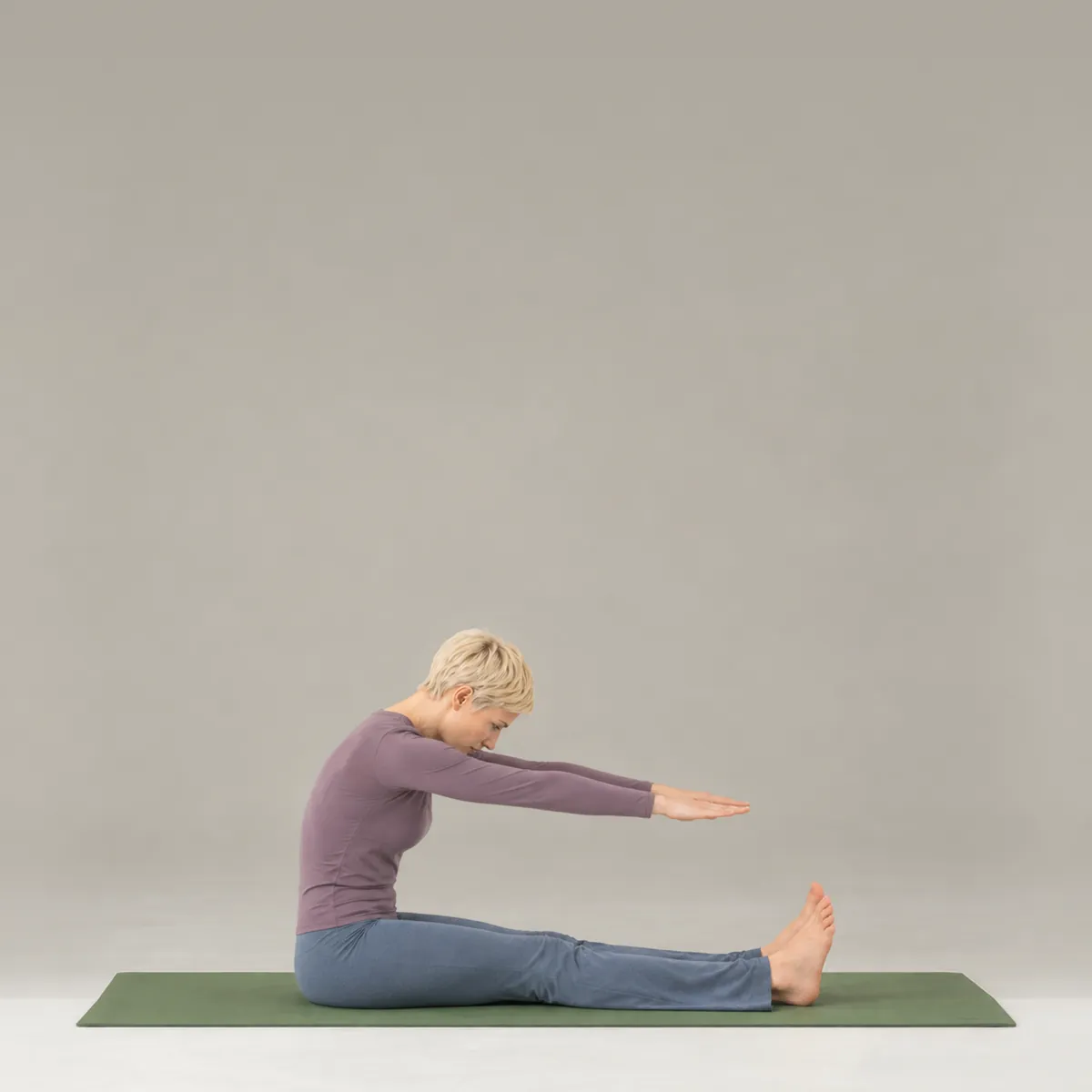
A yoga app for over 40 that still builds strength.
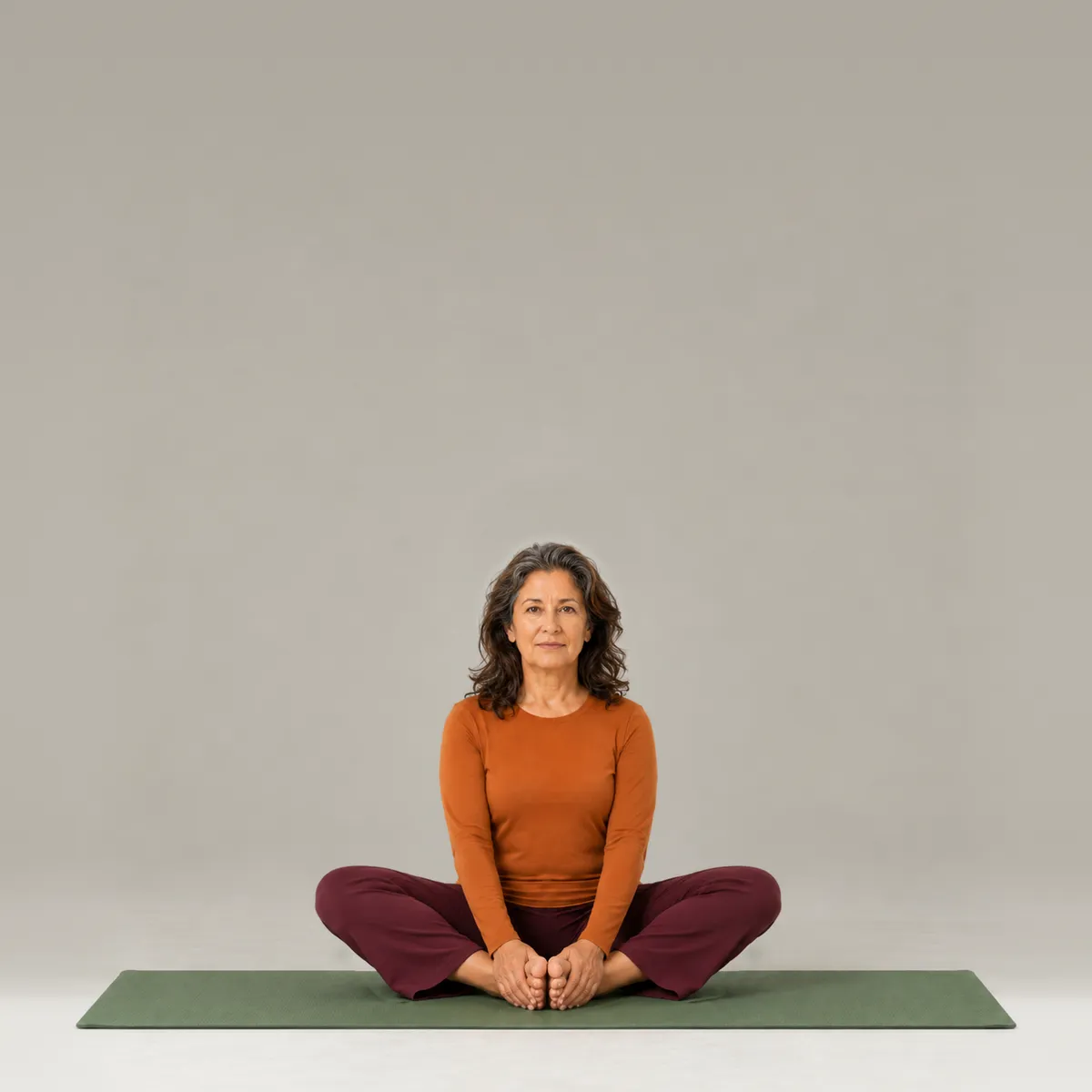
Sit tall. Let gravity and time open your hips.
Starting later is not starting behind.
Plenty of people start yoga in their forties, fifties, and beyond, often at the moment their body asks for more care: a stiff back in the morning, a shoulder that complains, a sense that strength and balance matter more than they used to.
Muscle mass and bone density gradually decline with age, connective tissue can feel less springy, balance needs more practice, and recovery takes a little longer. None of that is a reason to avoid movement. It is a reason to choose movement well. Your plan blends yoga for mobility and balance with pilates for core strength and posture, the qualities that keep everyday movement feeling easy.
Starting yoga after 40Six habits for a later start
- 1Begin with short sessions of 10 to 20 minutes, three times a week.
- 2Warm up gradually, especially in the morning when joints feel stiffer.
- 3Use props generously: blocks, a strap, a folded blanket under the knees.
- 4Favor slow, controlled movement over long passive stretching at first.
- 5Include balance and strength work, not just flexibility.
- 6Treat sharp pain as a stop signal, never something to push through.
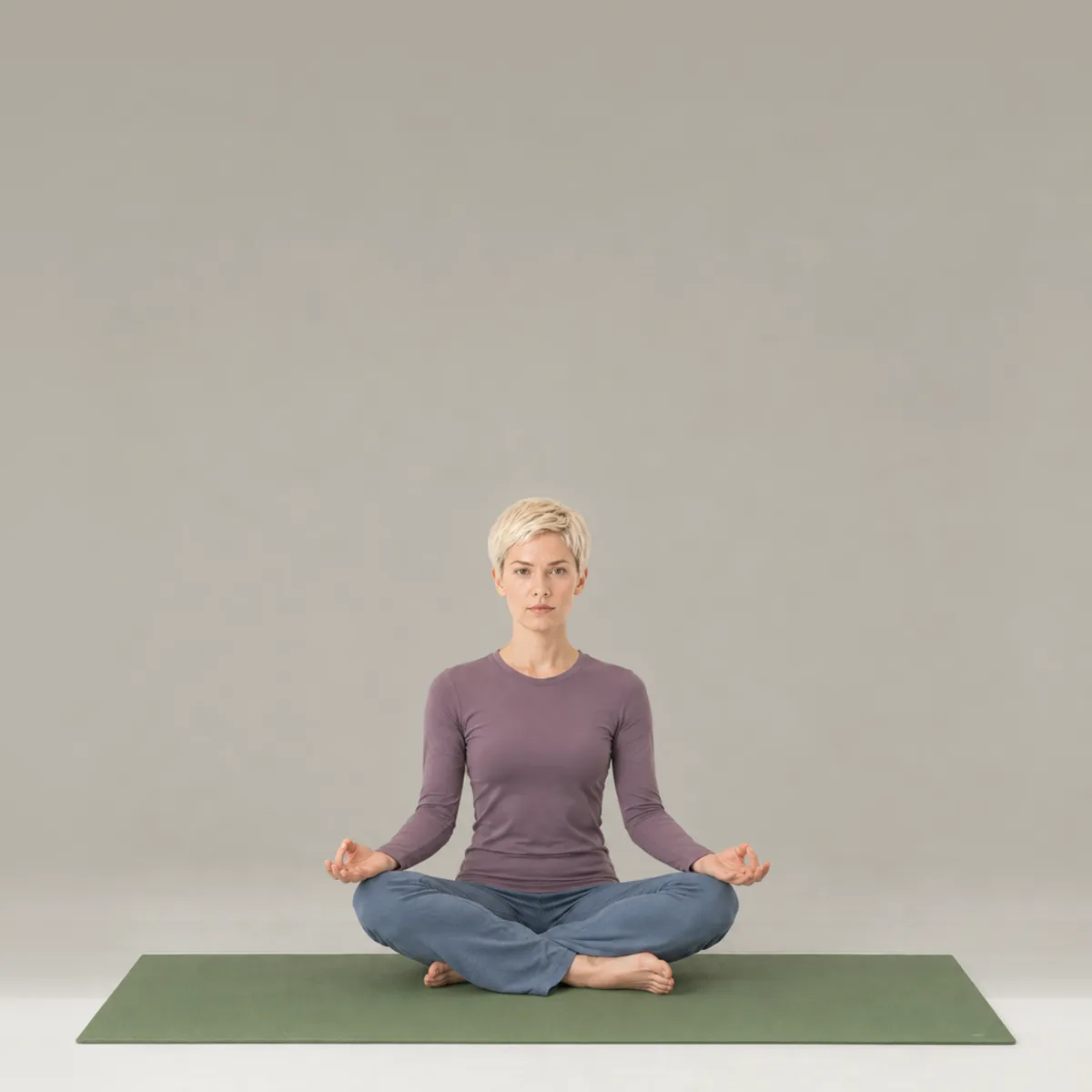
Gentle Start
Progress at the pace your body sets.
The intake asks about experience, goals, and any injuries or tender spots. Your plan starts gently and builds slowly, with modifications whenever a pose needs support.
- Modifications offered, never forced
- A gentler next session after a tender day
- Props welcome: blocks, straps, a chair
It also remembers. If your hips felt tight on Tuesday, the next session opens gentler, and on days you would rather not look at a screen, audio-only mode keeps the breath pacing and verbal cues.
Balance
Balance is a skill. It comes back with practice.
Balance is a skill, not a fixed trait. It improves quickly with practice because your body learns to make small, constant corrections through the feet, ankles, and core.
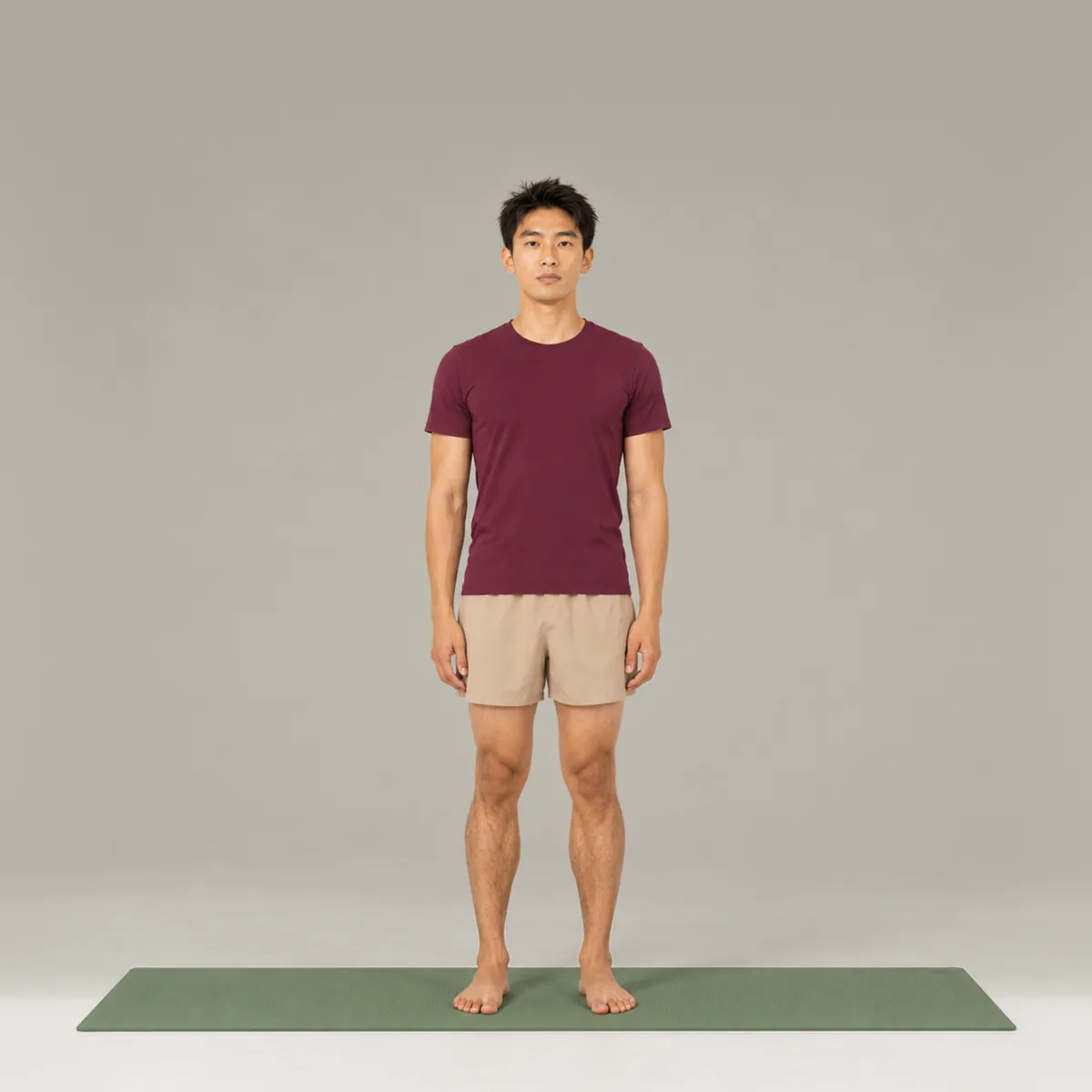
1 · Two feet
Mountain pose
Balance starts on two feet. Notice how your weight moves between heels and toes, then find the center.
With support: Stand with your feet wider apart for more balance.
2 · One foot
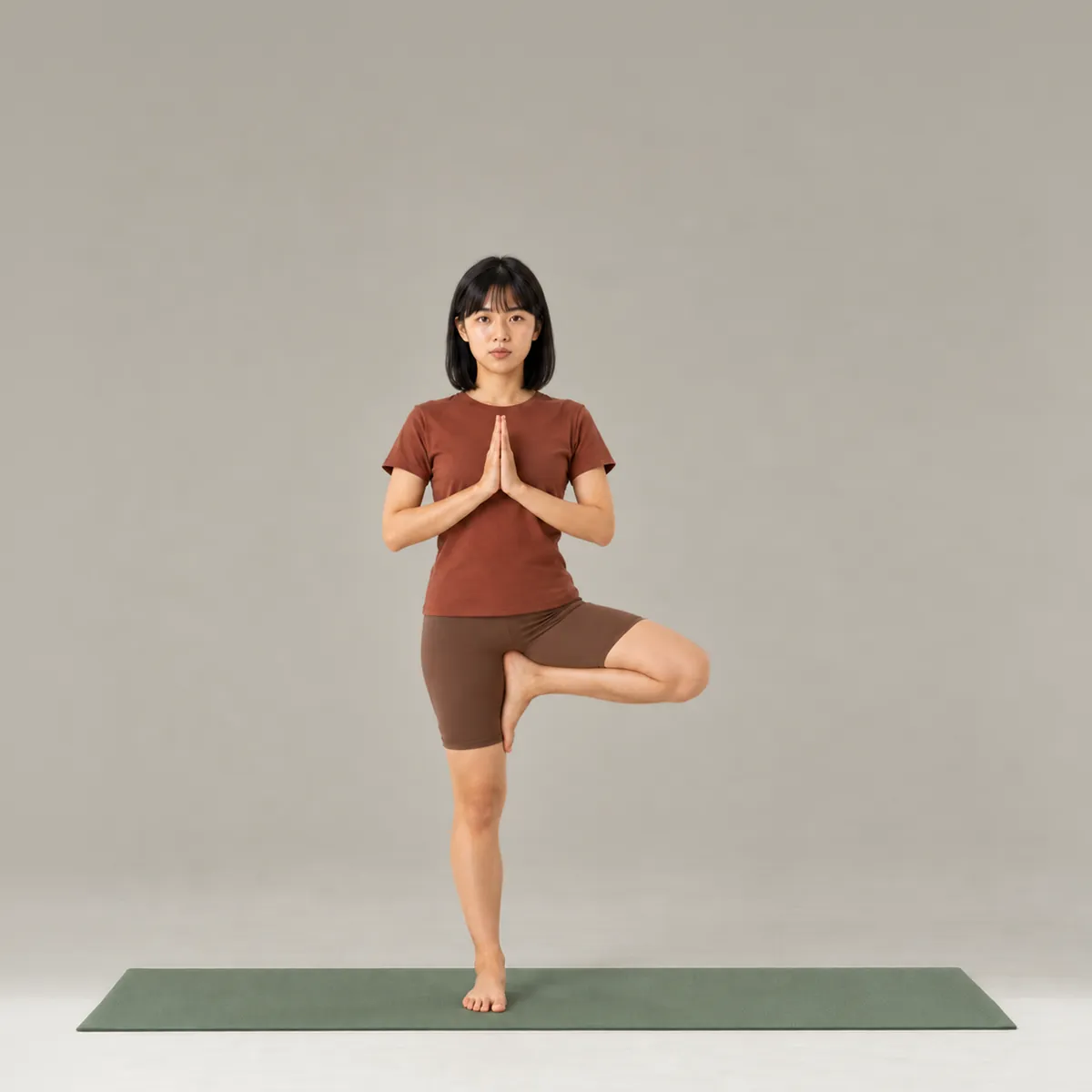
Tree pose
The first one-legged balance most people learn. Press the foot and the standing leg into each other for stability.
With support: Keep your toes on the floor with your heel against the inner ankle, like a kickstand.
3 · Tipping forward
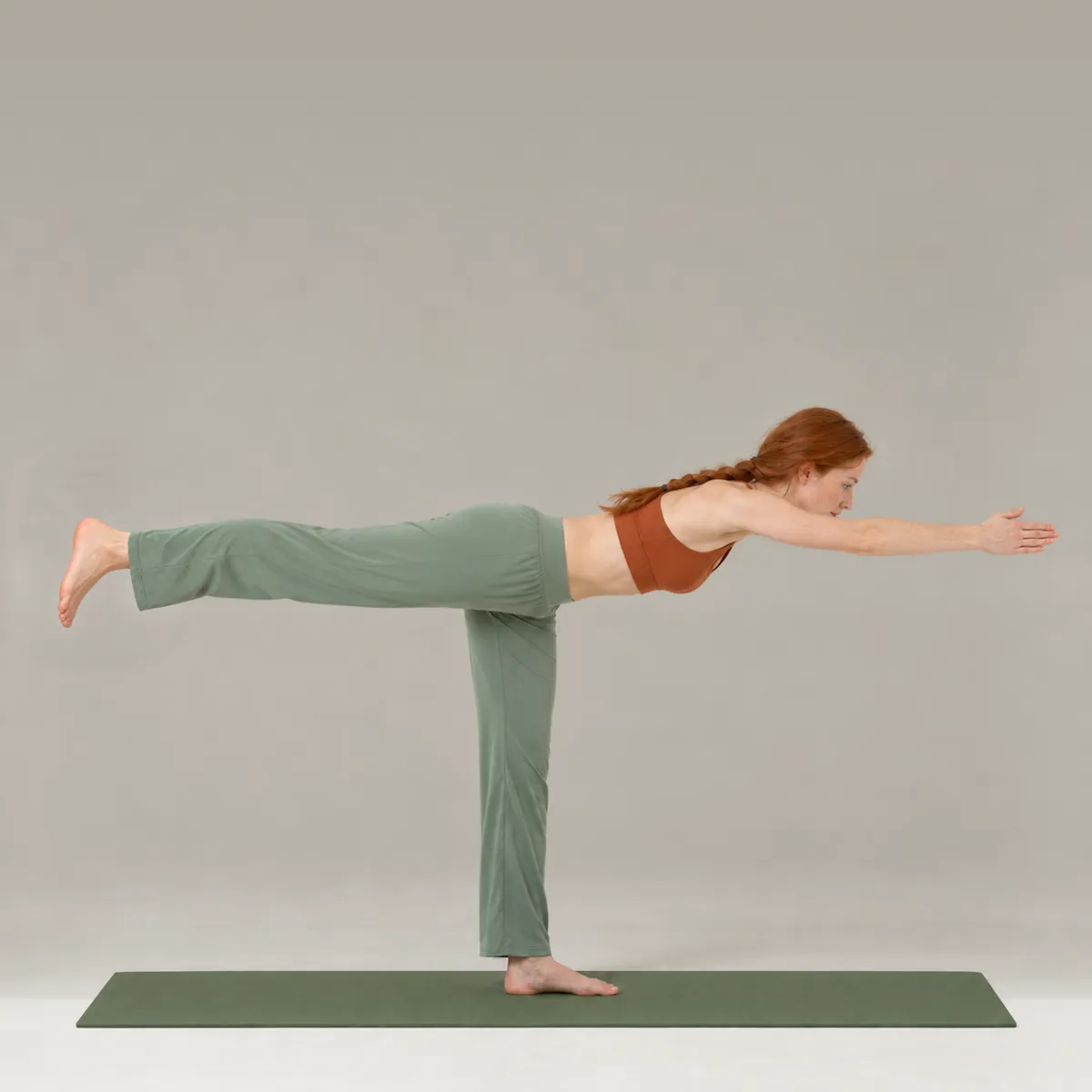
Warrior III
Tips the body forward on one leg, which builds strength in the standing leg and glutes. Hands on blocks help at first.
With support: Place your hands on a wall or the back of a chair at hip height.
4 · Opening on one leg
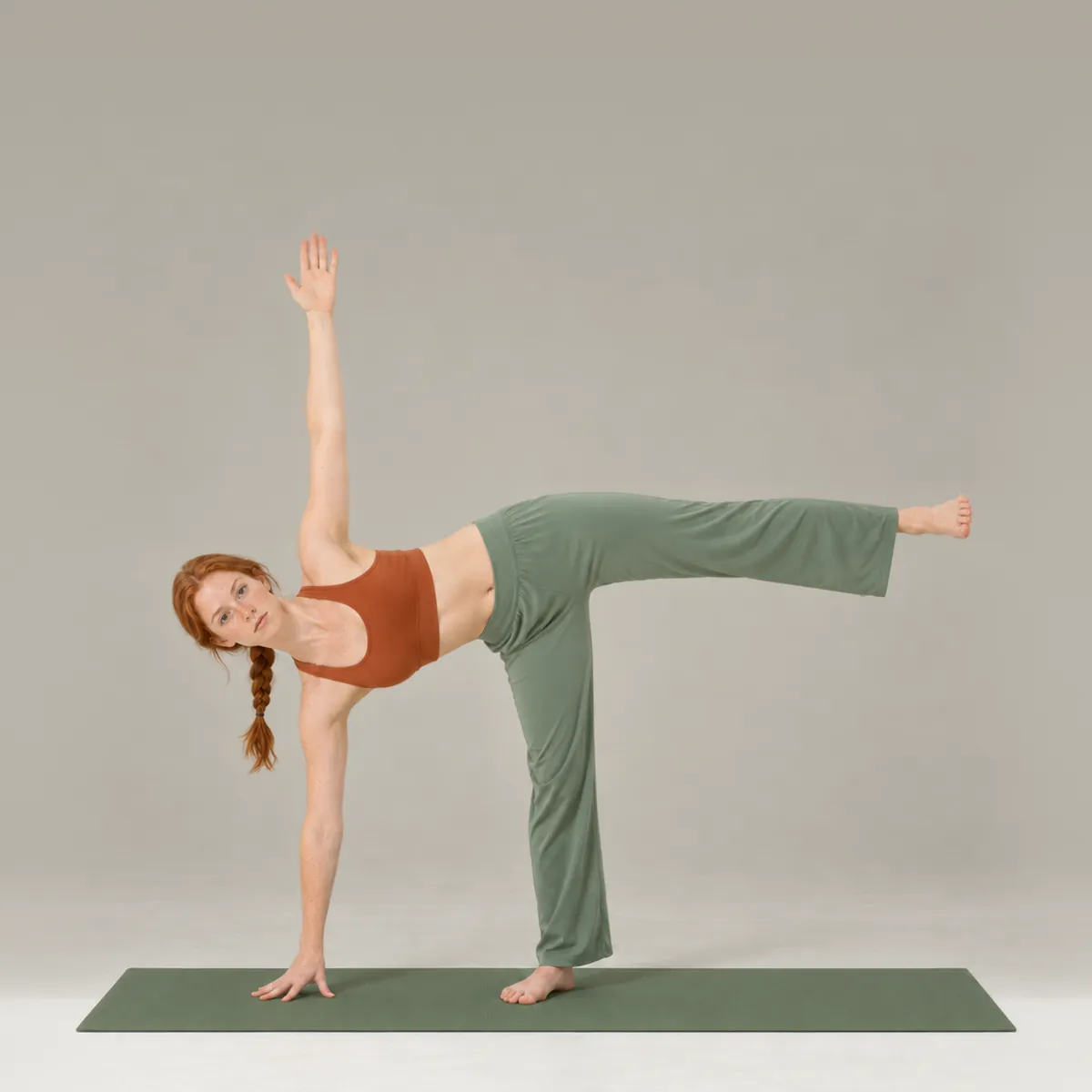
Half moon pose
Opens the hips while you balance on one leg. Use a block under the lower hand and a wall behind you if needed.
With support: Practice with your back near a wall so you can rest into it.
Practice near a wall or a sturdy chair if balance is new to you or your steadiness has changed. Arm balances put weight on the wrists, so warm them up first and skip these poses if you have a wrist injury. Why you wobble in tree pose
Form
Feedback that keeps you safer at home.
Form matters more, not less, as the years go on. The cost of a knee collapsing in a lunge or a rounded back in a fold tends to show up sooner. Kova reads your alignment on device and gives calm cues, like softening a locked knee or easing out of a shoulder that is hiking up, so you are not practicing alone and guessing.
Knees
Mountain poseThe knees lock back.
Cue: Keep a micro bend in the knees and lift through the thighs instead of pushing the joints back.
Gentler option: Practice seated on the front edge of a chair with your feet flat if standing is not comfortable.
Wrists
Downward facing dogThe weight sinks into the wrists.
Cue: Press through your knuckles and fingertips, then send your hips back to move more weight into your legs.
Gentler option: Press your hands into a wall at hip height for a standing half dog with no weight on your wrists.
Shoulders
Warrior IIThe shoulders lift as the arms tire.
Cue: Soften the shoulders down every few breaths and keep the arms long rather than rigid.
Gentler option: Rest your hands on your hips if your shoulders need a break.
Lower back
Chair poseThe lower back arches sharply.
Cue: Draw your lower belly in and lengthen your tailbone slightly toward the floor.
Gentler option: Slide your back down a wall into a shallow wall sit for support.
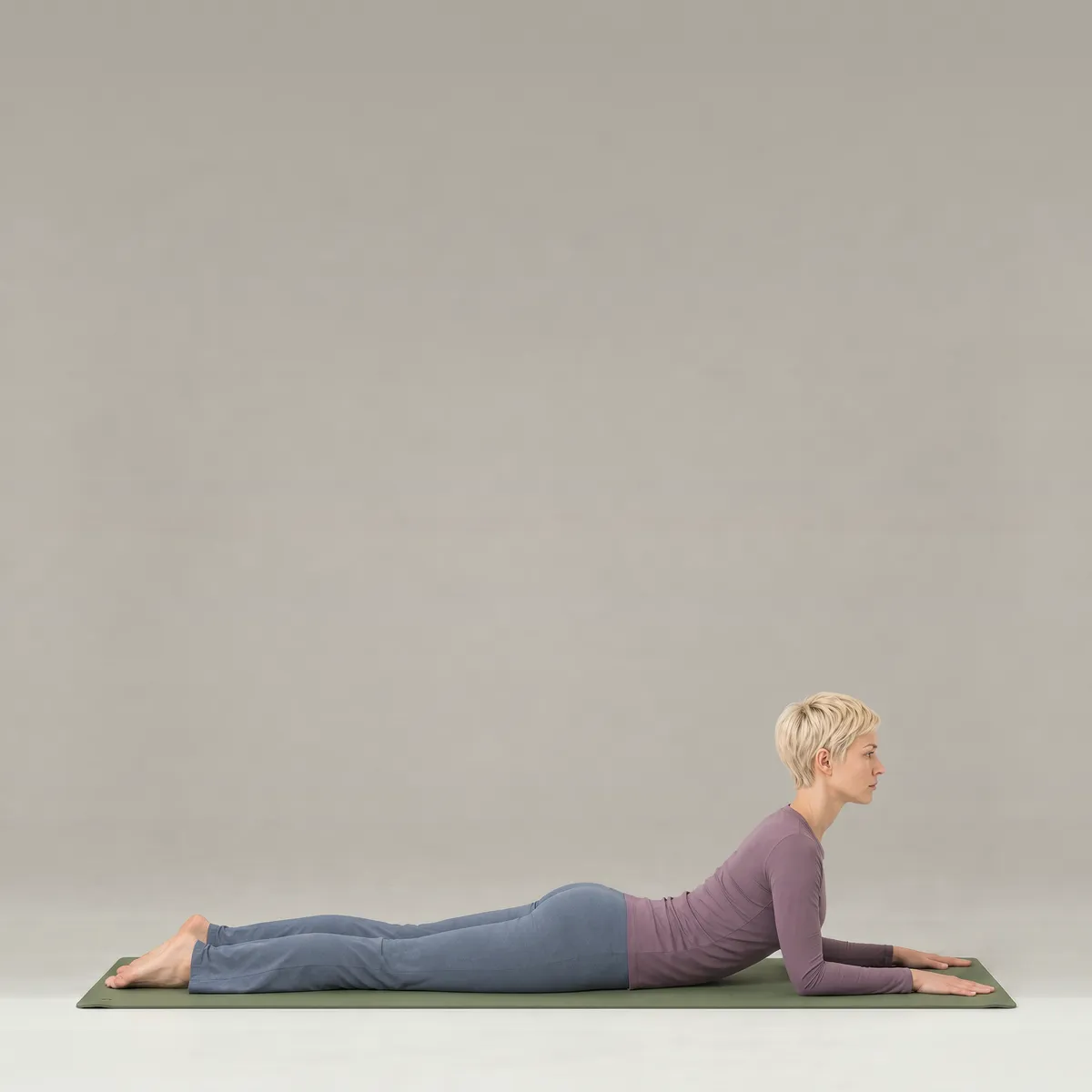
Props bring the floor closer.
They let you find good alignment before your body has the range to do it alone. During setup you can tell Kova which props you own, and your plan can include them. Most homes already have what you need.
- Block
- Two or three hardback books held with a rubber band, a sturdy box, or the bottom step of a staircase. It must not slide or tip.
- Strap
- A belt, a sturdy scarf, a bath towel, or a dressing gown tie. Hold it loosely: it supports the pose, it does not pull you deeper.
- Bolster
- A firm sofa cushion or two stacked bed pillows, under your chest in child’s pose or under your knees on your back.
- Blanket
- A folded blanket or bath towel under your knees in lunges, or under your hips in seated poses.
- Wall and chair
- A clear stretch of wall for balance. A sturdy chair without wheels, pushed against the wall first.
A prop is not a shortcut. It is a way to meet the pose where your body is today.
Yoga props at homeA clear line
Where Kova stops, and your doctor starts.
Kova is not a medical device, and it does not diagnose injuries. It lets you note injuries and tender spots, offers modifications, and keeps an eye on visible alignment. That is support for your practice, not medical advice and not a substitute for a physiotherapist.
If you have a heart condition, high blood pressure, a joint replacement, osteoporosis, a recent injury, or any condition you are unsure about, talk to your doctor before starting a new exercise practice. And on any day, treat sharp pain as a stop signal.
Free to download. Every practice needs Kova Plus, which starts with a 3-day free trial for new subscribers, then $9.99 a month or $89.99 a year in the US App Store.
See pricingIs it too late to start yoga after 40?
Is Kova safe if I have an injury?
Can I use props with Kova?


It is not
too late.
Download Kova on your iPhone or iPad today. It is free to download, and Kova Plus starts with a 3-day free trial for new subscribers.
Download on the App Store