Mountain pose
Tadasana
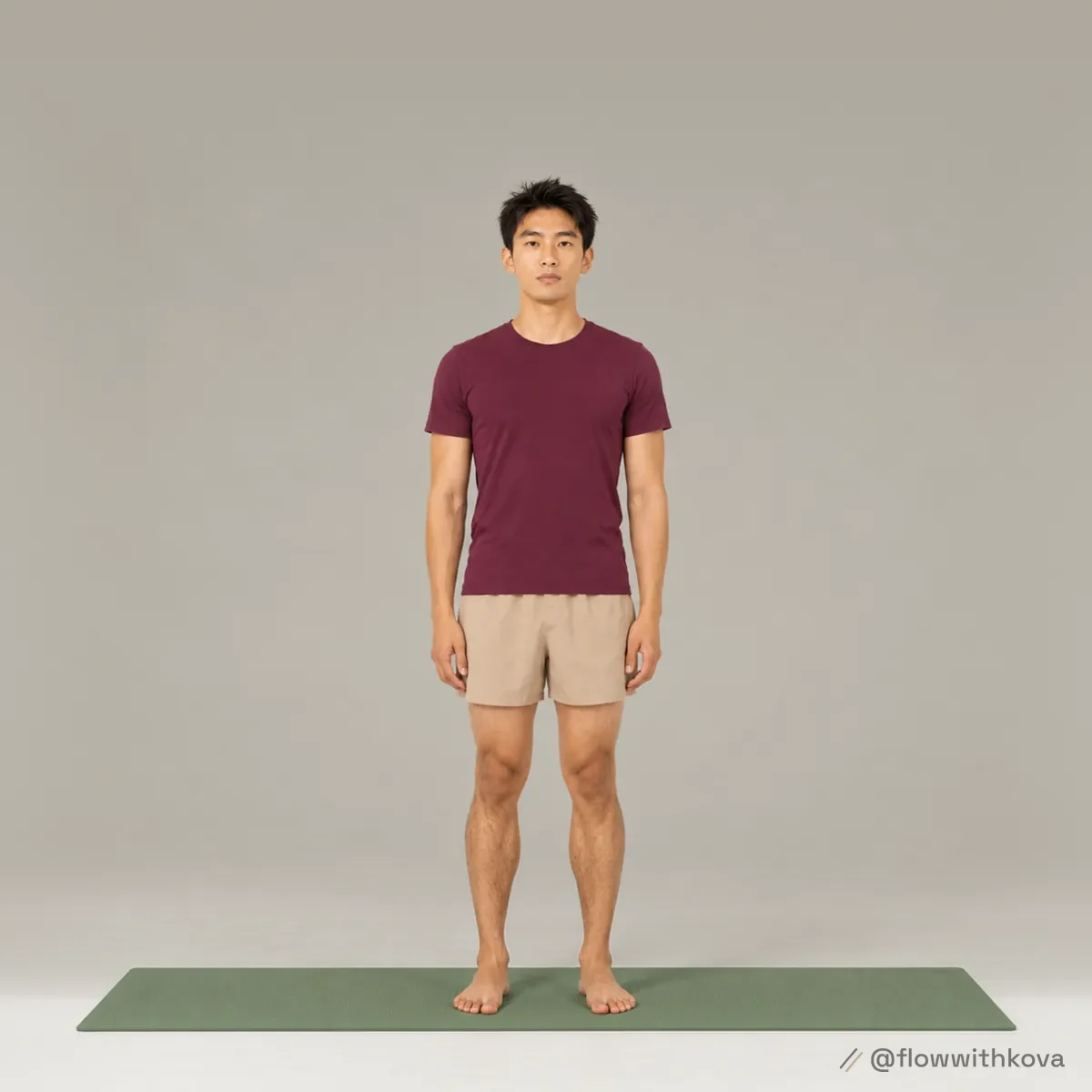
Mountain pose is the simple standing pose that many other standing poses start from. It teaches you to stand tall with balanced, active posture, and the habits you build here carry into every pose that follows.
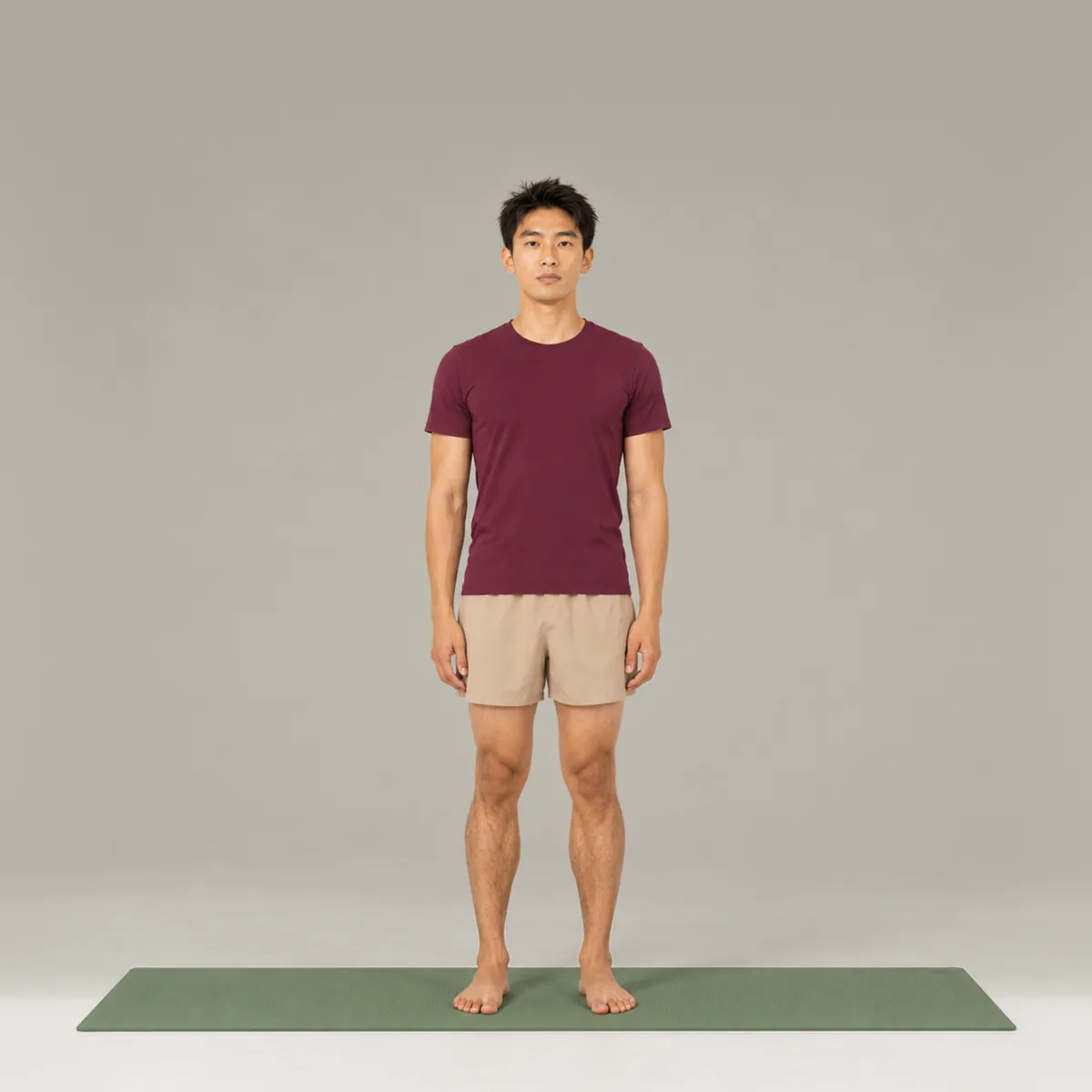
Ribs stack over the hips.
How to do Mountain pose
Read each step once before you try it. Move slowly, and come out of the pose whenever your breath gets short.
- Level
- Beginner
- Discipline
- Yoga
- Works
- Feet, Legs, Core, Spine
- Family
- Standing poses
- 01
Stand at the top of your mat with your feet hip width apart, or with your big toes touching if that feels steady.
- 02
Spread your toes and press evenly through the big toe, the little toe, and the heel of each foot.
- 03
Engage your thighs gently so your kneecaps lift, without locking your knees.
- 04
Lengthen your tailbone toward the floor and draw your lower belly in lightly to keep your pelvis level.
- 05
Stack your ribs over your pelvis and your shoulders over your hips.
- 06
Relax your shoulders down and let your arms hang by your sides with your palms facing in or forward.
- 07
Lengthen through the crown of your head, keep your chin level, and hold for five to ten slow breaths.
Form checklist
What good form looks like.
Once you are in the pose, check these one at a time. If one slips, ease off a little until it comes back.
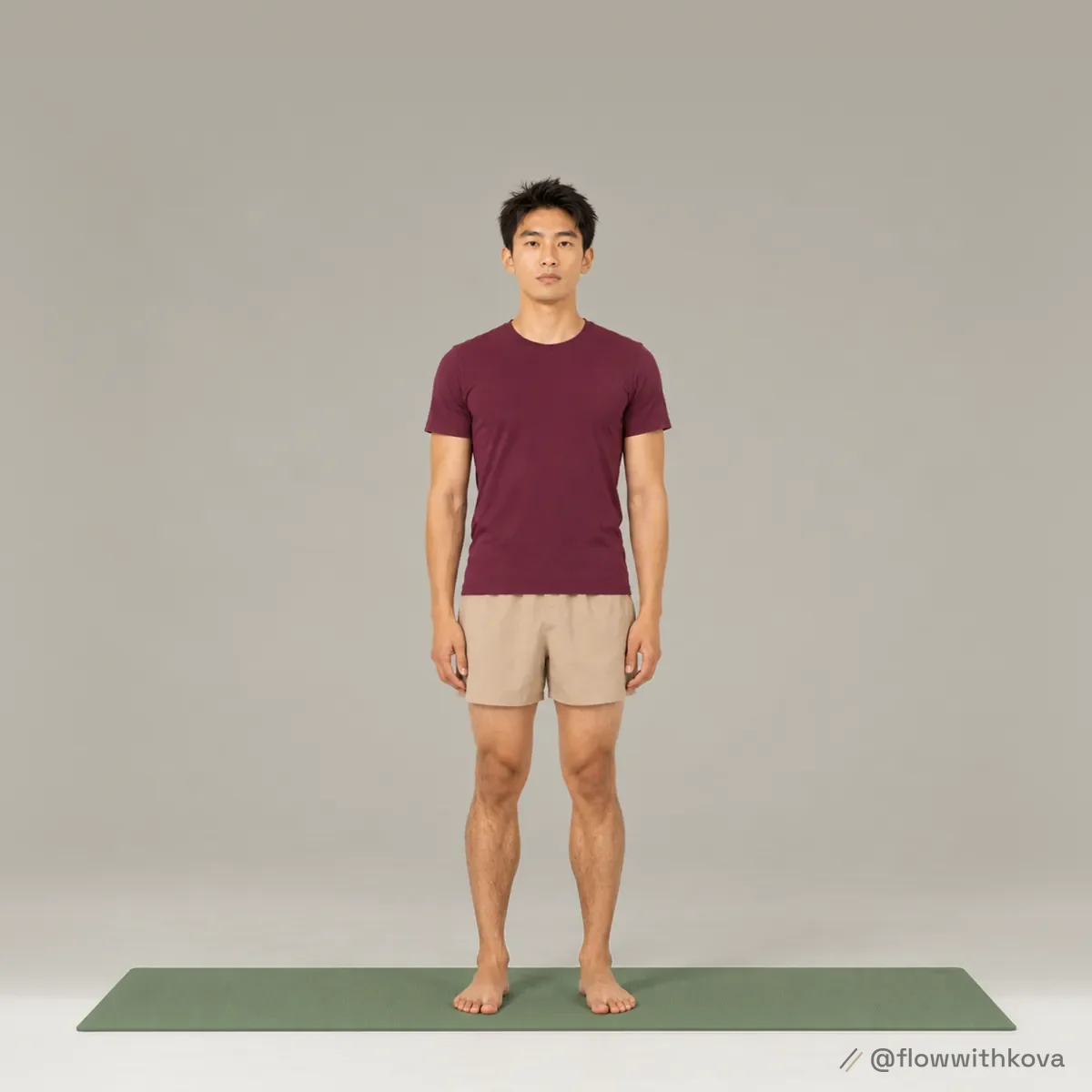
- 01Weight spreads across the whole of each foot.
- 02Knees are straight but not locked.
- 03Pelvis sits level, neither tucked nor tipped forward.
- 04Ribs stack over the hips.
- 05Ears line up over the shoulders.
Common mistakes and how to fix them.
Most of these are hard to feel from the inside, so check them one by one.
- 01
The knees lock back.
The fix
Keep a micro bend in the knees and lift through the thighs instead of pushing the joints back.
- 02
The lower ribs flare forward.
The fix
Soften the front ribs down toward your hips and draw your lower belly in lightly.
- 03
The weight rocks into the heels or the toes.
The fix
Sway gently forward and back a few times, then settle where the weight feels even through the whole foot.
- 04
The chin juts forward.
The fix
Draw your head back gently until your ears sit over your shoulders.
Modifications for your body
Easier and supported ways into the pose.
- Stand with your feet wider apart for more balance.
- Stand with your back against a wall to feel how your head, shoulders, and hips line up.
- Practice seated on the front edge of a chair with your feet flat if standing is not comfortable.
Benefits over time
What regular practice of this pose can help with.
- Builds awareness of your standing posture.
- Gently engages the legs and core.
- Creates a steady base for other standing poses.
- Offers a calm moment to settle the breath.
Breath
Breathe slowly through the nose. Let each exhale settle your weight evenly into your feet.
Take care
Stand near a wall or chair if you feel dizzy or unsteady on your feet. Stop if you feel sharp pain or lightheaded. Kova is not a medical device and does not diagnose injuries.
By Fayeed PawaskarUpdated
Use this photo
This photo is free to use on your blog, in articles, newsletters, and class handouts. Keep the credit link to Kova. Image use terms
Download photo (WebP, 1200 x 1200)<figure>
<a href="https://www.flowwithkova.com/poses/mountain-pose"><img src="https://www.flowwithkova.com/pose-photos/mountain-pose.webp" alt="A man standing tall in mountain pose on a green yoga mat, arms relaxed by his sides" width="1200" height="1200" loading="lazy" style="max-width:100%;height:auto"></a>
<figcaption>Mountain pose (Tadasana). Photo: <a href="https://www.flowwithkova.com/poses/mountain-pose">Kova pose library</a></figcaption>
</figure>Practice with Kova
Get cued while you hold it.
Kova uses on-device pose tracking to check how your ears, shoulders, hips, and ankles stack. If your hips shift to one side or your shoulders creep up toward your ears, a calm spoken cue helps you return to center.
- Pose tracking runs on your device. Your camera feed is never uploaded and never leaves your iPhone or iPad.
- Prefer no camera? Every session has an audio-only mode.
- Free to download on iPhone and iPad. Kova Plus starts with a 3-day free trial for new subscribers.
Mountain pose questions
Back to the pose libraryWhat is the point of mountain pose?
Should my feet touch in mountain pose?
Should I lock my knees in Tadasana?
Related poses
All 79 poses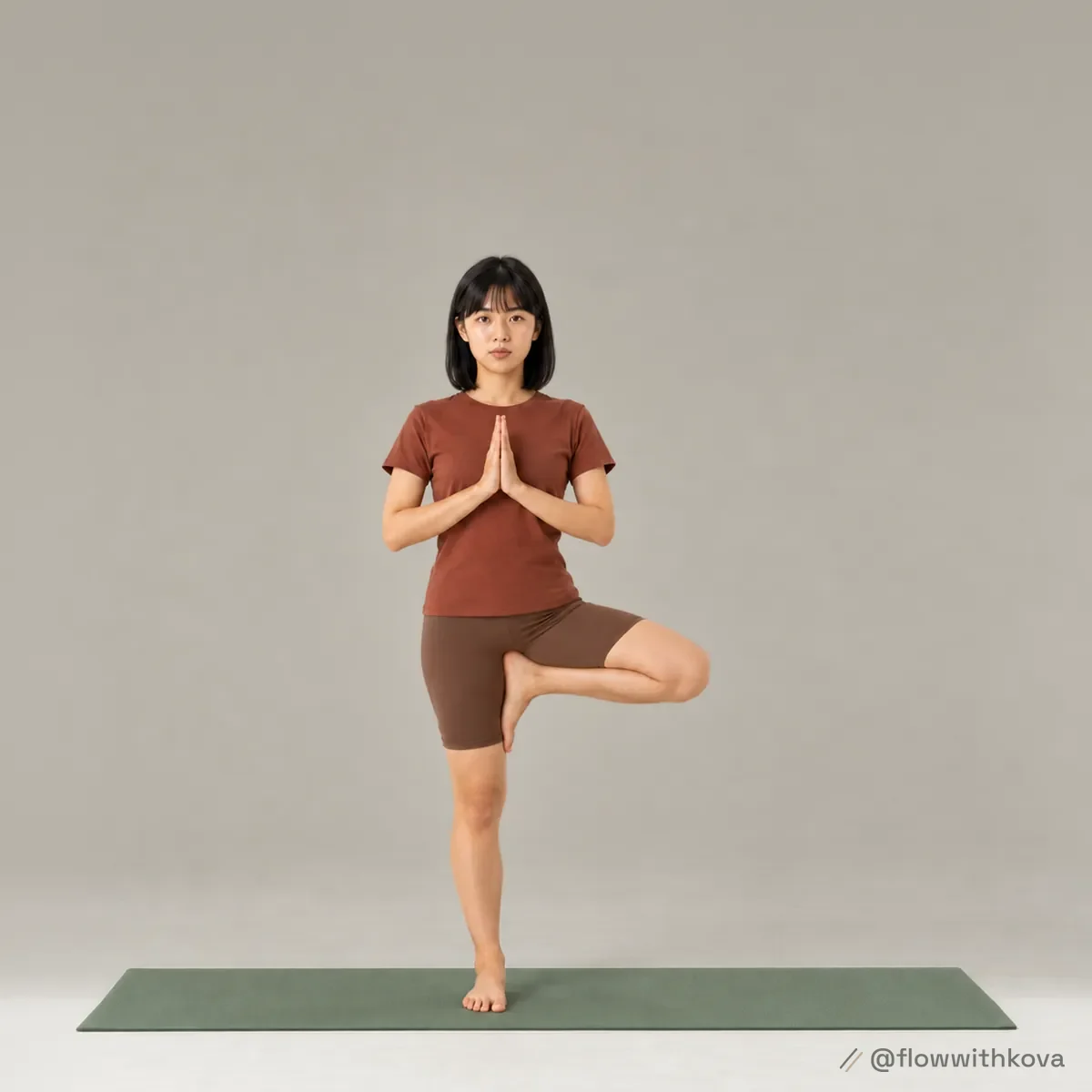
Yoga · Beginner
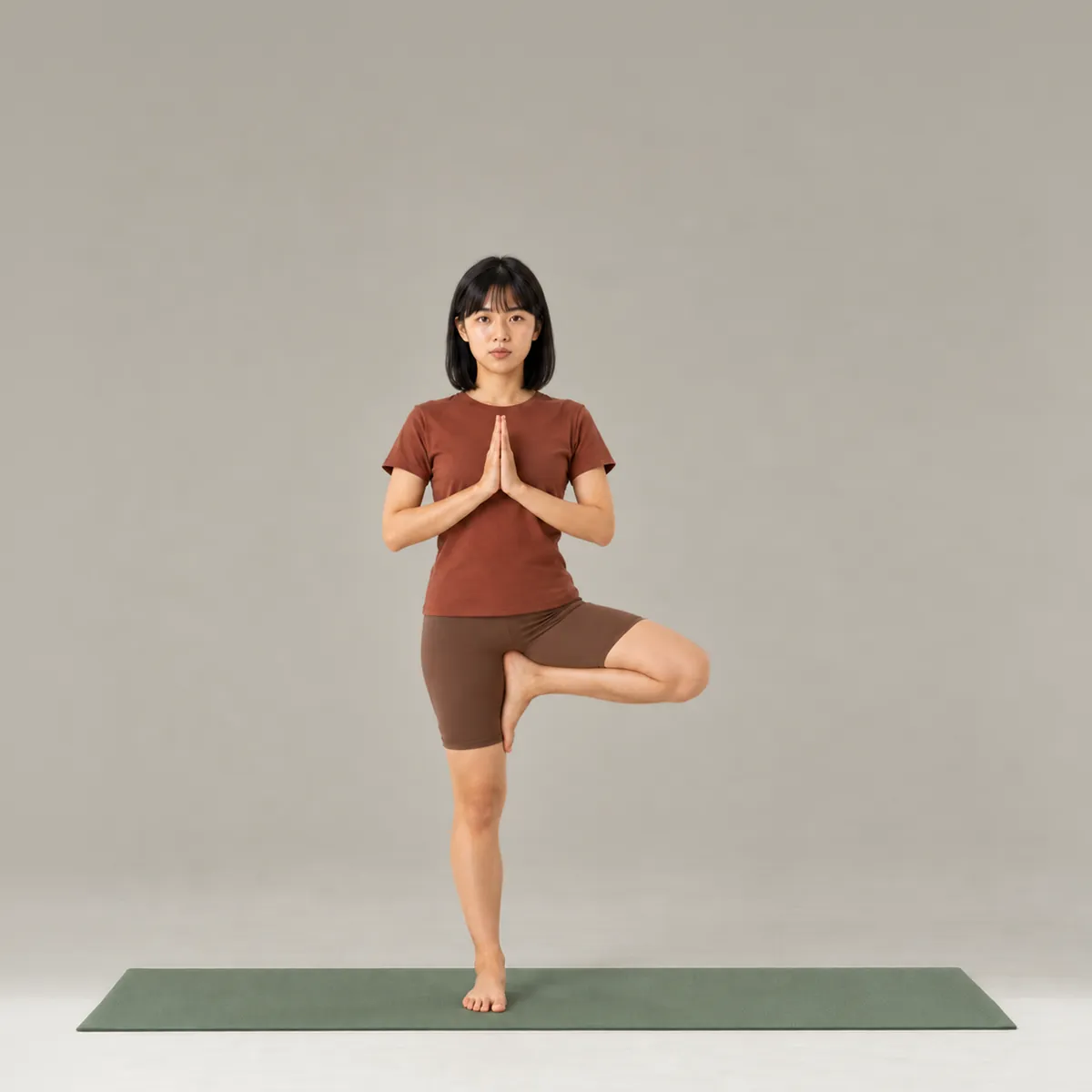
Tree pose
Vrksasana
Yoga · Beginner
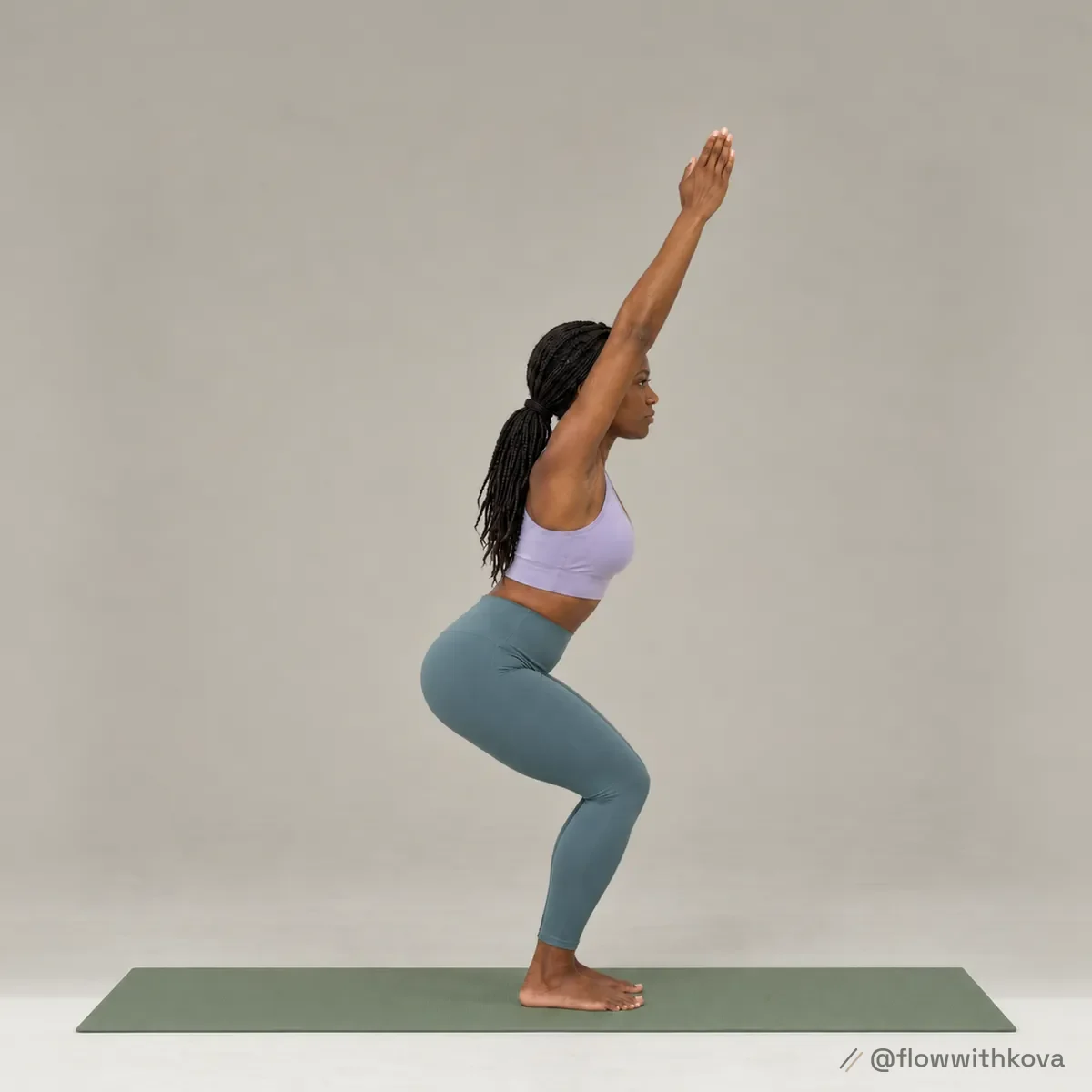
Chair pose
Utkatasana
Yoga · Beginner
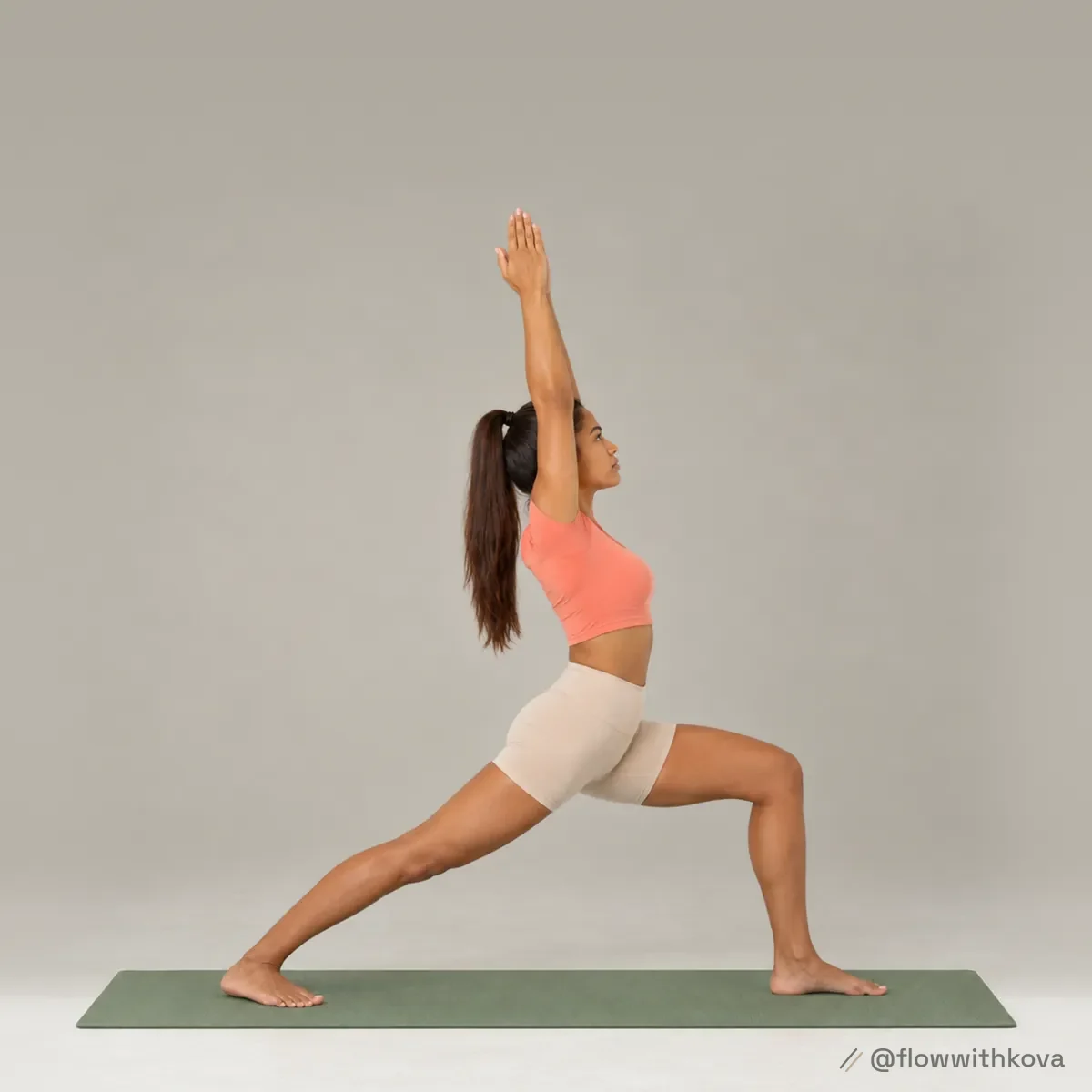
Warrior I
Virabhadrasana I
Collections with this pose
From the journal
BeginnersHow to start yoga at home when you have never done it
RoutineA 10-minute morning yoga routine you will actually keep
PracticeHow long does it take to see results from yoga?
FormWhy you wobble in tree pose, and how to steady it
BeginnersHatha, vinyasa, yin: which type of yoga should a beginner try?
MovementChair yoga: a gentle seated practice for any age
Practice it
with a coach.
Download Kova on your iPhone or iPad today. It is free to download, and Kova Plus starts with a 3-day free trial for new subscribers.
Download on the App Store