Downward facing dog
Adho Mukha Svanasana
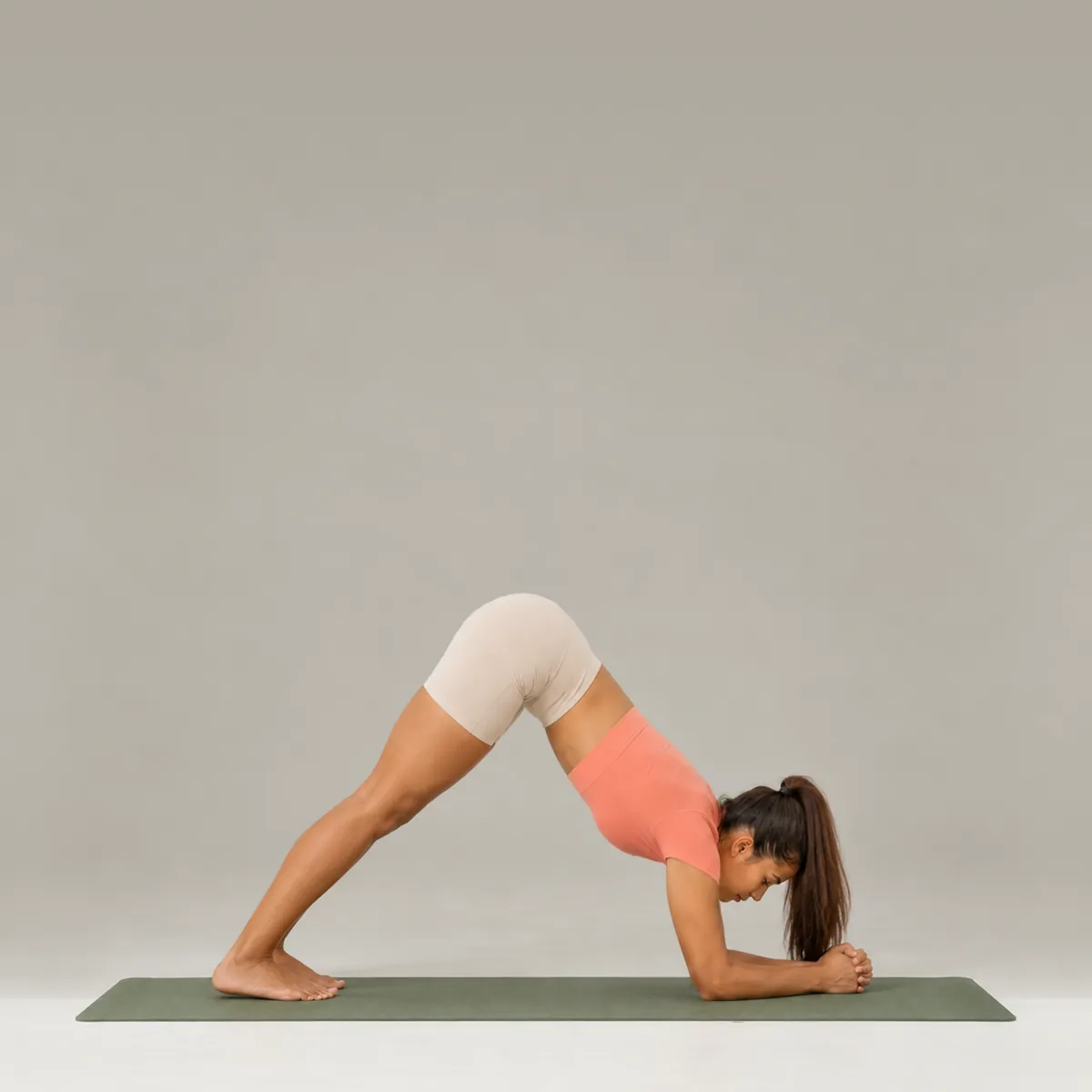
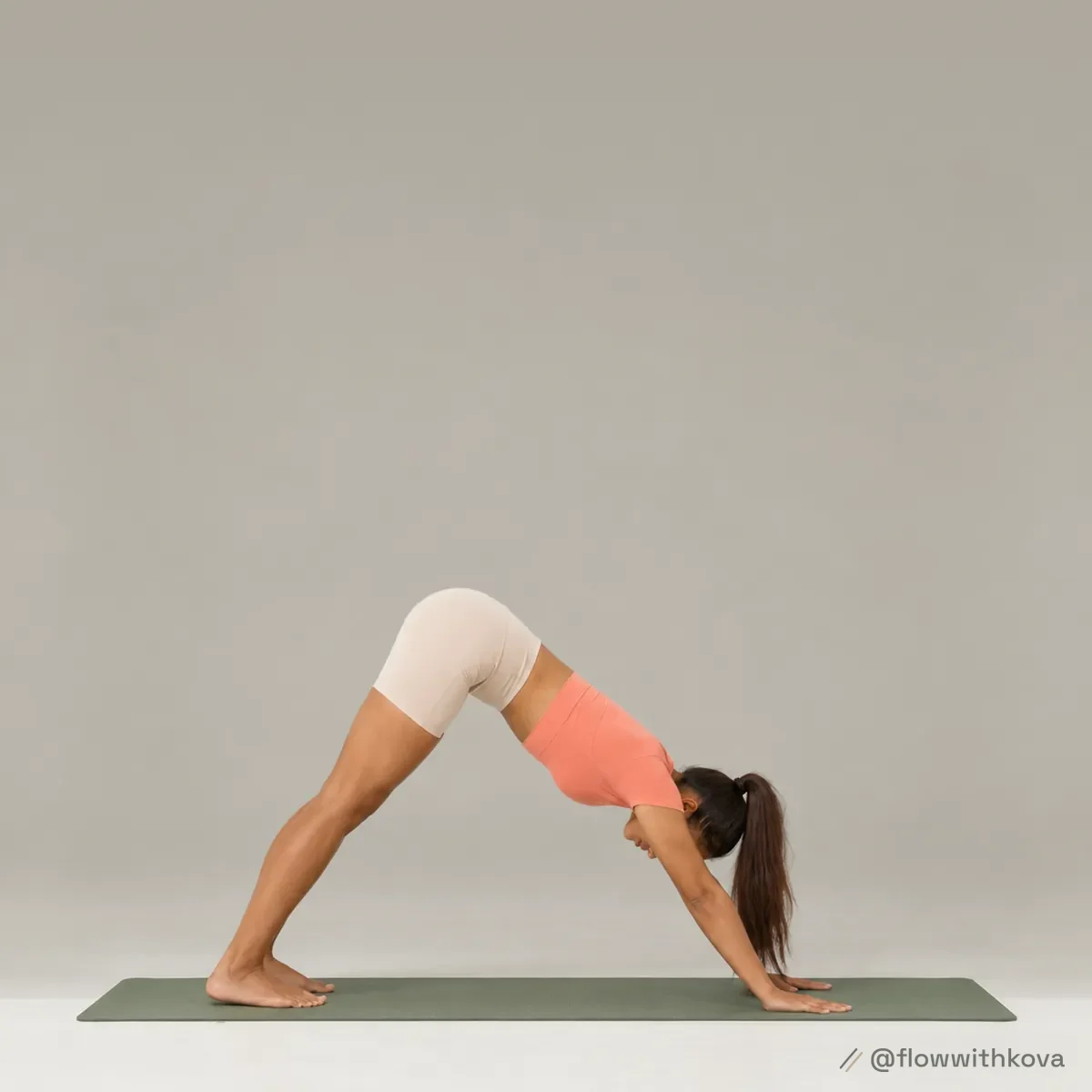
Downward facing dog is an upside down V shape that stretches the back of the legs and builds strength in the arms and shoulders. It shows up in most yoga classes, so learning to keep a long spine here pays off across your whole practice.
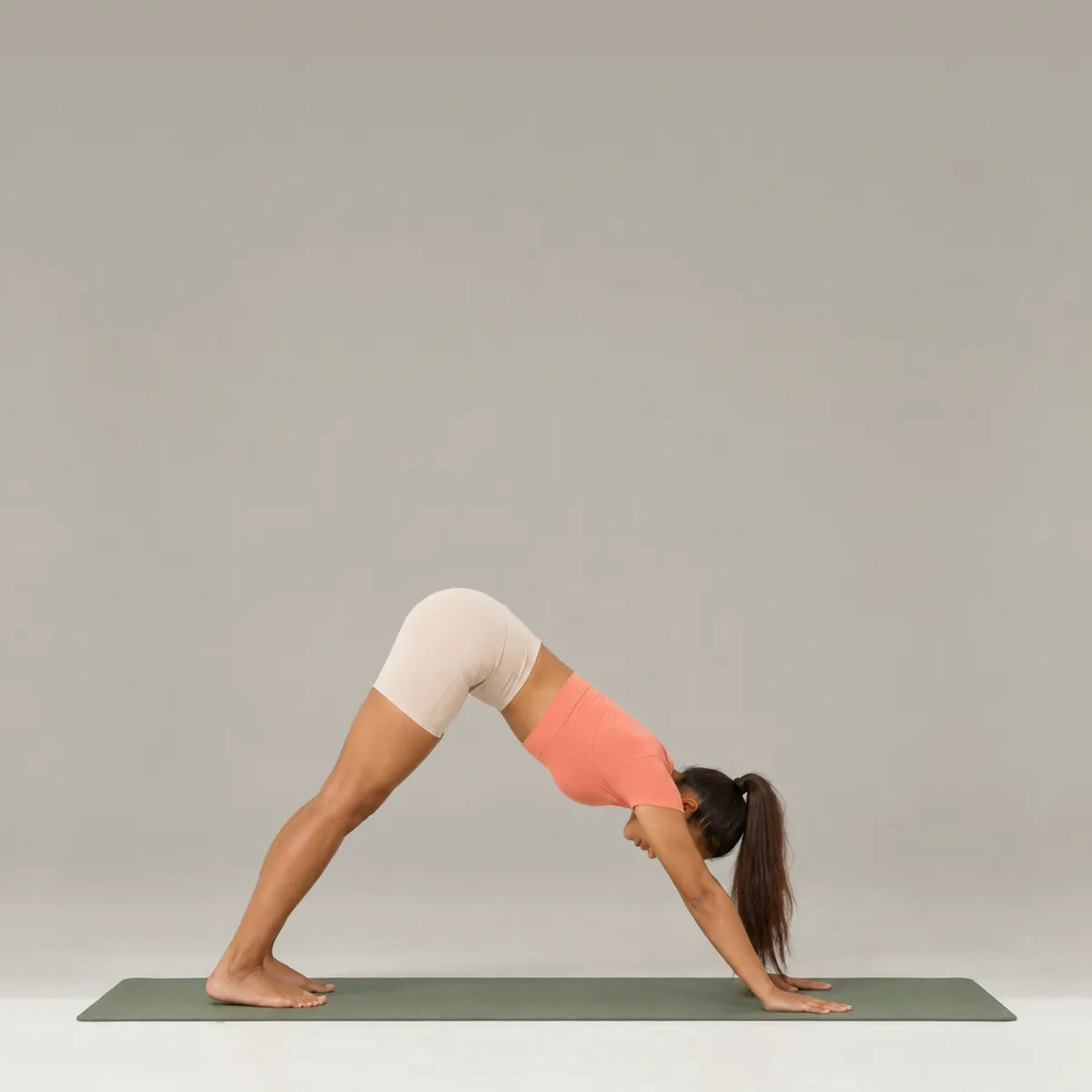
Hips reach up and back.
How to do Downward facing dog
Read each step once before you try it. Move slowly, and come out of the pose whenever your breath gets short.
- Level
- Beginner
- Discipline
- Yoga
- Works
- Hamstrings, Calves, Shoulders, Spine
- Family
- Standing poses
- Also called
- Down dog, Downward dog
- 01
Start on your hands and knees with your wrists under your shoulders and your knees under your hips.
- 02
Spread your fingers wide and press firmly through your palms and knuckles.
- 03
Tuck your toes under and lift your knees off the mat as you exhale.
- 04
Send your hips up and back so your body forms an upside down V.
- 05
Keep your knees bent at first and focus on lengthening your spine from your hands to your hips.
- 06
Let your heels move toward the mat without forcing them down.
- 07
Relax your neck so your head rests between your upper arms, and hold for five breaths.
- 08
To come out, lower your knees to the mat and rest in child's pose.
Form checklist
What good form looks like.
Once you are in the pose, check these one at a time. If one slips, ease off a little until it comes back.
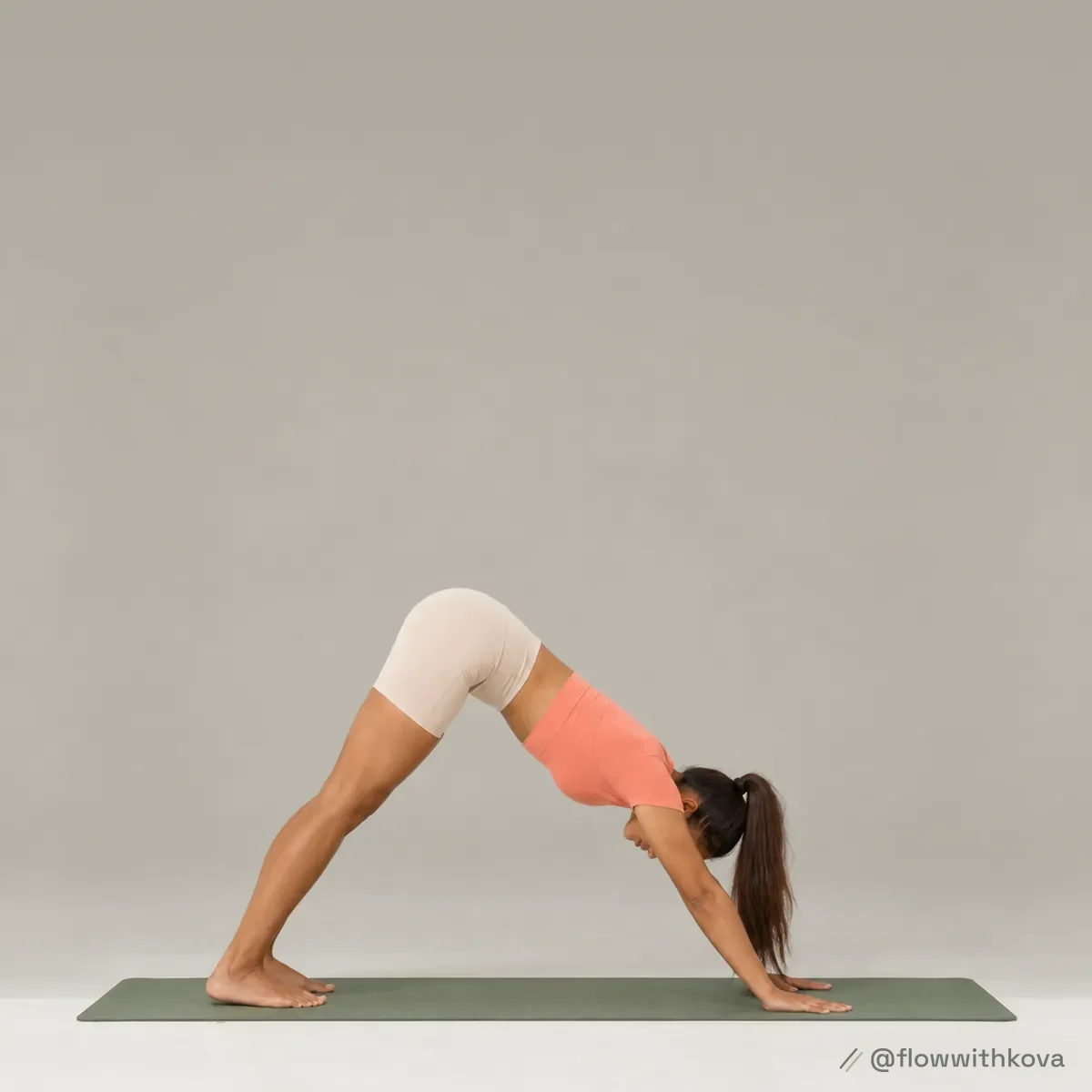
- 01Hands are shoulder width apart with fingers spread.
- 02Spine is long, not rounded.
- 03Hips reach up and back.
- 04Knees bend as much as needed.
- 05Neck stays relaxed between the arms.
Common mistakes and how to fix them.
Most of these are hard to feel from the inside, so check them one by one.
- 01
The back rounds because the hamstrings are tight.
The fix
Bend your knees generously and lift your sit bones toward the ceiling until your spine lengthens.
- 02
The weight sinks into the wrists.
The fix
Press through your knuckles and fingertips, then send your hips back to move more weight into your legs.
- 03
The shoulders creep up toward the ears.
The fix
Draw your shoulder blades gently away from your ears and turn your upper arms slightly outward.
- 04
The stance is too short or too long.
The fix
Start in plank and push your hips back without moving your hands or feet. That distance is a good place to begin.
Modifications for your body
Easier and supported ways into the pose.
- Keep your knees deeply bent to free your spine.
- Place your hands on blocks to ease the load on your wrists and shoulders.
- Press your hands into a wall at hip height for a standing half dog with no weight on your wrists.
Benefits over time
What regular practice of this pose can help with.
- Stretches the hamstrings and calves.
- Builds strength in the arms and shoulders.
- Lengthens the spine.
- Links many poses together in a flowing practice.
Breath
Breathe evenly through the nose. Use each inhale to lengthen your spine and each exhale to soften your heels toward the floor.
Take care
Take care with wrist or shoulder injuries, and come down if you feel dizzy with your head below your heart. Stop if you feel sharp pain. Kova is not a medical device and does not diagnose injuries.
By Fayeed PawaskarUpdated
Use this photo
This photo is free to use on your blog, in articles, newsletters, and class handouts. Keep the credit link to Kova. Image use terms
Download photo (WebP, 1200 x 1200)<figure>
<a href="https://www.flowwithkova.com/poses/downward-dog"><img src="https://www.flowwithkova.com/pose-photos/downward-dog.webp" alt="A woman in downward facing dog on a green yoga mat, hips lifted and heels reaching toward the floor" width="1200" height="1200" loading="lazy" style="max-width:100%;height:auto"></a>
<figcaption>Downward facing dog (Adho Mukha Svanasana). Photo: <a href="https://www.flowwithkova.com/poses/downward-dog">Kova pose library</a></figcaption>
</figure>Practice with Kova
Get cued while you hold it.
Kova tracks the line from your wrists through your shoulders to your hips with on-device pose tracking. If your back rounds or your shoulders hunch toward your ears, you hear a calm cue to bend your knees and lengthen your spine.
- Pose tracking runs on your device. Your camera feed is never uploaded and never leaves your iPhone or iPad.
- Prefer no camera? Every session has an audio-only mode.
- Free to download on iPhone and iPad. Kova Plus starts with a 3-day free trial for new subscribers.
Downward facing dog questions
Back to the pose libraryDo my heels need to touch the floor in downward dog?
Why does downward dog hurt my wrists?
How long should I hold downward dog?
Related poses
All 79 poses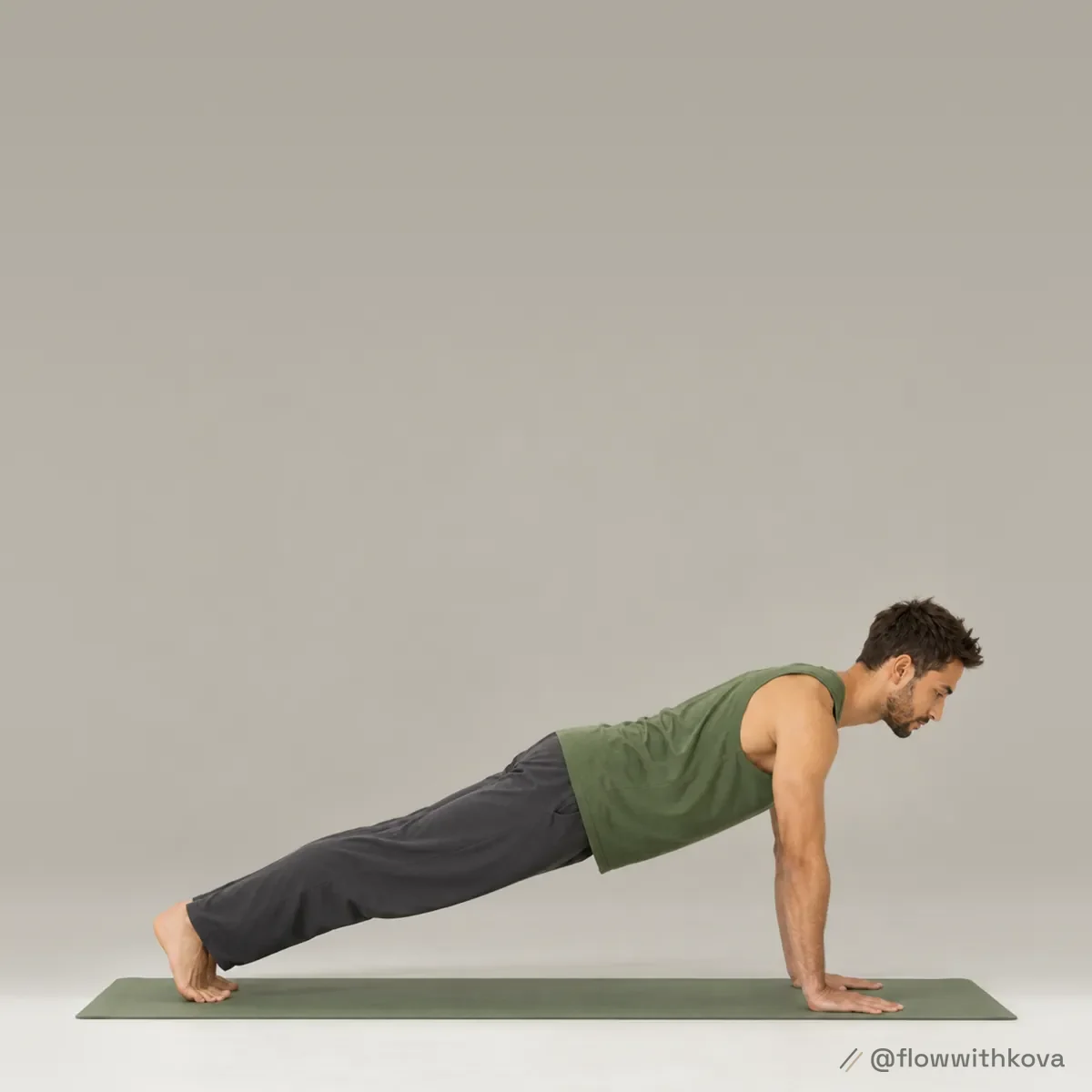
Yoga · Beginner
Plank pose
Phalakasana
Yoga · Beginner
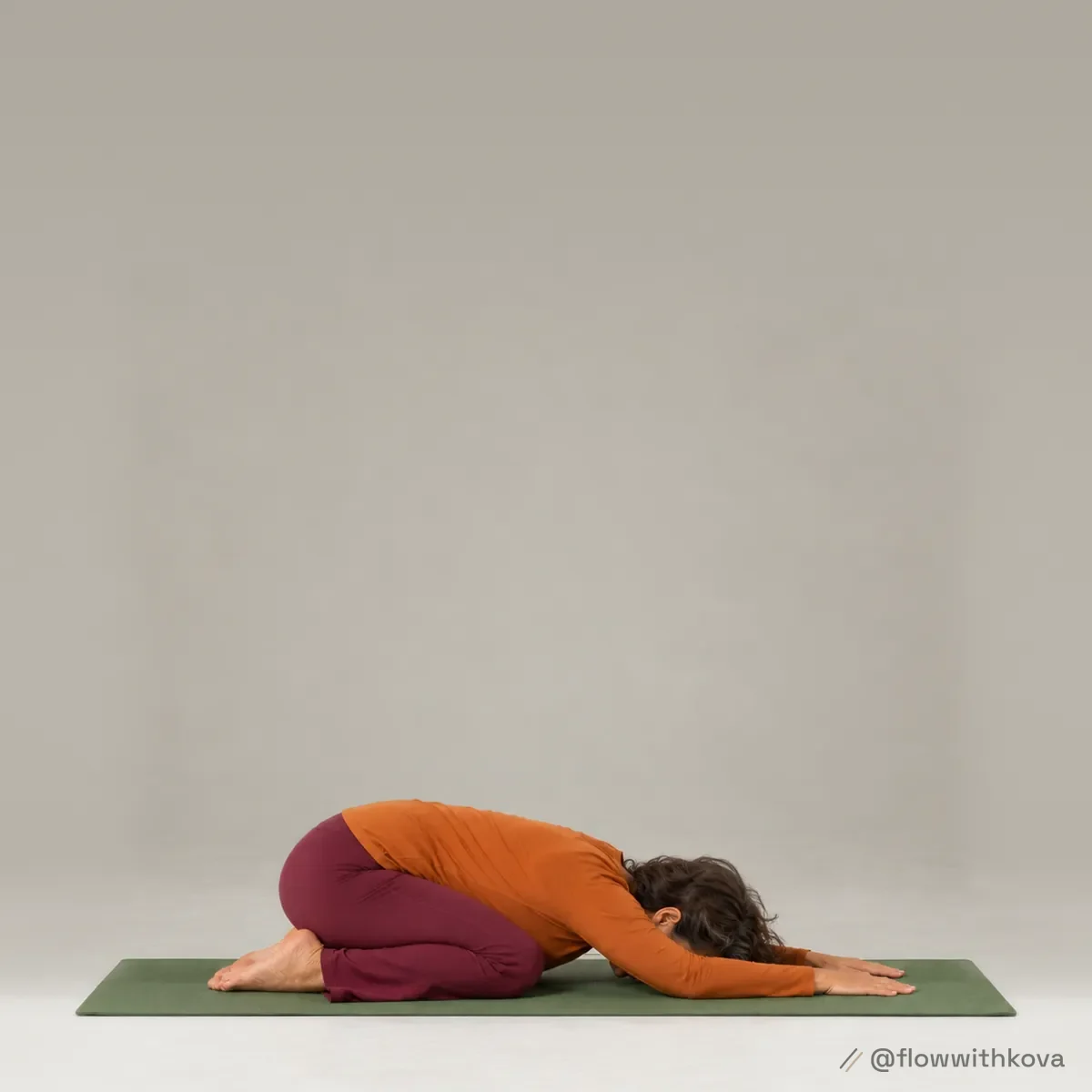
Child's pose
Balasana
Yoga · Beginner
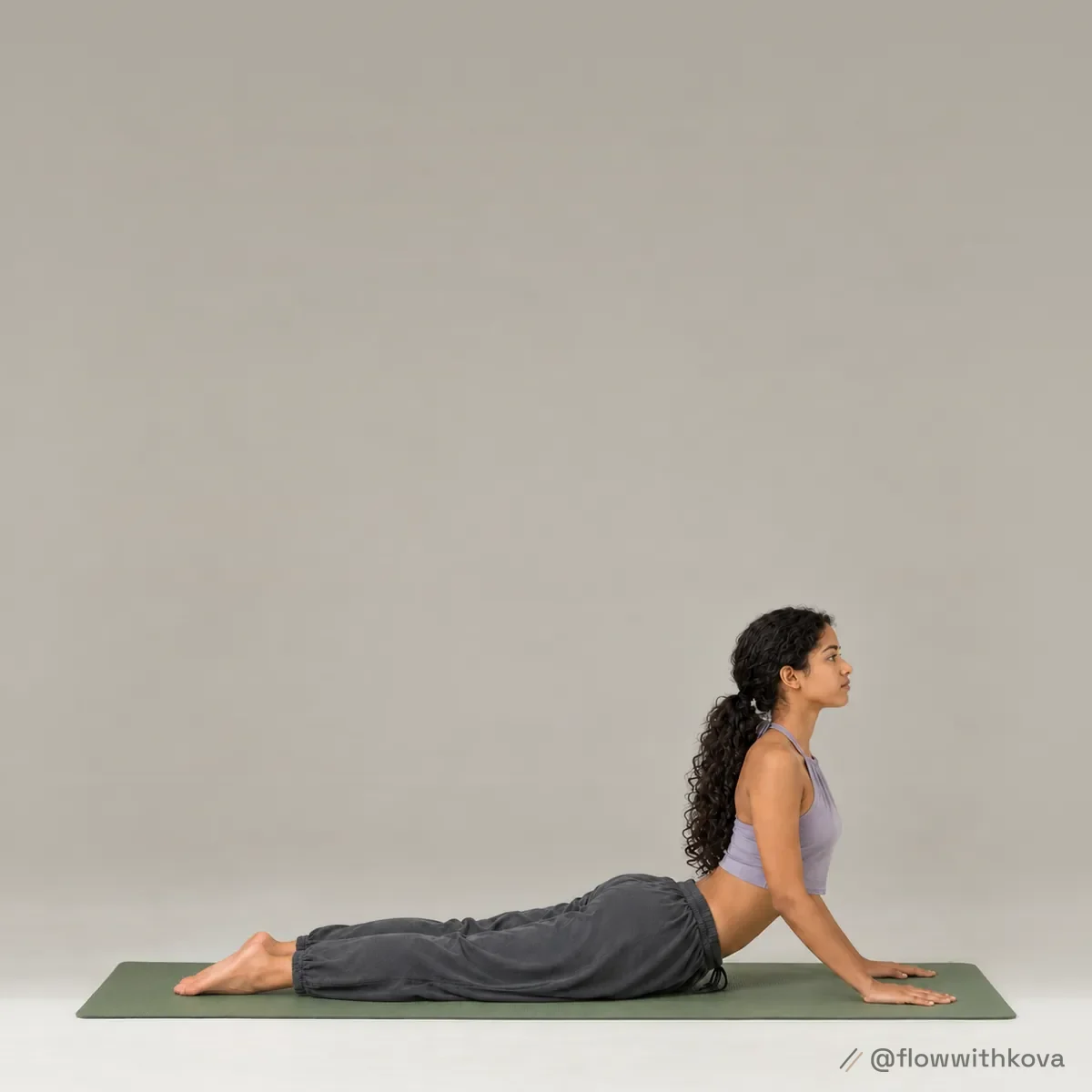
Cobra pose
Bhujangasana
Collections with this pose
From the journal
FormDownward dog mistakes almost every beginner makes
BeginnersBeginner yoga form: how to know if you are doing it right
MobilityYoga for runners: poses for tight calves, hips, and hamstrings
BodyCan't touch your toes? What it means and how to get there
BeginnersHatha, vinyasa, yin: which type of yoga should a beginner try?
BodyWrists hurt in yoga? How to protect them in plank and downward dog
RoutineYoga while traveling: a 15-minute hotel room practice
Practice it
with a coach.
Download Kova on your iPhone or iPad today. It is free to download, and Kova Plus starts with a 3-day free trial for new subscribers.
Download on the App Store