A yoga app for beginners that tells you when it’s right.
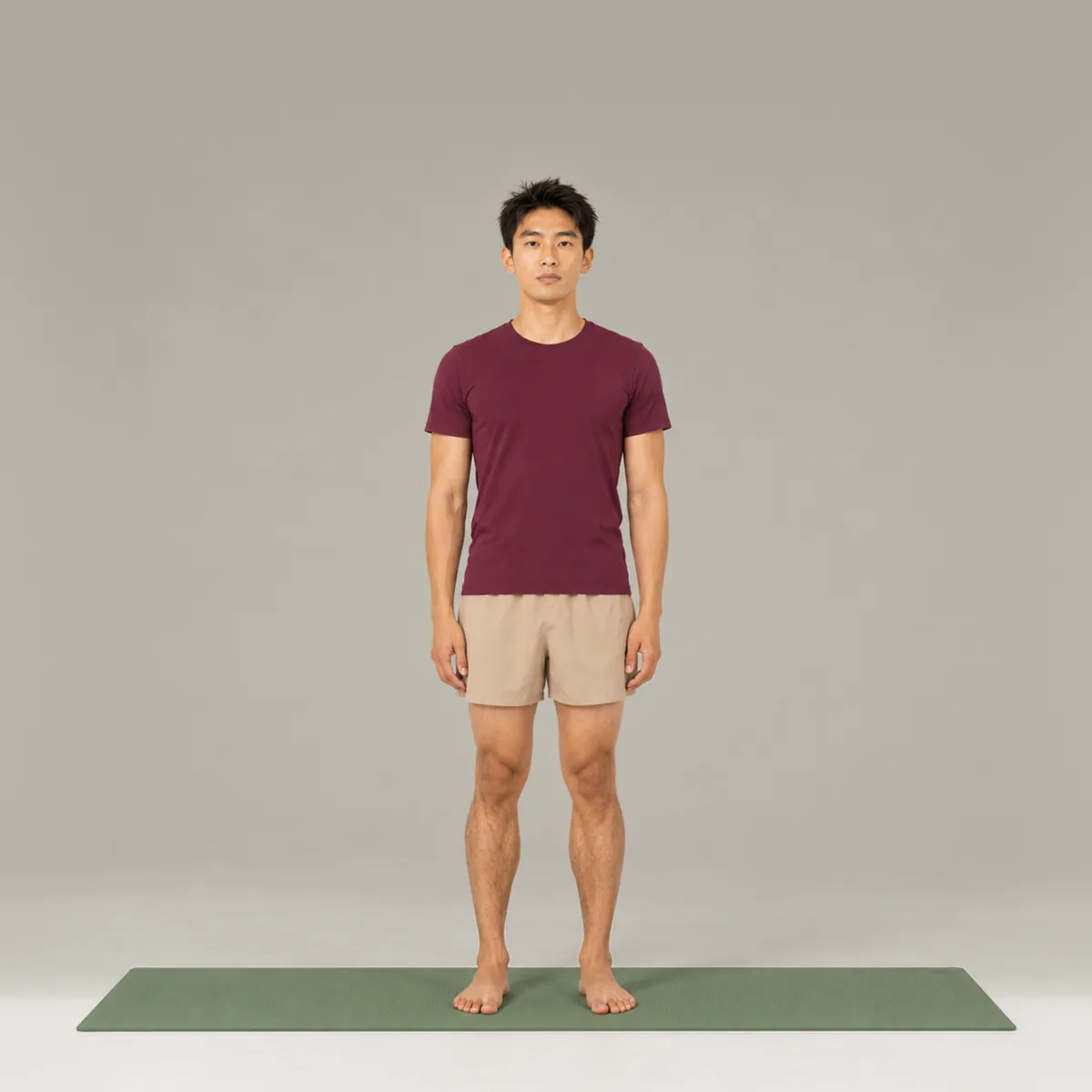
Spread your toes and press evenly through both feet.
You do not need to be flexible, and you do not need fifty poses. You need a dozen shapes done well, sessions short enough to repeat, and someone to tell you when your knee drifts.
Starting Point
Built for people who have never done yoga.
Most beginner videos show the shape and hope you match it. Kova starts with a short intake about your experience, goals, injuries, and available days, then shapes a plan that begins with the foundations and grows slowly.
- Foundational poses before long flows
- Short sessions that fit an ordinary day
- Each class designed for that day, around what you completed
Twelve poses to learn first, and why each one matters.
Most beginner classes and apps are built from the same dozen shapes repeated in different orders. Each of these teaches a skill you will use everywhere else.
Mountain pose
Teaches you how to stand: weight spread through both feet, ribs stacked over hips, and a long neck. Almost every standing pose starts here.
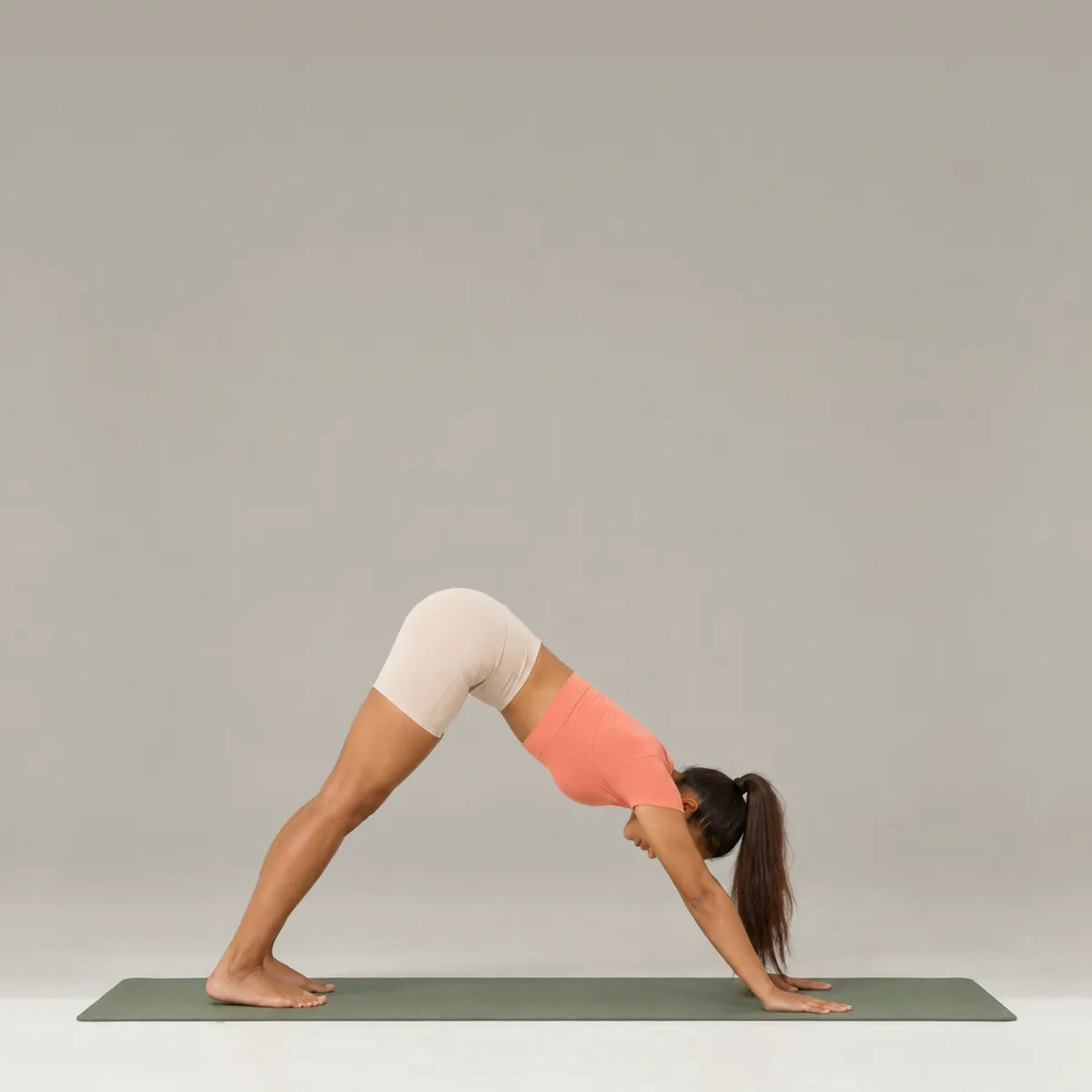
Downward facing dog
The pose you will see most. Learn it with bent knees first so the length goes into your spine instead of forcing your heels down.
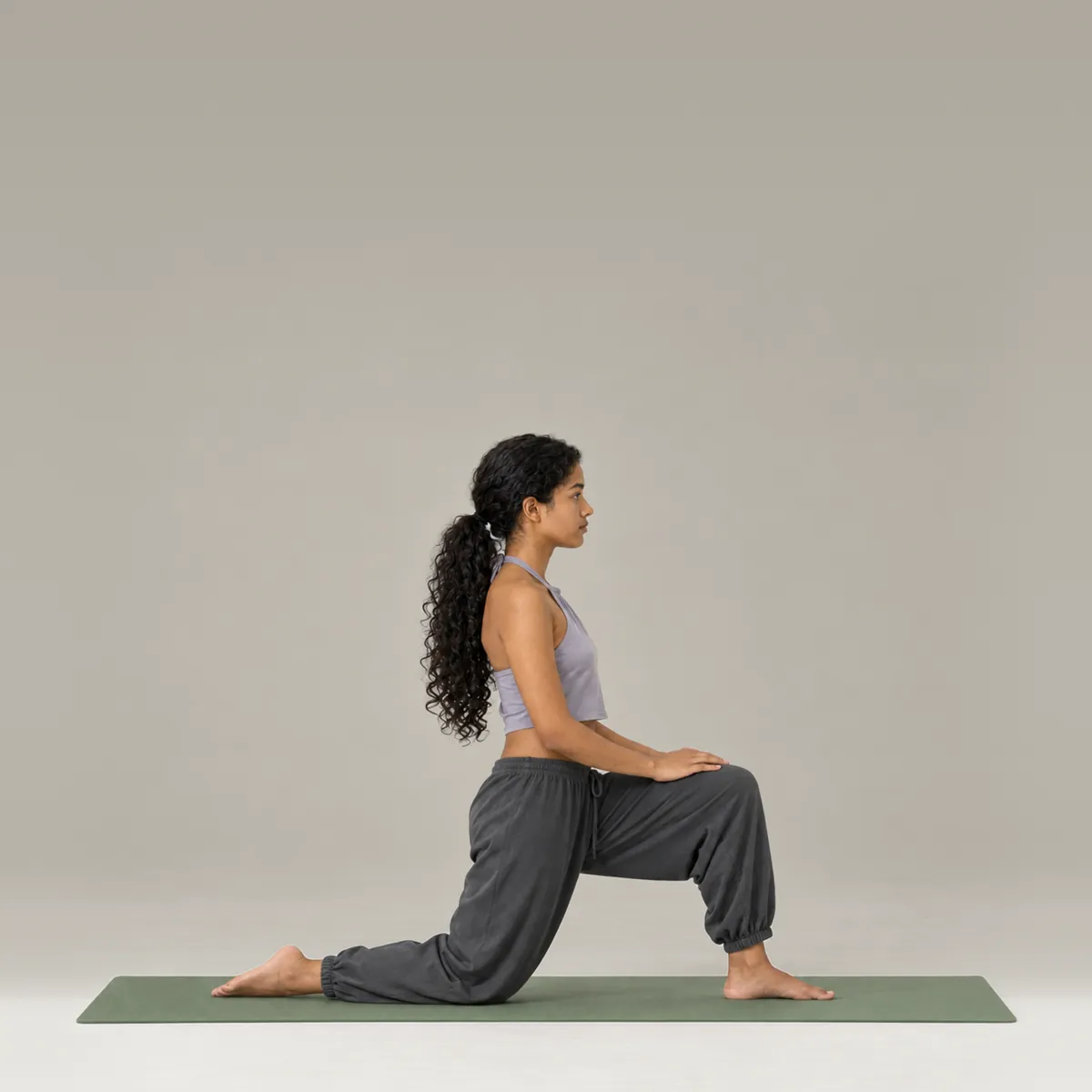
Low lunge
A gentle way to open the front of the hip and learn to keep the front knee over the ankle.
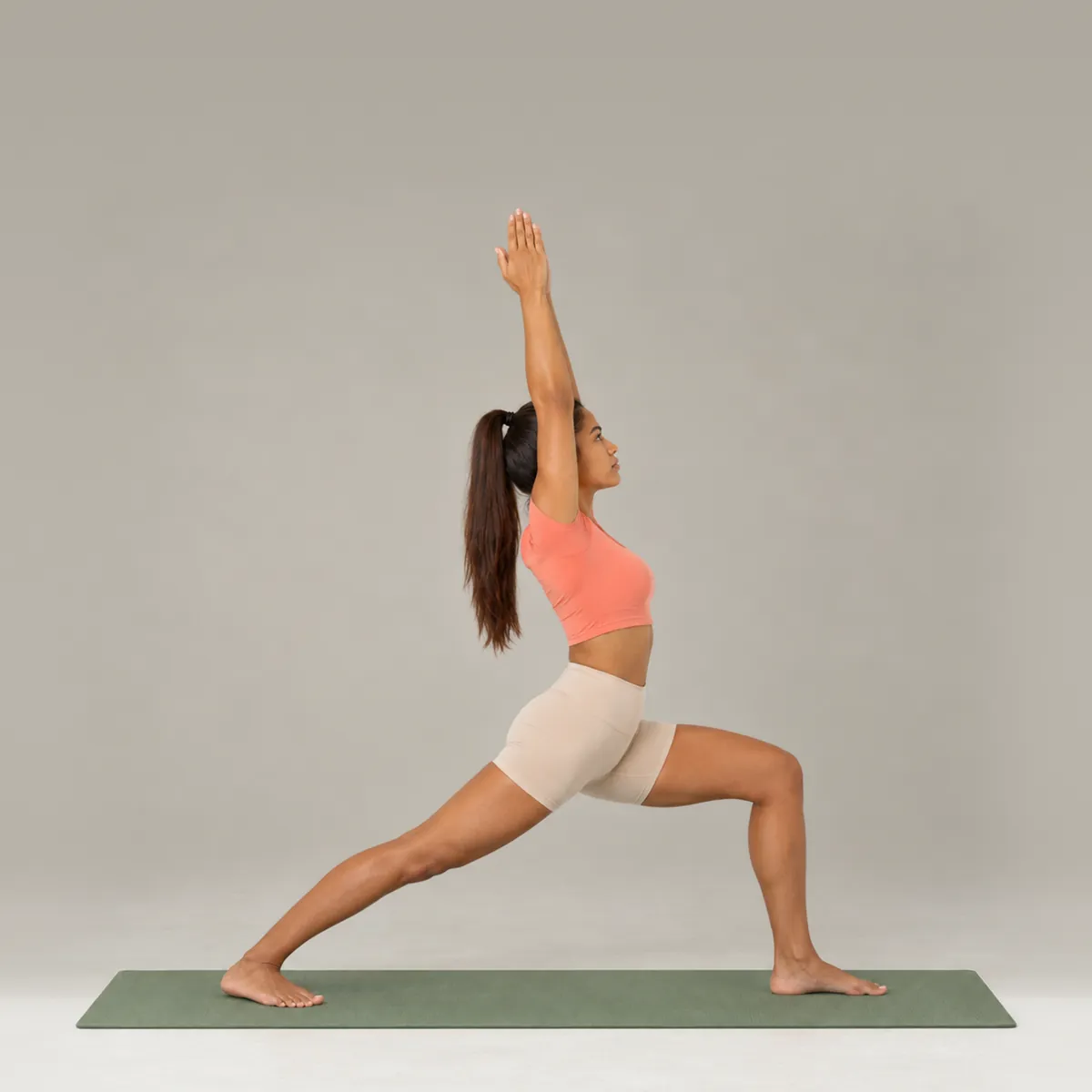
Warrior I
Builds leg strength and teaches a lifted chest with the back heel grounded.
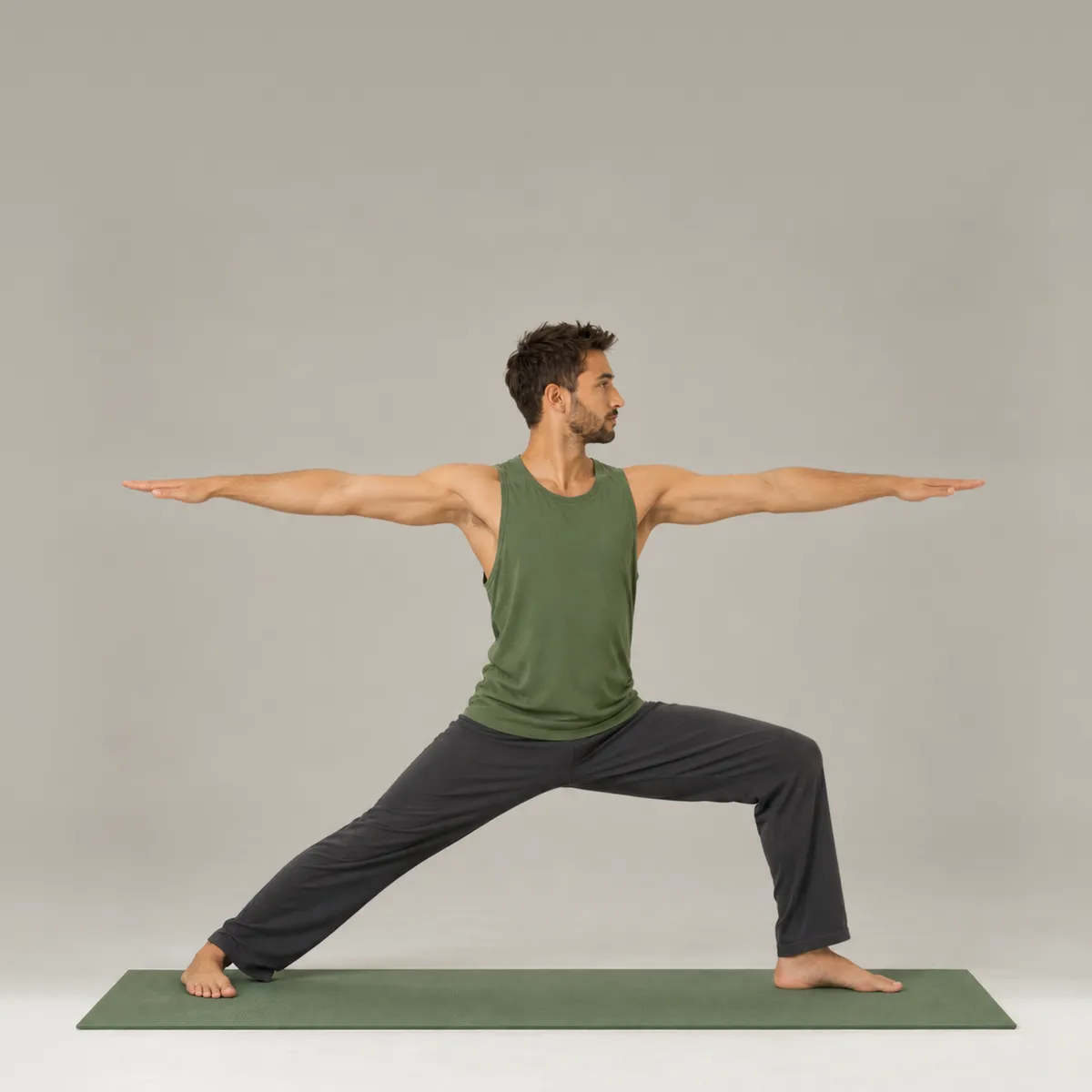
Warrior II
Teaches the open-hip stance used in many standing poses, and the habit of tracking the front knee over the middle toes.
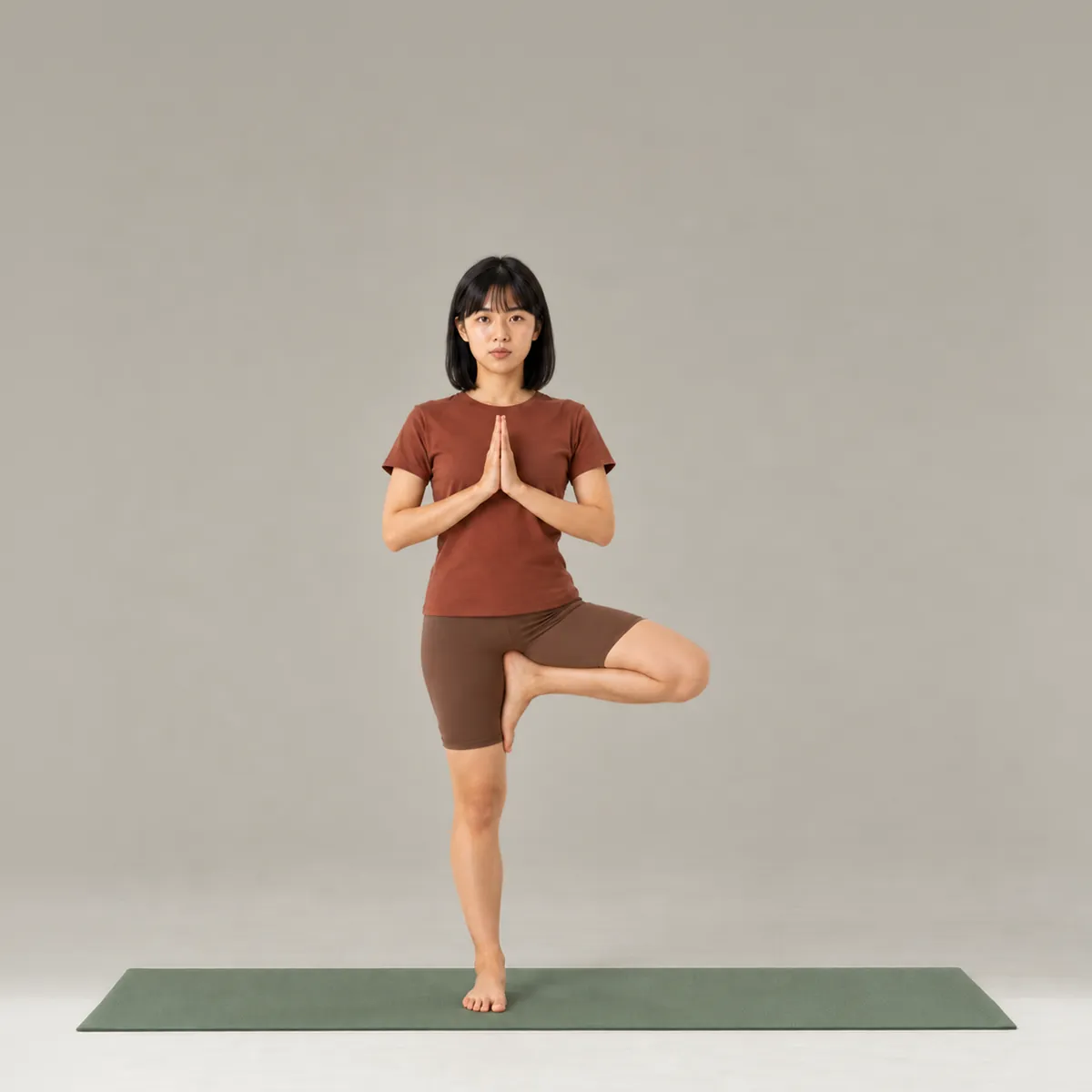
Tree pose
A first balance that rewards focus over flexibility. Place the foot on the calf or thigh, never on the side of the knee.
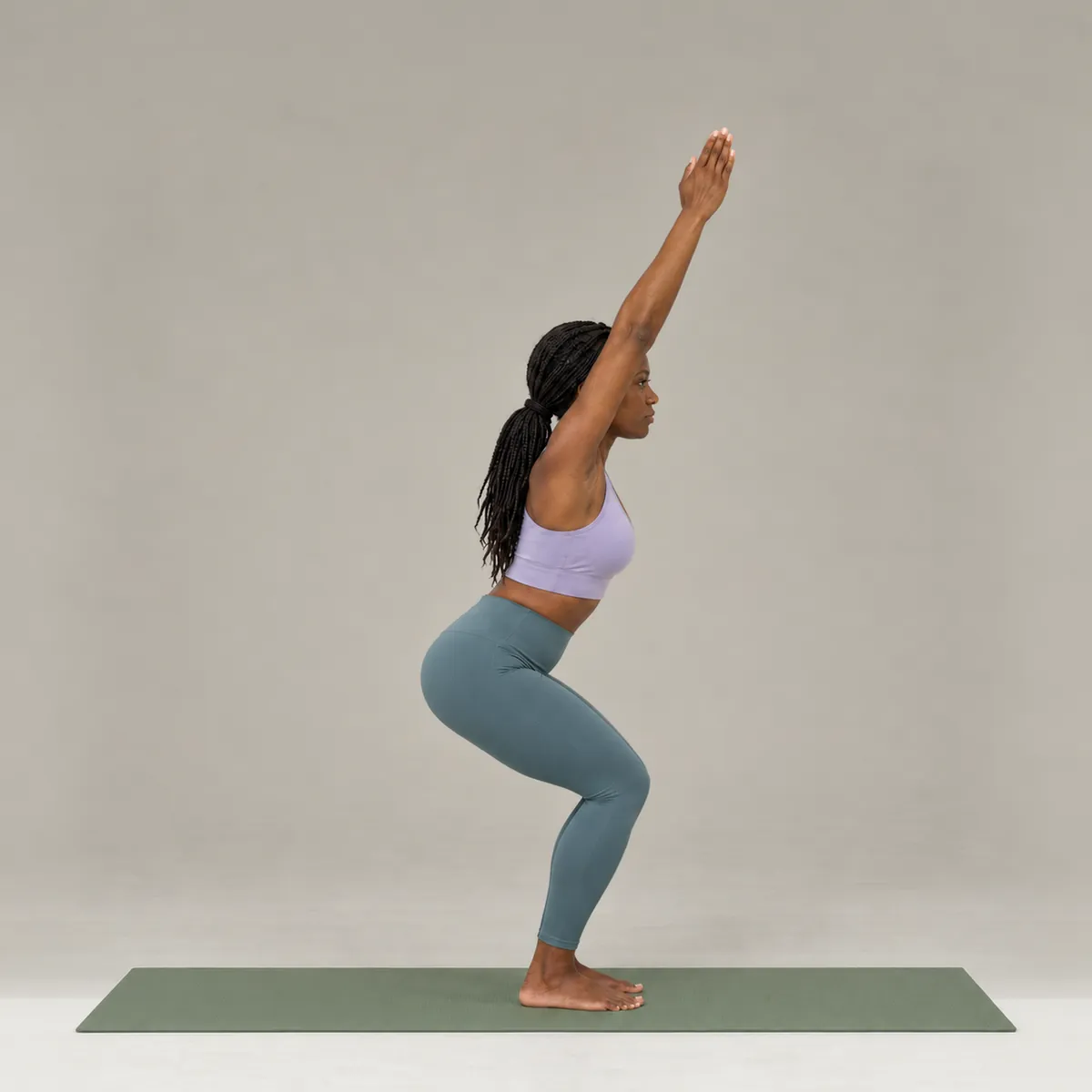
Chair pose
Strengthens the thighs and glutes and shows you how to sit the hips back without letting the knees cave in.
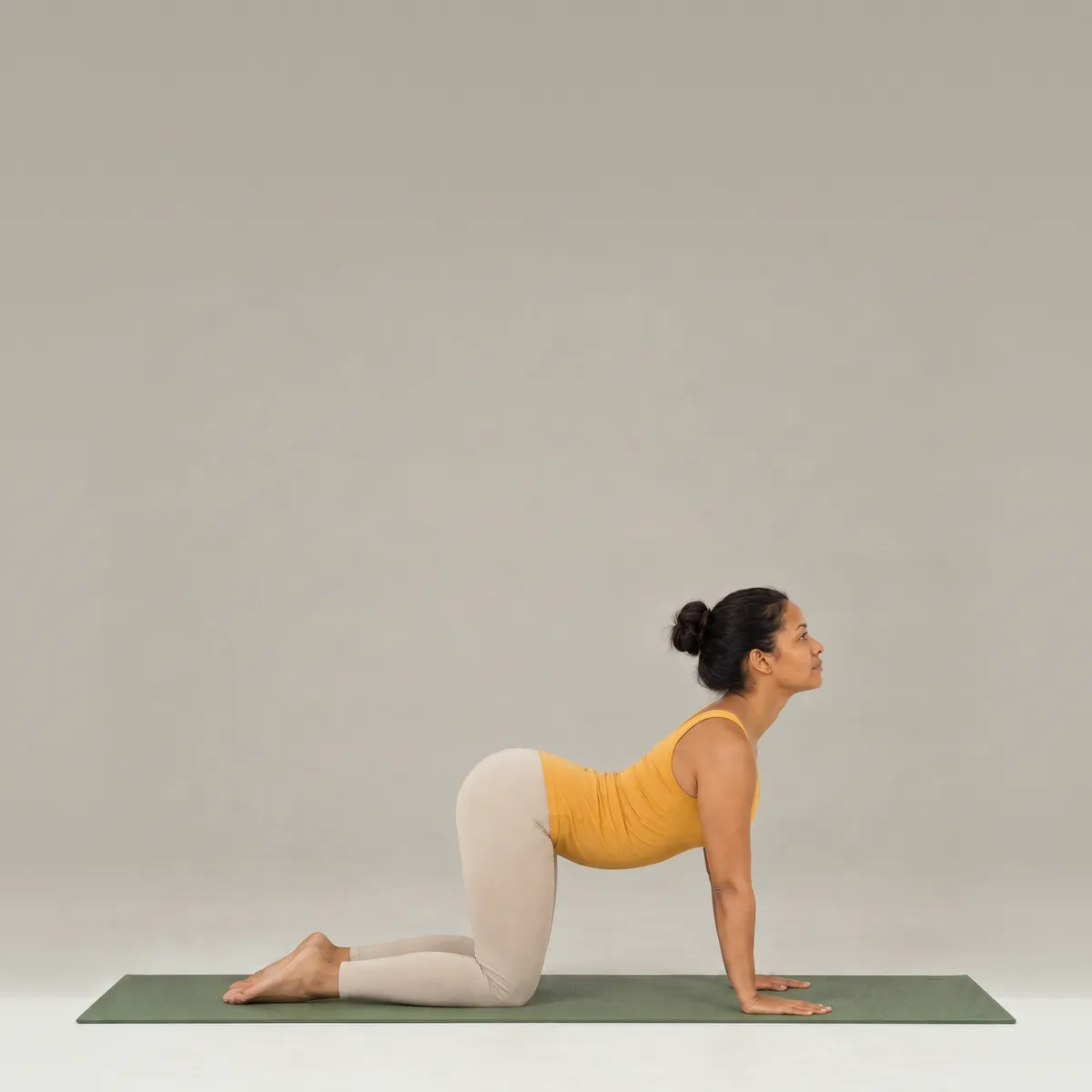
Cat-cow
Moves the spine through flexion and extension with the breath. It is the easiest way to learn breath-led movement.
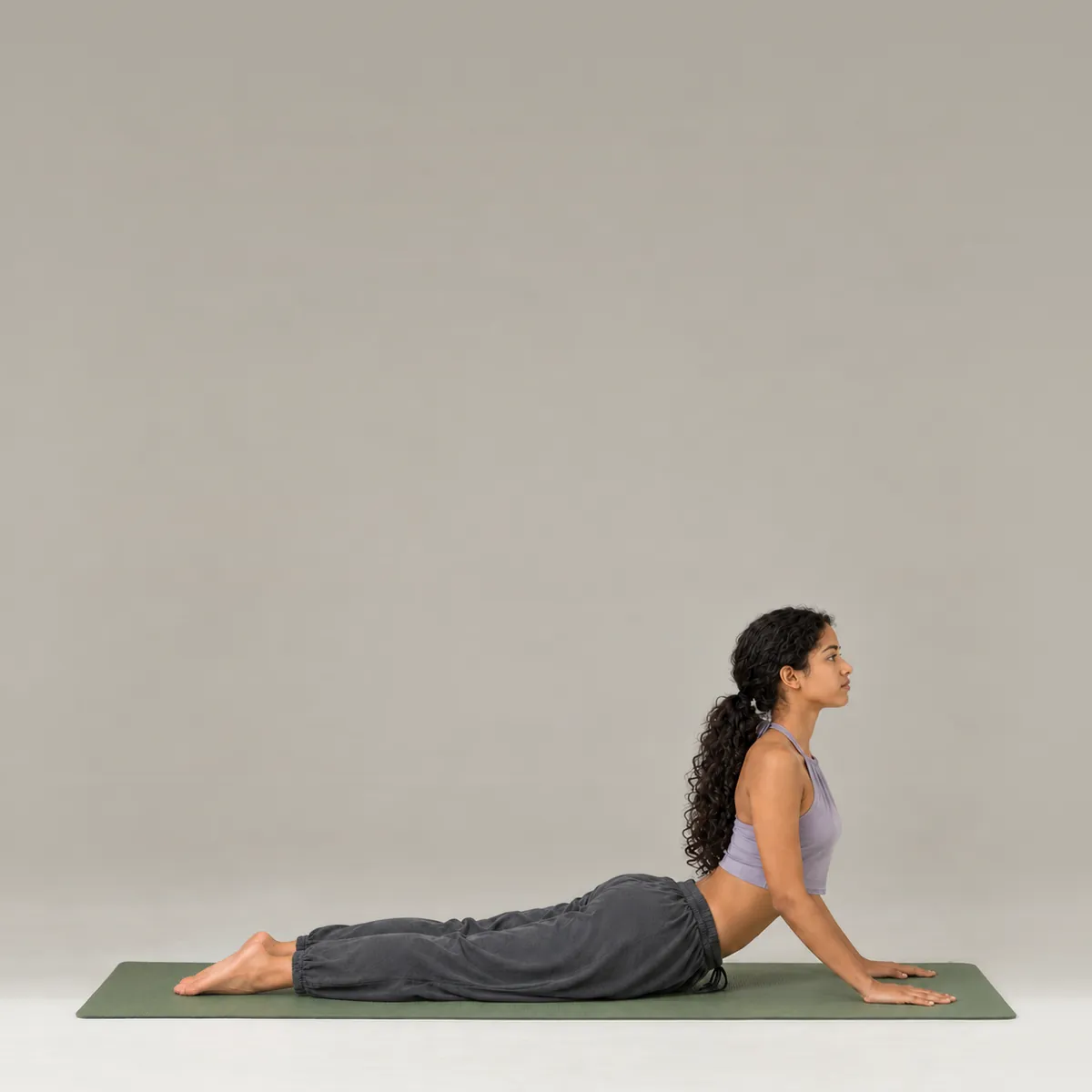
Cobra pose
A low, controlled backbend that strengthens the back. Let the back muscles lift you rather than pushing up with straight arms.
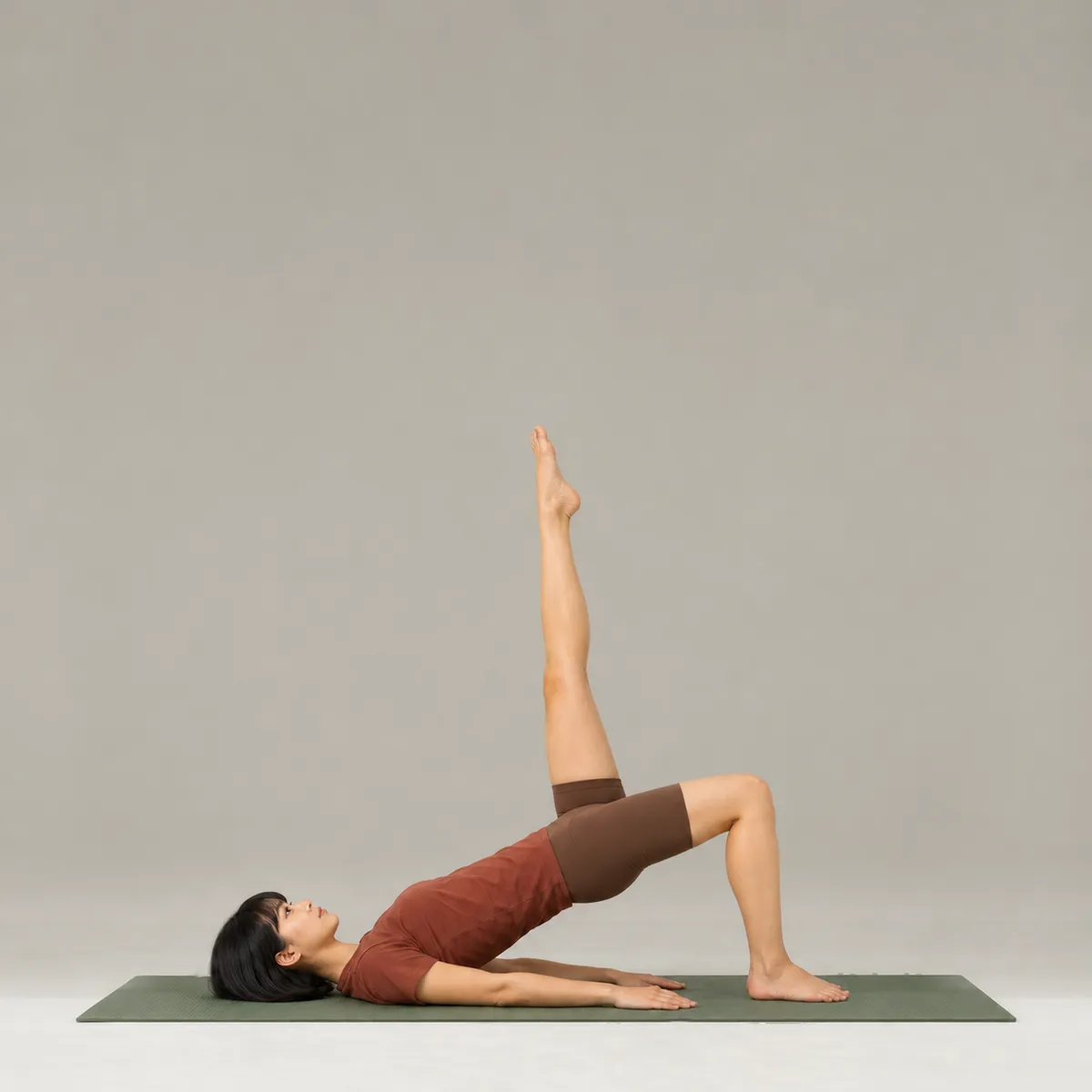
Bridge pose
Wakes up the glutes and hamstrings and opens the front of the hips, all from a stable position on your back.
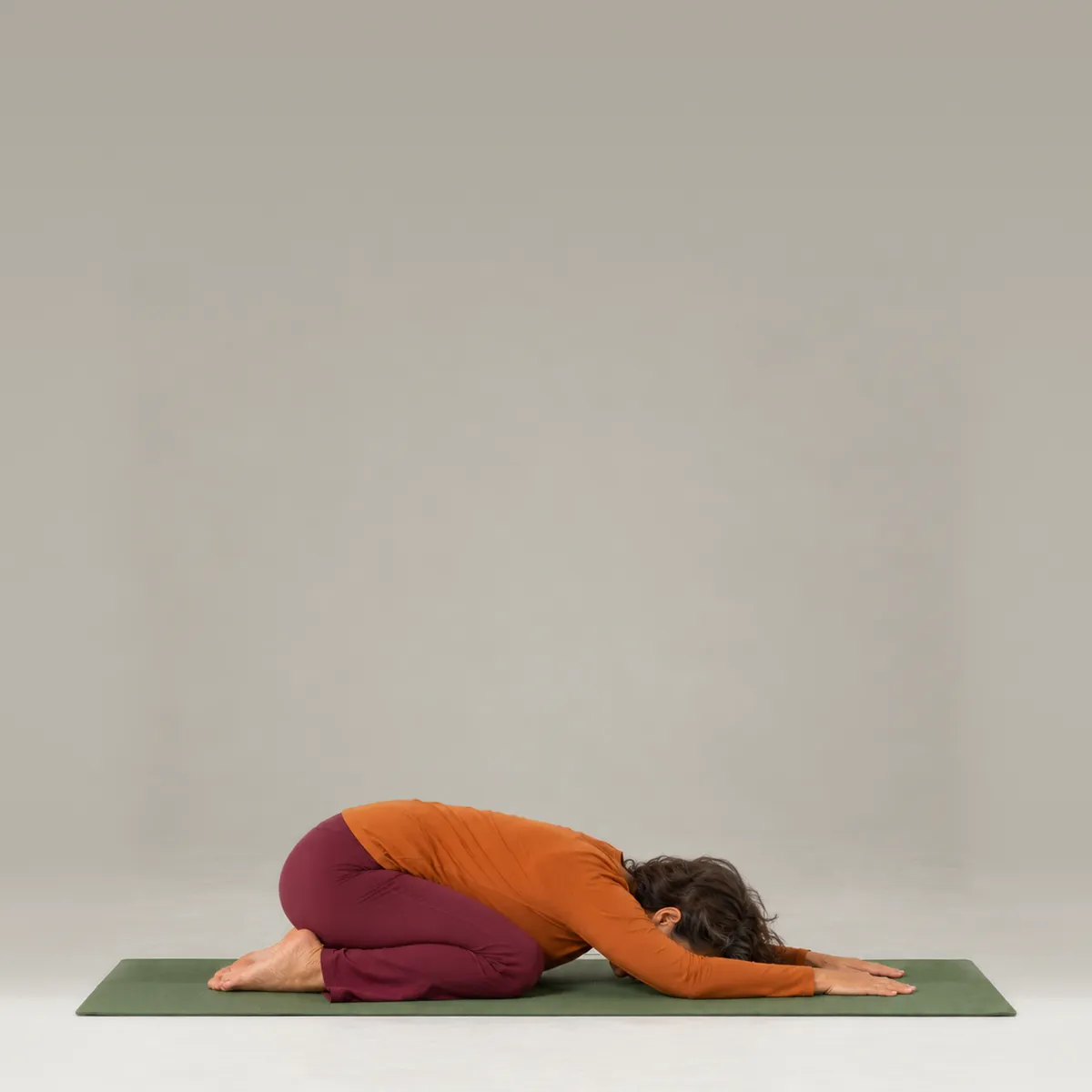
Child's pose
Your resting pose. Come here any time you need to slow your breath, in any class, without asking.
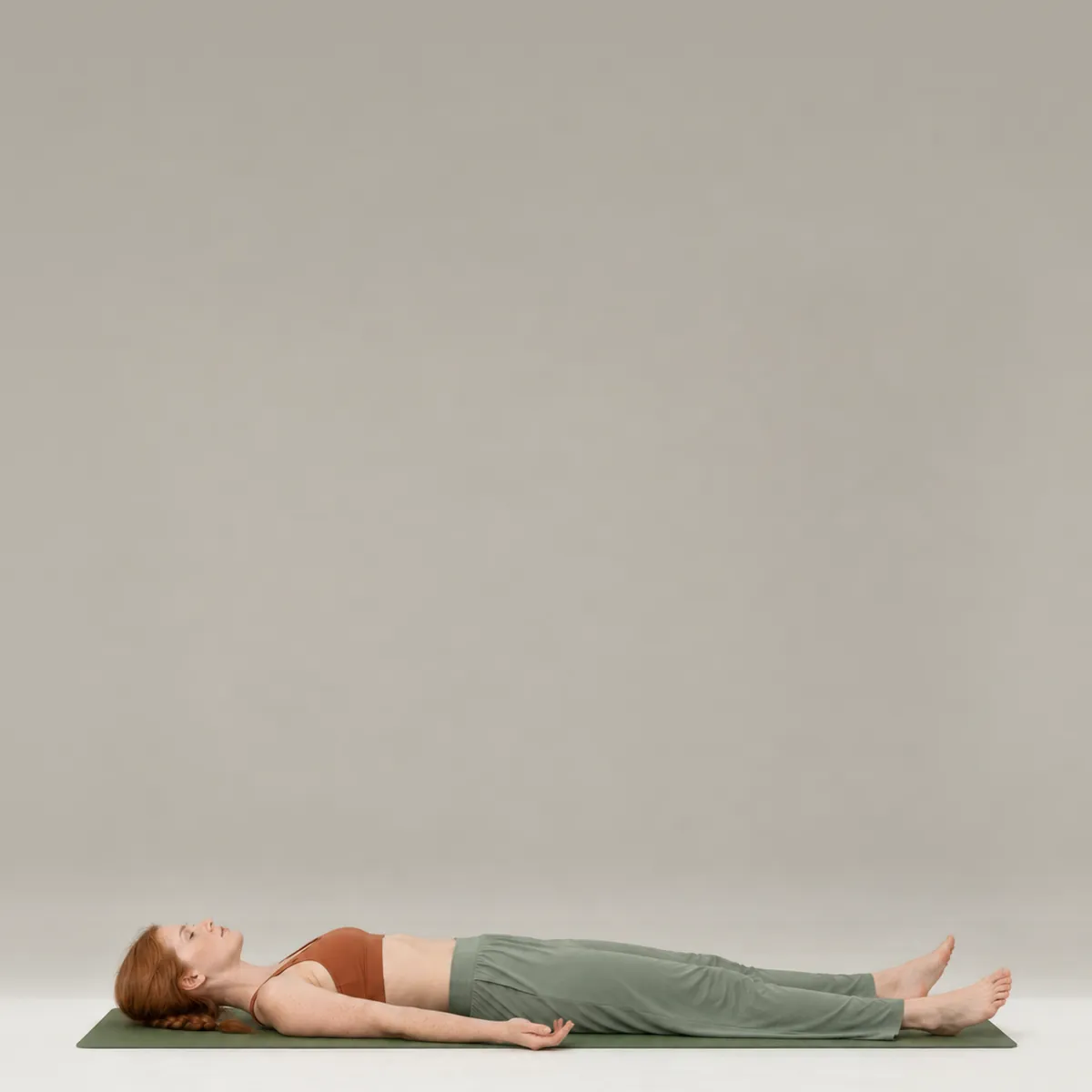
Corpse pose
The final rest. A few minutes of stillness at the end lets your breath and heart rate settle before you get up.
A simple first sequence
A simple first session: start on hands and knees with cat-cow, then press back to downward dog. Step forward into low lunge on each side, then stand up into mountain pose. Move through warrior I and warrior II on each side, balance in tree pose, and strengthen with chair pose. Come to the floor for cobra and bridge, then finish in child's pose and five minutes of corpse pose. Hold each shape for three to five slow breaths.
Day one
What the first session actually feels like.
The hardest part of learning at home is not knowing whether your knee, spine, or shoulders are in the right place. Kova reads your alignment with on-device pose tracking and gives a calm spoken cue at the moment it can still help. When a cue does not make sense, a "Not sure?" demo shows you the shape.
- Before
- A short intake asks about your experience, your goals, any injuries, and the days you can practice. Your plan starts with the foundations.
- Setting up
- Prop your iPhone or iPad 2 to 3 metres from the mat. Kova guides camera placement, so you know it can see you before you move.
- In the pose
- Kova reads your alignment on device and gives one calm spoken cue at a time. A live form score shows when you have found the shape.
- When you are unsure
- If a cue does not make sense, tap “Not sure?” for a quick demo of the shape you are working toward.
- Whenever you need it
- Child’s pose is your rest. Come back to it any time you need to slow your breath, without asking.
- Afterwards
- Kova remembers how the session felt, so a tender day leads to a gentler next one.
A first month that grows slowly.
Short sessions you finish build more than long sessions you dread. Here is a sensible shape for learning yoga at home. Kova plans follow the same idea: gentle foundations first, deeper work as you grow.
Week one
Three sessions of 10 to 15 minutes. Foundations only.
Week two
Three sessions of 15 minutes, adding one standing pose such as warrior II.
Week three
Three or four sessions, linking poses into a short flow with the breath.
Week four
Four sessions. One of them 25 to 30 minutes, the rest short.
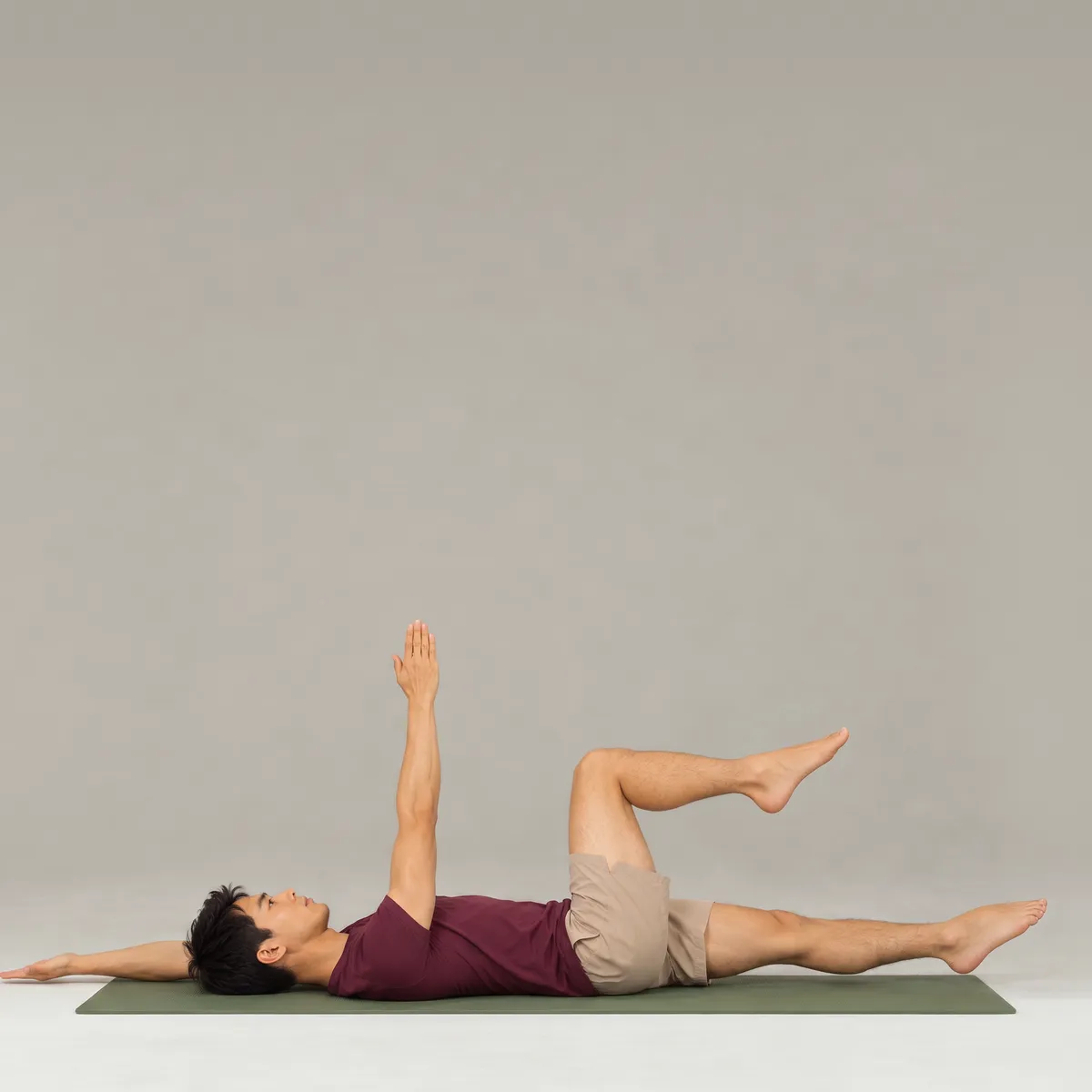
Yoga and Pilates
Strength and mobility in one plan.
Beginner plans blend yoga and pilates, so you build flexibility, core strength, and body awareness together. Kova remembers how each session felt, so a tender day leads to a gentler next one. Your own path of seven stages is shaped by your intake, and each class is designed for that day around what you completed.
Beginner · 10 minutes · 13 poses
Ten minutes, before the day starts.
Ten minutes is enough to change how the rest of your morning feels. This routine moves your spine in every direction, wakes up your legs, and adds a short balance so your attention arrives along with your body.
Cat-cow1 min
Inhale to lift your chest and tailbone, exhale to round. Let the breath lead the movement.
Downward facing dog45 sec
Bend your knees generously and send your hips up and back so your spine stays long.
Low lunge30 sec each side
Keep your front knee over your ankle and let your hips sink forward gently.
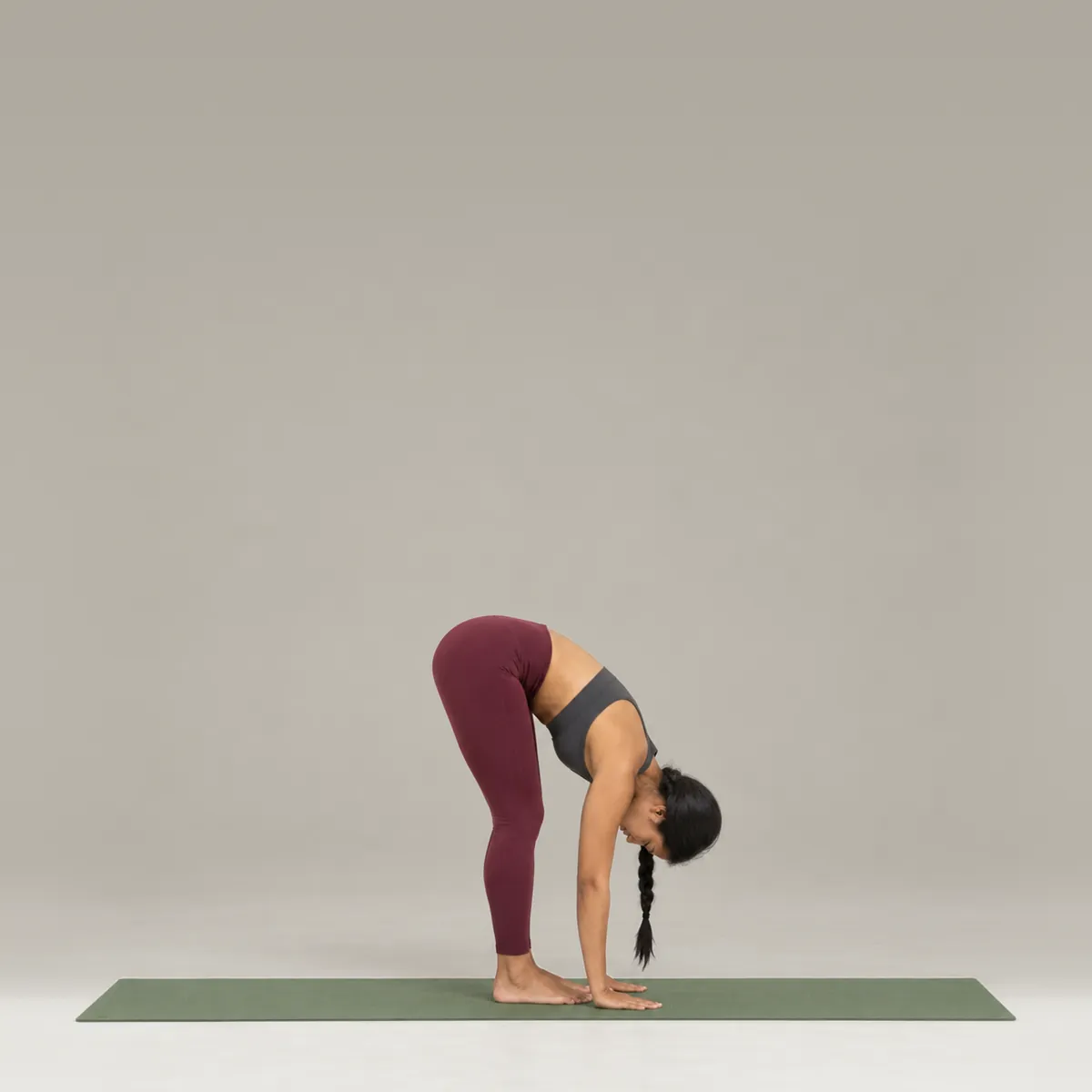
Standing forward fold30 sec
Soften your knees and let your head hang heavy. Sway side to side if it feels good.
Mountain pose30 sec
Press evenly through both feet, stack your ribs over your hips, and take three slow breaths.
Chair pose30 sec
Sit your hips back as if reaching for a chair, keeping your knees in line with your toes.
Warrior II30 sec each side
Track your front knee over your middle toes and reach long through both arms.
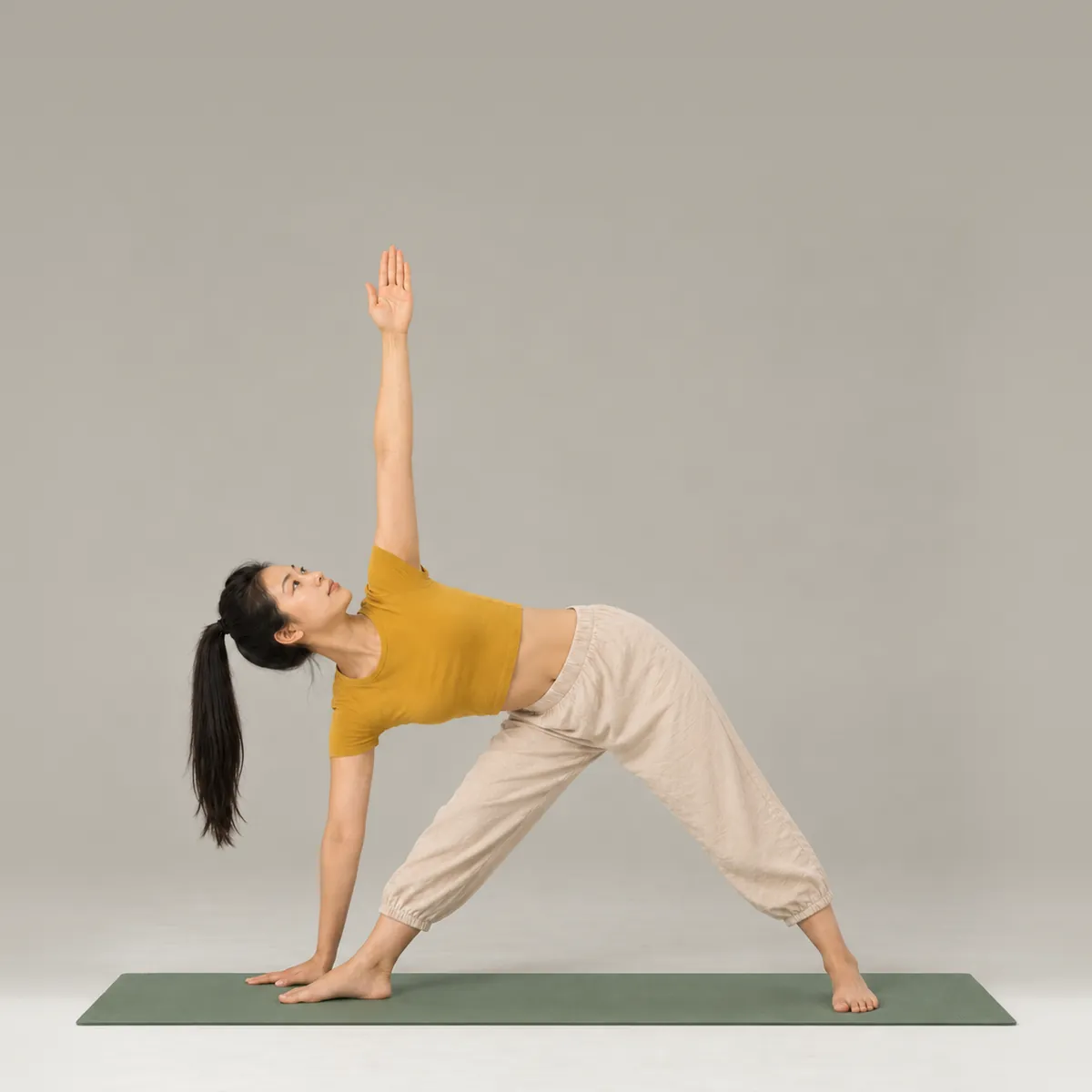
Triangle pose30 sec each side
Lengthen both sides of your waist. Rest your hand on your shin or a block, not your knee.
Tree pose30 sec each side
Place your foot on your calf or inner thigh, never on the side of the knee. Fix your gaze on one point.
Cobra pose30 sec
Let your back muscles lift your chest. Keep your elbows bent and your shoulders away from your ears.
Bridge pose30 sec
Press through your heels and lift your hips, keeping your knees hip width apart.
Child's pose45 sec
Widen your knees, rest your forehead down, and breathe into your back.
Corpse pose1 min
Lie still and let your breath return to its natural rhythm before you get up.
Stiff in the morning? Spend the full minute on cat-cow and keep your knees bent in every fold.
Short on time? Cat-cow, downward dog, low lunge, and warrior II make a solid four-minute version.
Nervous about starting? Most people are.
- “I am not flexible.”
- Flexibility is something practice builds, not an entry requirement. Bend your knees, sit on a folded blanket, and take the smaller range. Kova offers modifications whenever a pose needs support.
- “I will not know if I am doing it right.”
- That is what the cues are for: one at a time, at the moment they can still help, with a live form score and a demo whenever a cue does not land.
- “I would rather not be on camera.”
- Pose tracking runs on your device, and your camera feed is never uploaded and never leaves your iPhone or iPad. You can also switch any session to audio-only mode.
- “I do not have much time.”
- Ten to fifteen minutes is enough at the start. Short sessions you repeat three times a week build more than long ones you dread.
- “What if something hurts?”
- Move within a range that feels like effort, not pain, and skip any pose that causes sharp pain. If you have an injury or a medical condition, check with a clinician before you start.
Free to download. Every practice needs Kova Plus, which starts with a 3-day free trial for new subscribers, then $9.99 a month or $89.99 a year in the US App Store.
See pricingWhat is the best yoga app for beginners?
Can I learn yoga at home with an app?
Do I need to be flexible to use Kova?
How much does Kova cost?


Start with
the foundations.
Download Kova on your iPhone or iPad today. It is free to download, and Kova Plus starts with a 3-day free trial for new subscribers.
Download on the App Store