Seated forward fold
Paschimottanasana
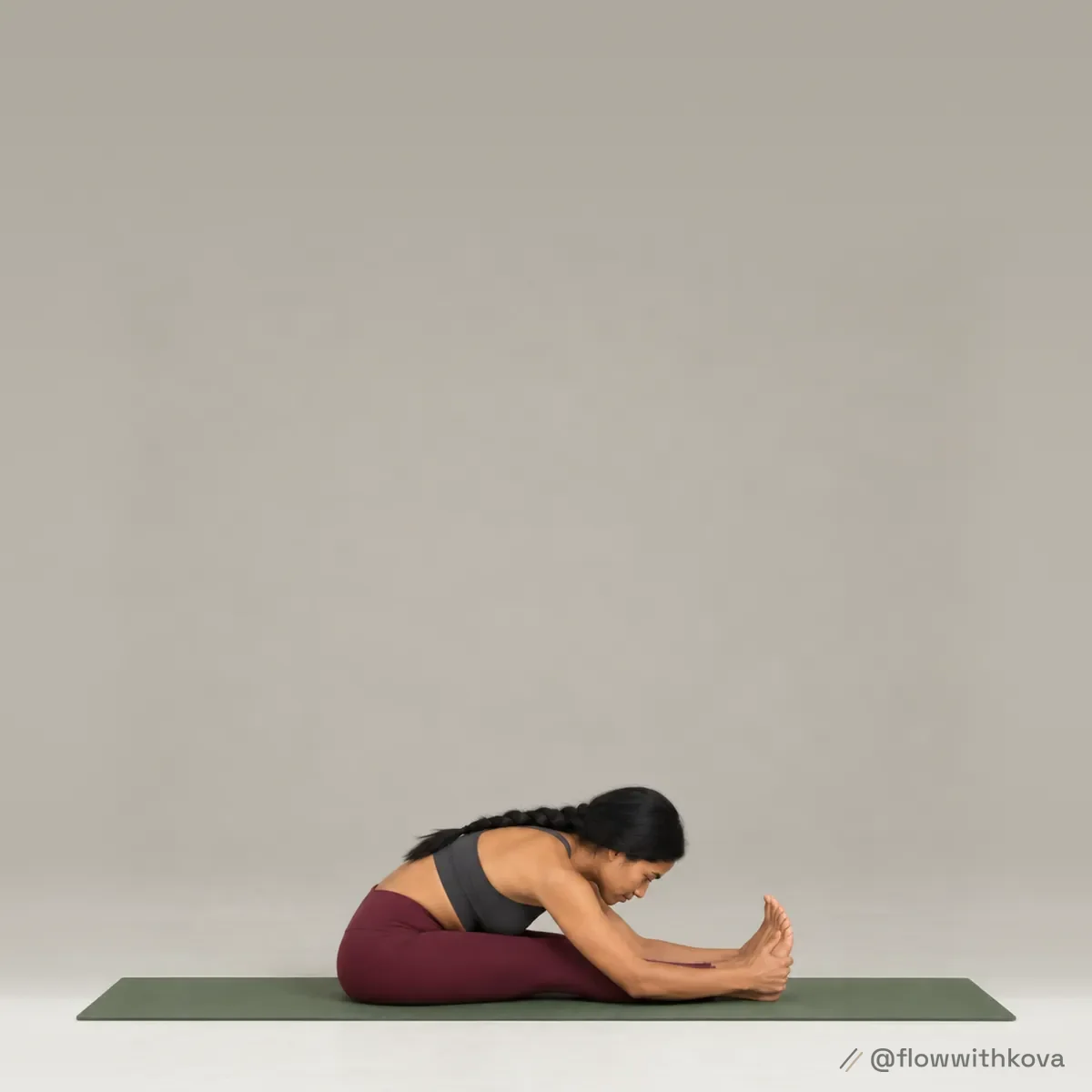
Seated forward fold is a classic stretch for the back of the legs and the spine. It is easy to chase your toes and round hard through the back, so good form focuses on folding from the hips with a long spine. Bent knees and props are welcome, and they often make the pose feel better.
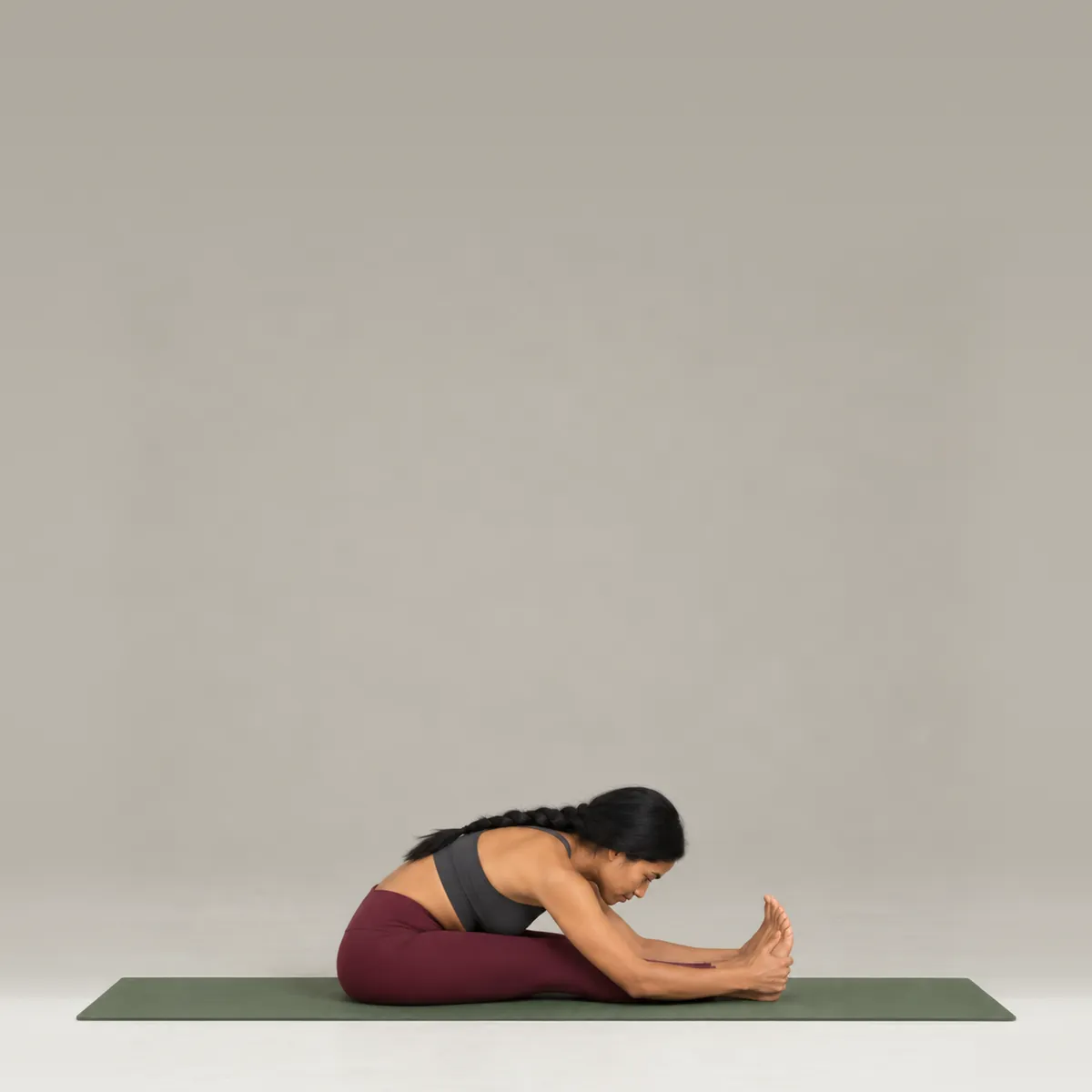
Knees bend as much as needed.
How to do Seated forward fold
Read each step once before you try it. Move slowly, and come out of the pose whenever your breath gets short.
- Level
- Beginner
- Discipline
- Yoga
- Works
- Hamstrings, Back, Calves
- Family
- Floor and seated poses
- Also called
- Seated toe touch
- 01
Sit on your mat with your legs straight out in front of you and your feet flexed.
- 02
Sit on a folded blanket if your lower back rounds or your pelvis tips back.
- 03
Inhale and lengthen your spine, reaching the crown of your head toward the ceiling.
- 04
Exhale and hinge forward from your hips, keeping your chest open.
- 05
Rest your hands on your shins, ankles, or feet, wherever they reach without strain.
- 06
Bend your knees as much as you need so the stretch stays in the hamstrings rather than the back.
- 07
Hold for five to ten breaths, then inhale and roll up slowly.
Form checklist
What good form looks like.
Once you are in the pose, check these one at a time. If one slips, ease off a little until it comes back.
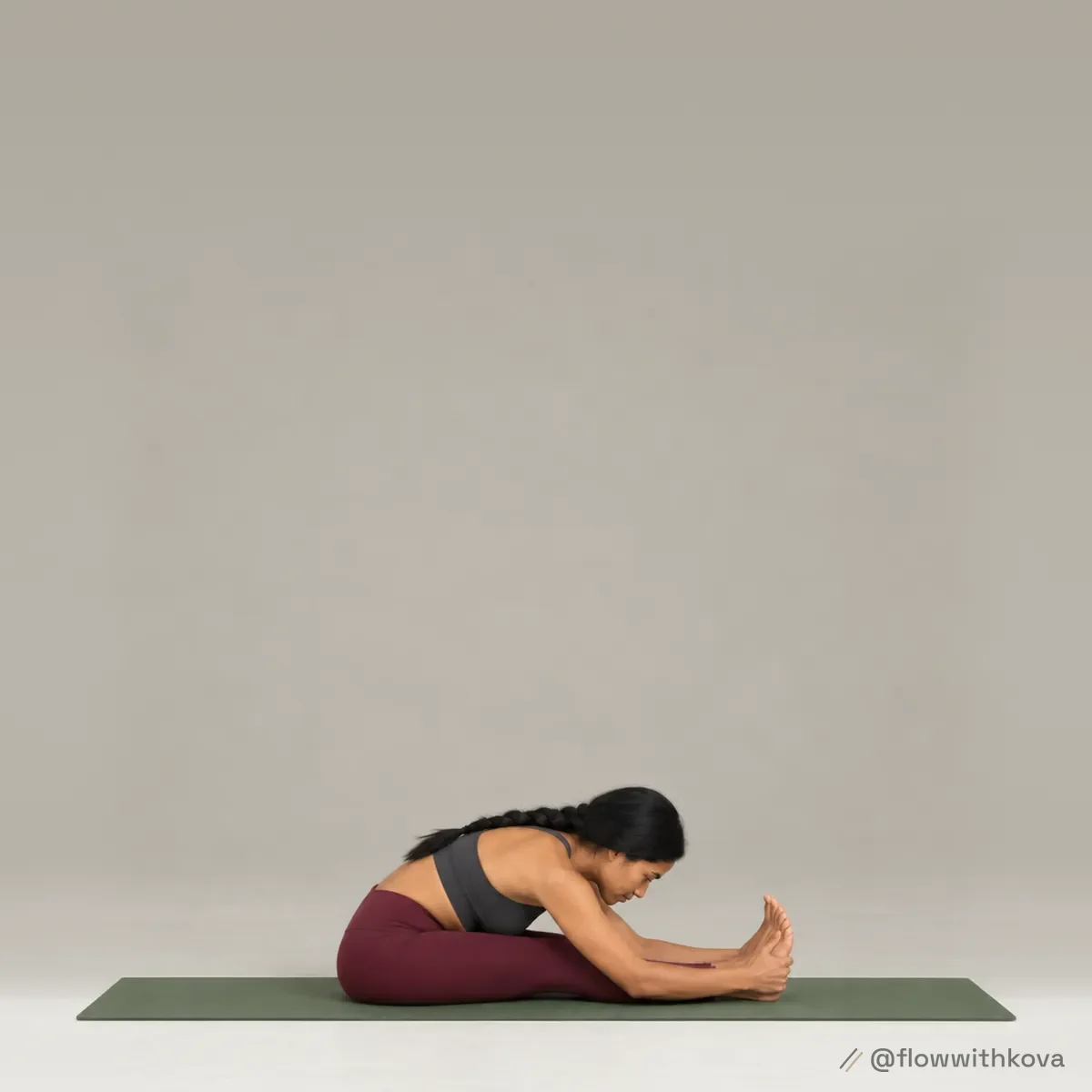
- 01Fold starts at the hips, not the waist.
- 02Spine stays long before it rounds.
- 03Knees bend as much as needed.
- 04Shoulders and neck stay soft.
- 05Feet are flexed with toes pointing up.
Common mistakes and how to fix them.
Most of these are hard to feel from the inside, so check them one by one.
- 01
The back rounds hard to reach the toes.
The fix
Bend your knees, sit on a folded blanket, and fold only as far as your spine stays long.
- 02
The hands pull the body down.
The fix
Rest your hands lightly and let gravity and breath do the work instead of tugging on your feet.
- 03
The pelvis tips back so you sit on your tailbone.
The fix
Raise your hips on a blanket or block until you can sit tall on your sit bones.
- 04
The shoulders creep up around the ears.
The fix
Soften your shoulders down your back and let your head hang naturally from a long neck.
Modifications for your body
Easier and supported ways into the pose.
- Sit on a folded blanket to help your pelvis tip forward.
- Bend your knees and rest your belly on your thighs.
- Loop a strap around your feet and hold it with long arms.
- Place a bolster on your legs and rest your chest on it for a restorative version.
Benefits over time
What regular practice of this pose can help with.
- Stretches the hamstrings and calves.
- Lengthens the muscles along the back.
- Encourages a calm, inward focus.
- Builds awareness of hinging from the hips.
Breath
Inhale to lengthen your spine and exhale to fold a little deeper. Keep the breath slow and avoid holding it to force the stretch.
Take care
Take care with lower back or hamstring injuries, and keep your knees bent if your back feels strained. Stop if you feel sharp pain. Kova is not a medical device and does not diagnose injuries.
By Fayeed PawaskarUpdated
Use this photo
This photo is free to use on your blog, in articles, newsletters, and class handouts. Keep the credit link to Kova. Image use terms
Download photo (WebP, 1200 x 1200)<figure>
<a href="https://www.flowwithkova.com/poses/seated-forward-fold"><img src="https://www.flowwithkova.com/pose-photos/seated-forward-fold.webp" alt="A woman in a seated forward fold on a green yoga mat, legs extended and hands reaching for her feet" width="1200" height="1200" loading="lazy" style="max-width:100%;height:auto"></a>
<figcaption>Seated forward fold (Paschimottanasana). Photo: <a href="https://www.flowwithkova.com/poses/seated-forward-fold">Kova pose library</a></figcaption>
</figure>Practice with Kova
Get cued while you hold it.
Kova uses on-device pose tracking to see whether you are hinging from your hips or rounding through your upper back. If your back curls forward to chase your toes, a calm cue suggests bending your knees and lengthening first.
- Pose tracking runs on your device. Your camera feed is never uploaded and never leaves your iPhone or iPad.
- Prefer no camera? Every session has an audio-only mode.
- Free to download on iPhone and iPad. Kova Plus starts with a 3-day free trial for new subscribers.
Seated forward fold questions
Back to the pose libraryIs it okay to bend my knees in a seated forward fold?
What if I cannot touch my toes in seated forward fold?
How long should I hold seated forward fold?
Related poses
All 79 poses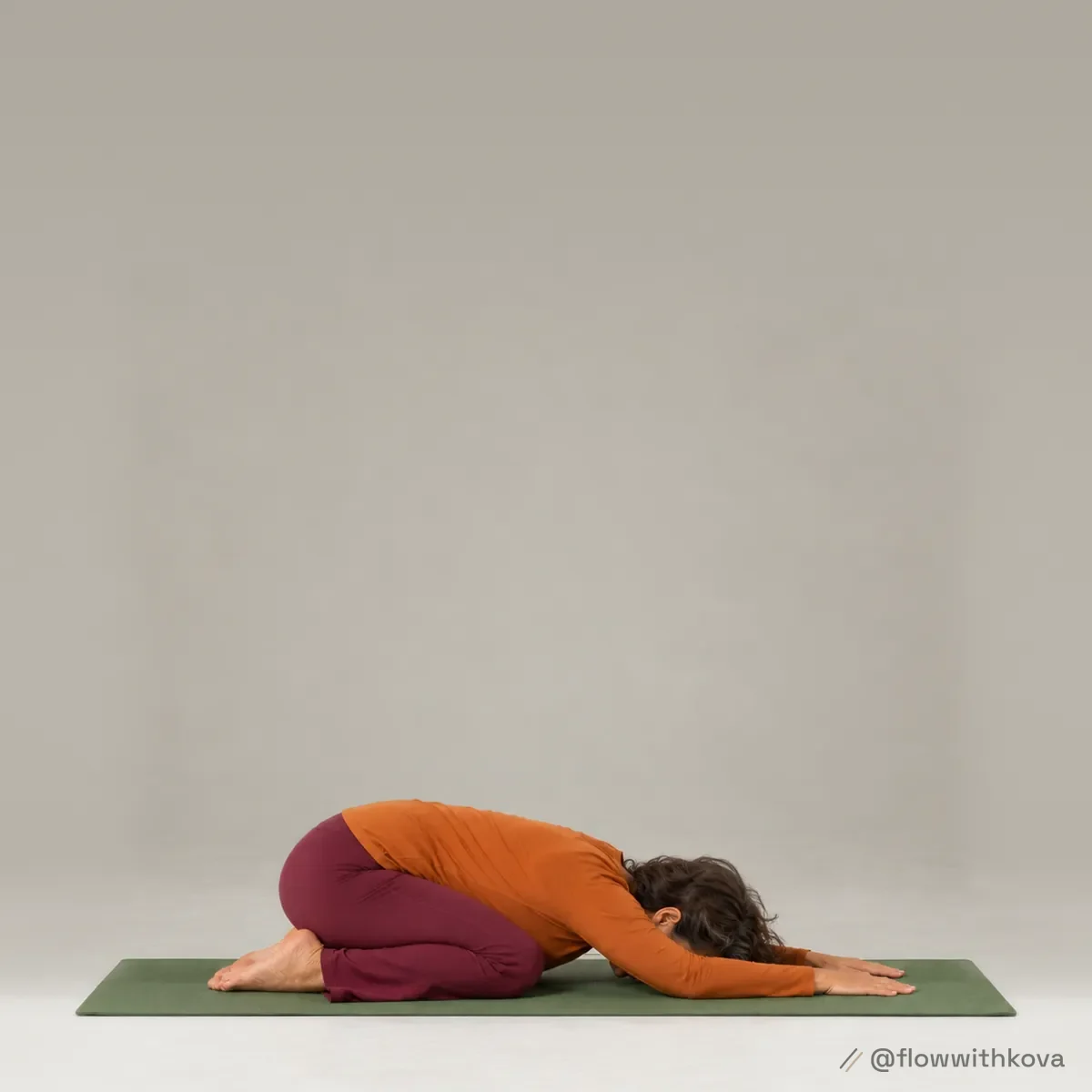
Yoga · Beginner
Child's pose
Balasana
Yoga · Beginner
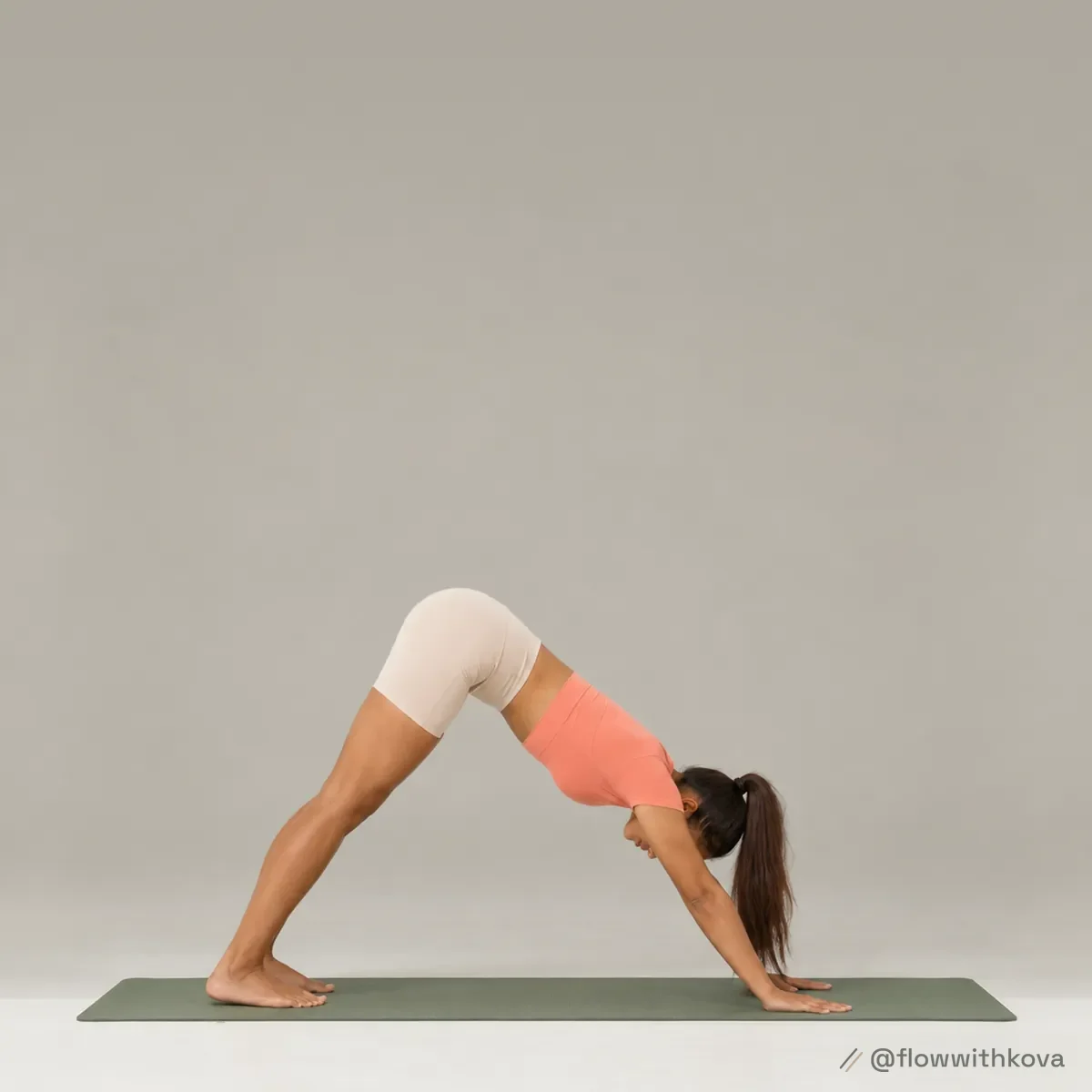
Downward facing dog
Adho Mukha Svanasana
Yoga · Beginner
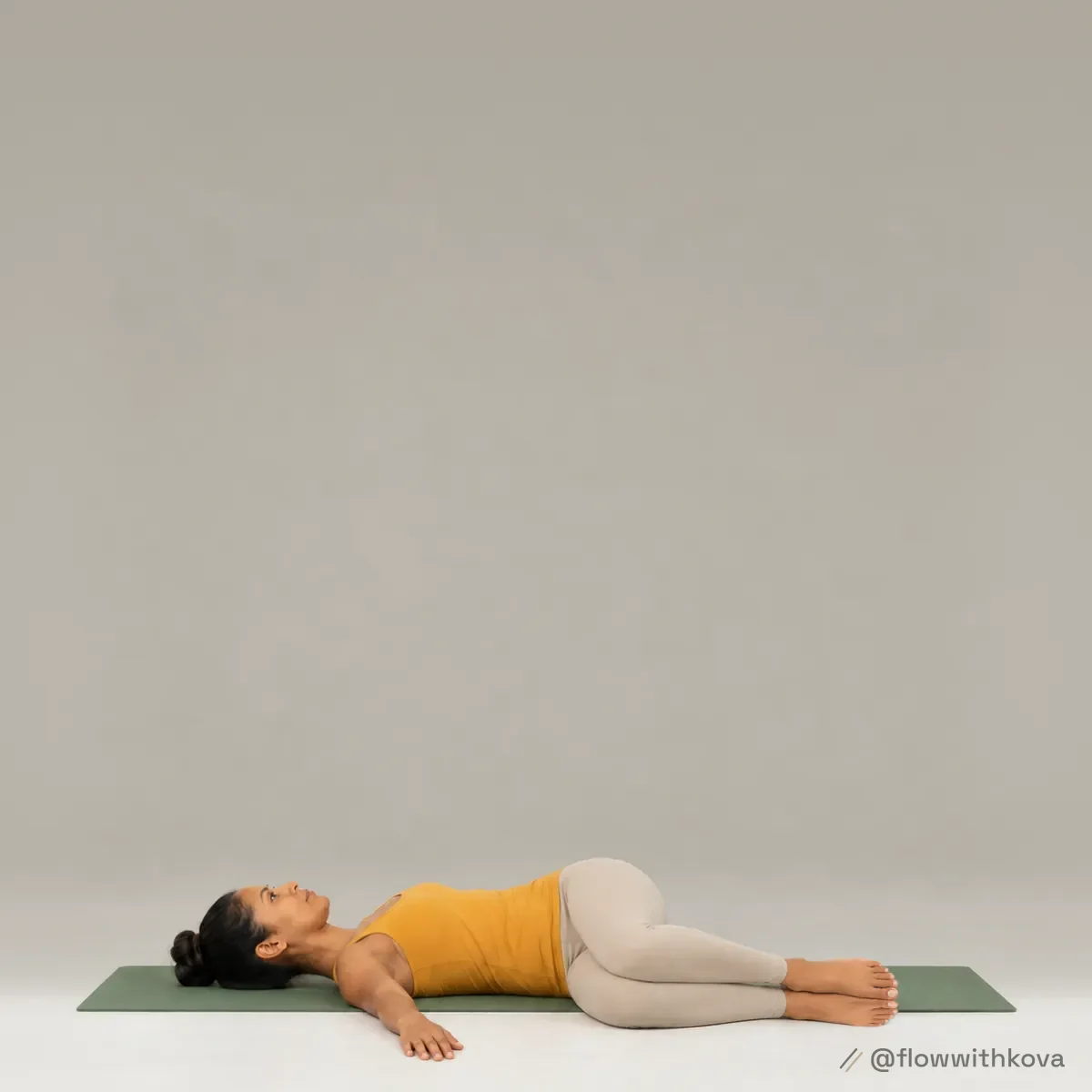
Supine twist
Supta Matsyendrasana
Collections with this pose


Practice it
with a coach.
Download Kova on your iPhone or iPad today. It is free to download, and Kova Plus starts with a 3-day free trial for new subscribers.
Download on the App Store