Restorative yoga poses for deep rest
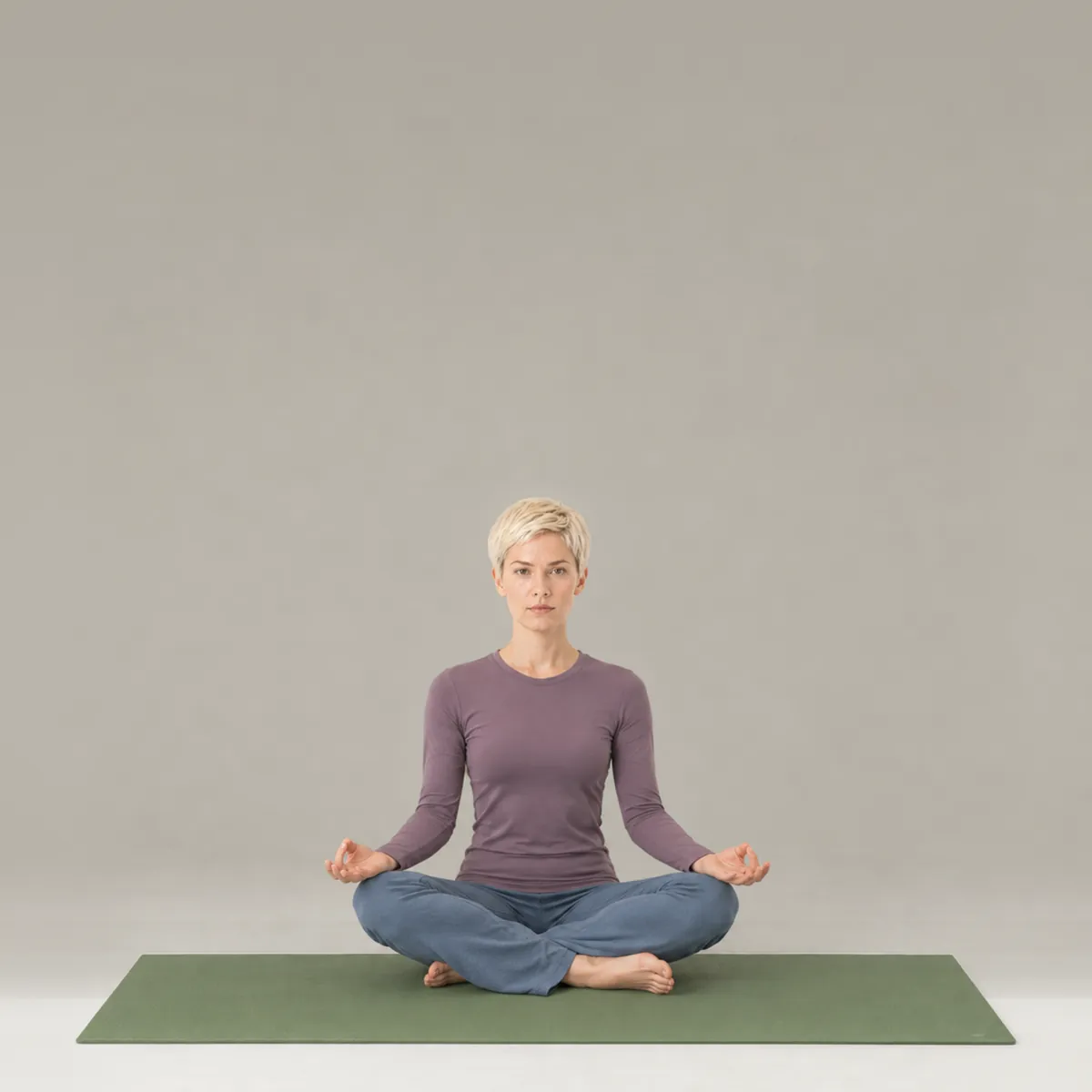
Restorative yoga poses are gentle, fully supported shapes that you hold for several minutes, with cushions, blankets, or a wall taking your weight so your muscles can stop working. The aim is rest rather than stretch: a slower breath, softer muscles, and a quieter mind.
Because each hold is long, comfort matters more than depth. Use more support than you think you need, and keep adjusting until nothing pinches or strains. Pillows, folded blankets, a firm cushion, and a couple of sturdy books in place of blocks are enough to get started.
11 poses, one at a time.
Open any pose for full steps, a form checklist, and common mistakes.
- 01
Yoga · Beginner
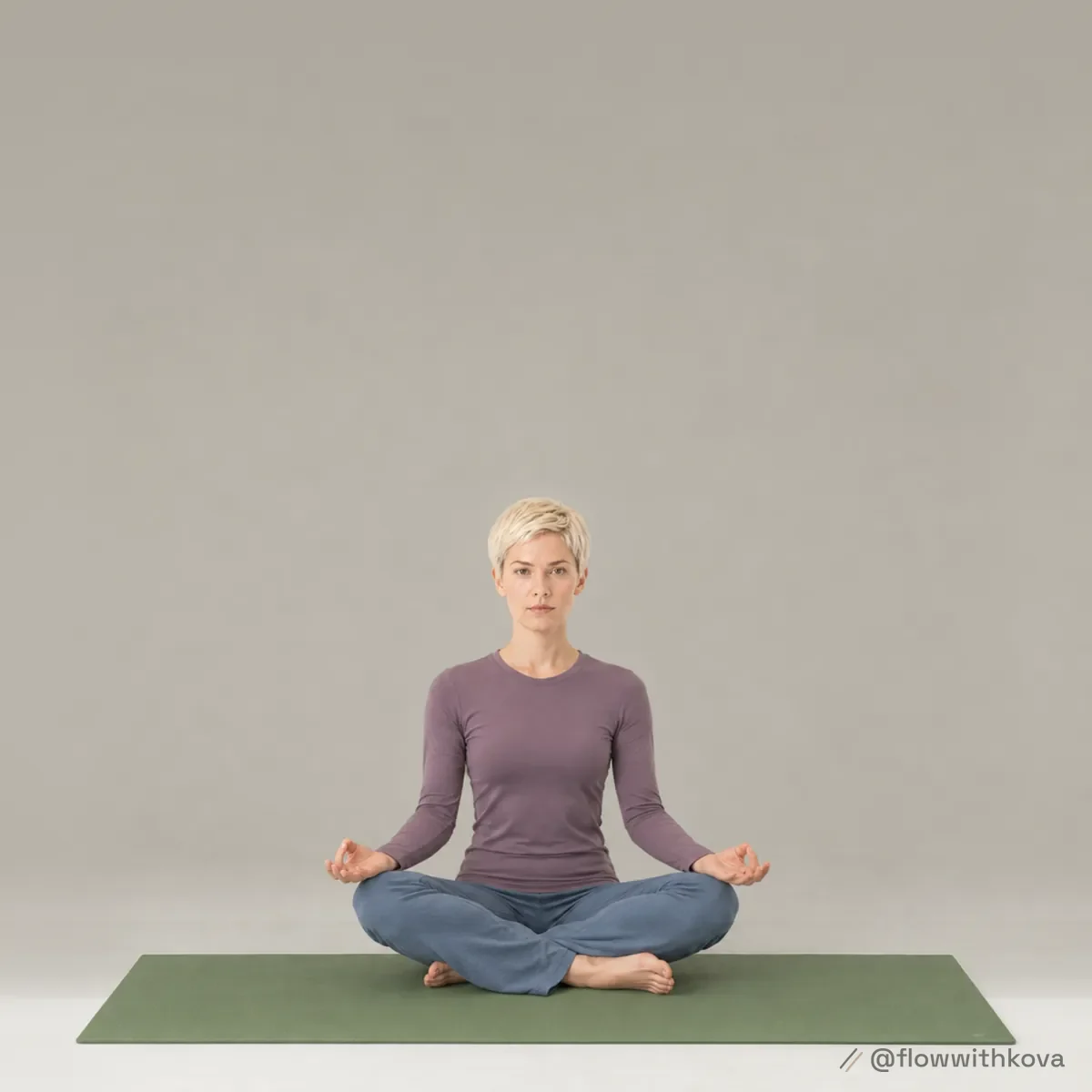
Easy pose
Sukhasana
A quiet seat to arrive in before you lie down. Sit on a folded blanket with your back against a wall, and let your shoulders and jaw soften as the breath slows.
How to do it - 02
Yoga · Beginner
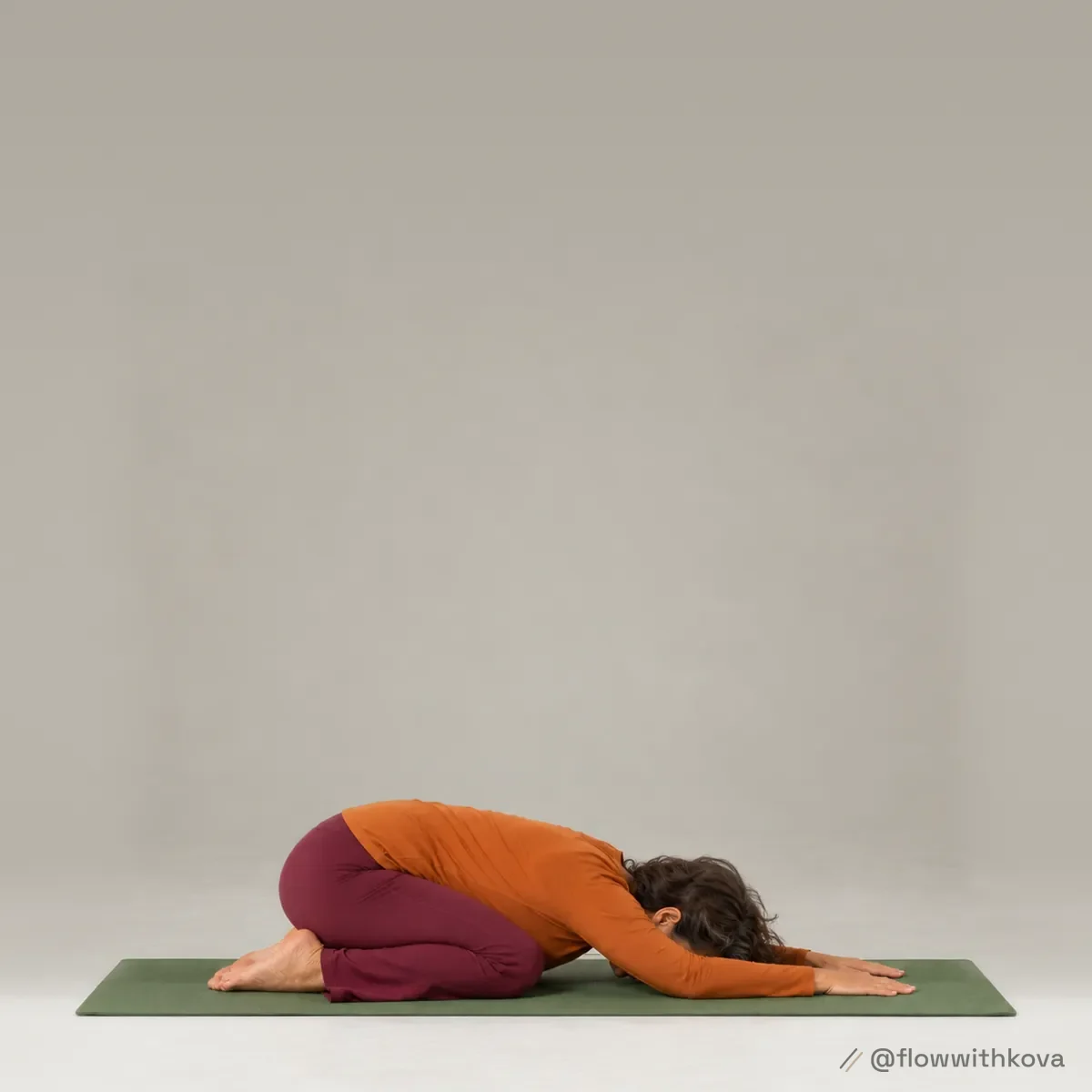
Child's pose
Balasana
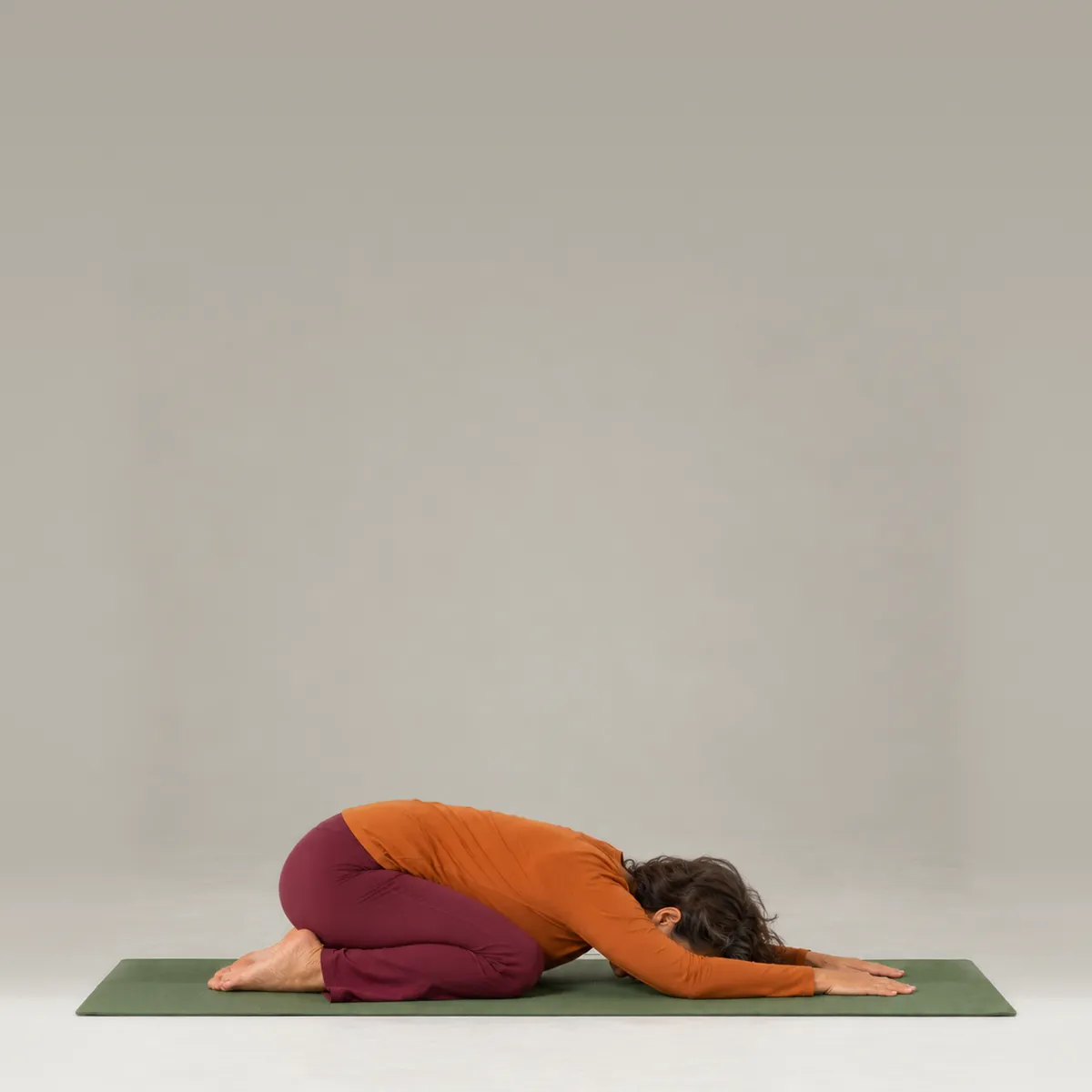
The most familiar resting shape, made softer with support. Stack pillows lengthwise between your knees, rest your chest and cheek on them, and turn your head halfway through.
How to do it - 03
Yoga · Beginner
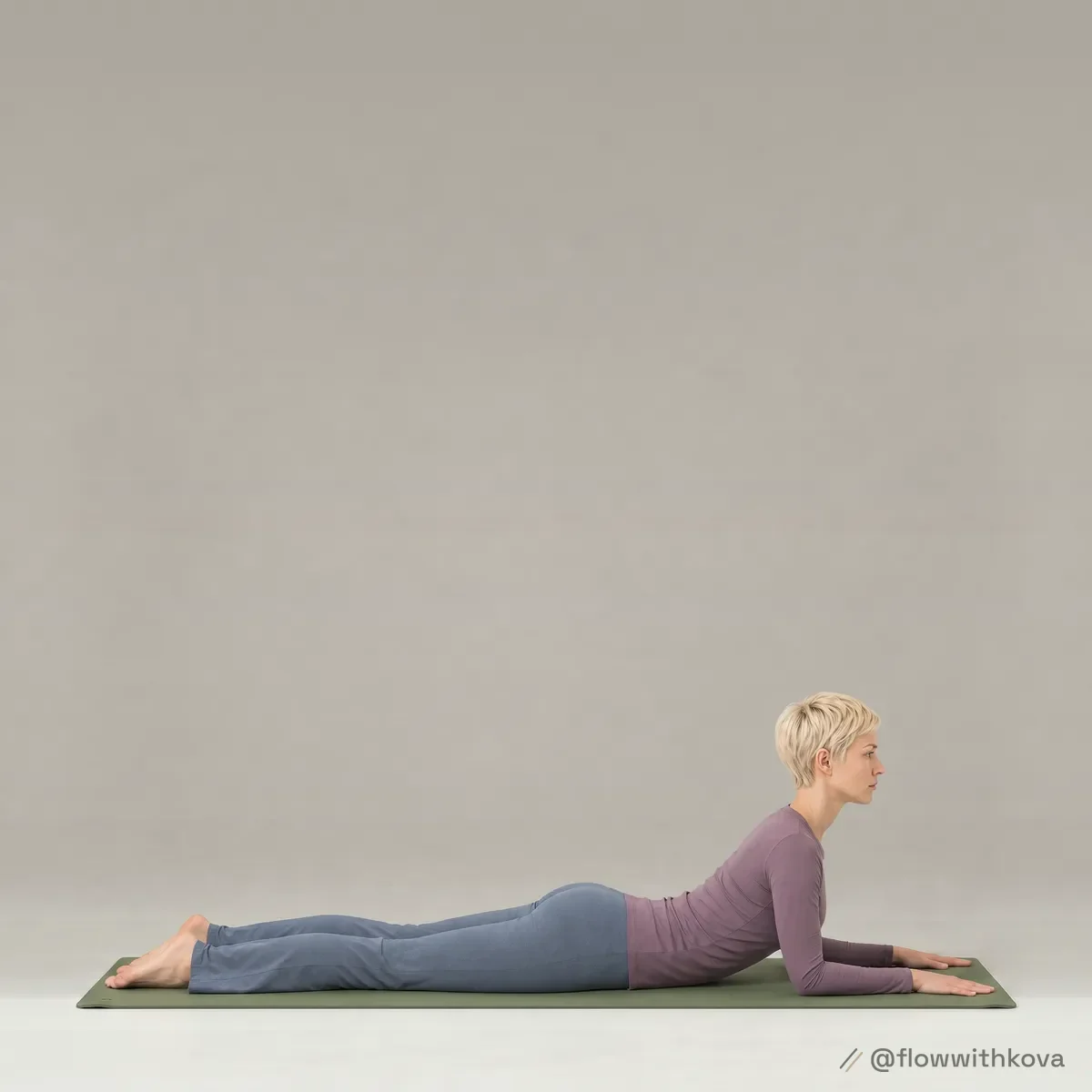
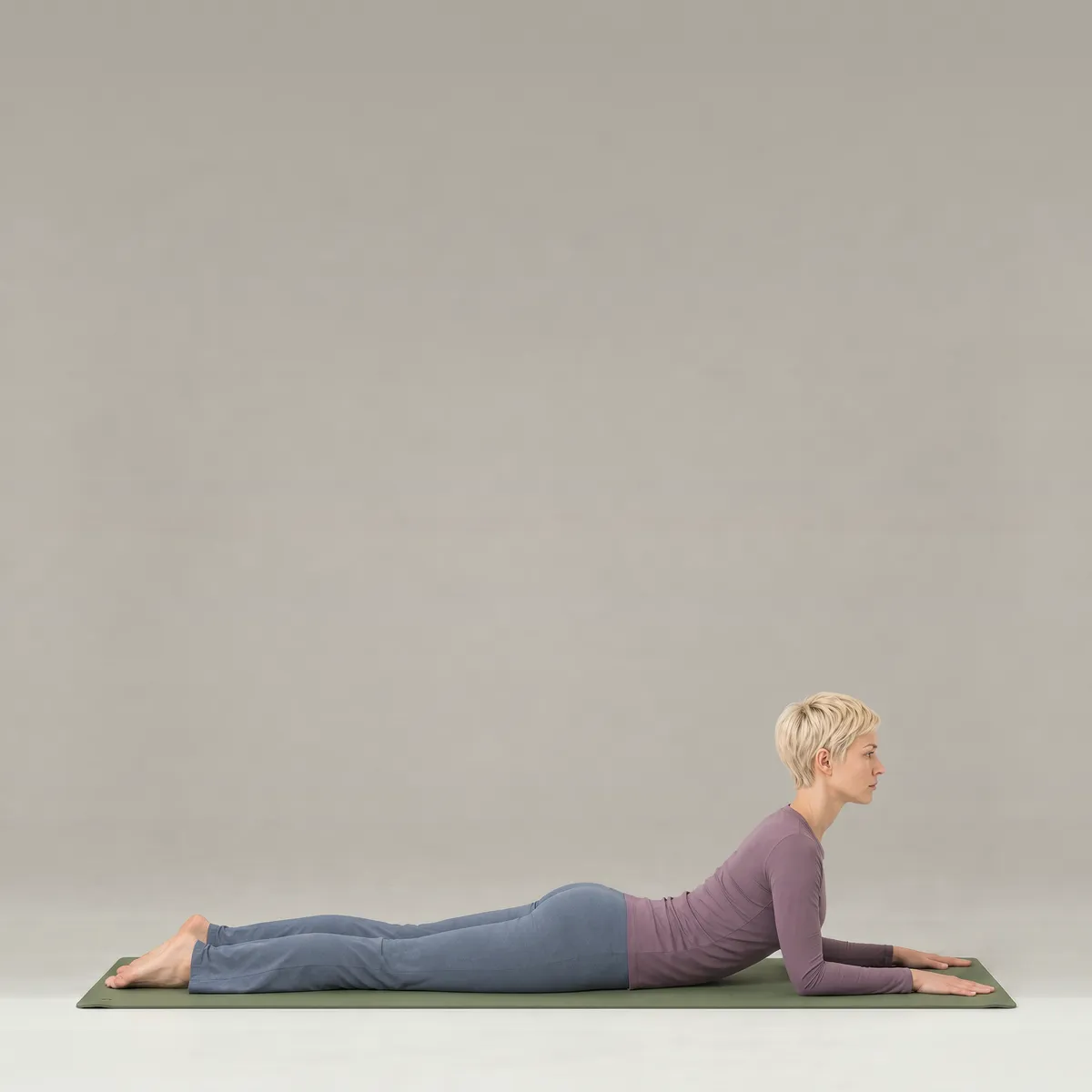
Sphinx pose
Salamba Bhujangasana
A low, gentle backbend that balances the rounded shapes around it. Rest a folded blanket under your forearms and walk your elbows slightly forward to soften the bend.
How to do it - 04
Yoga · Beginner
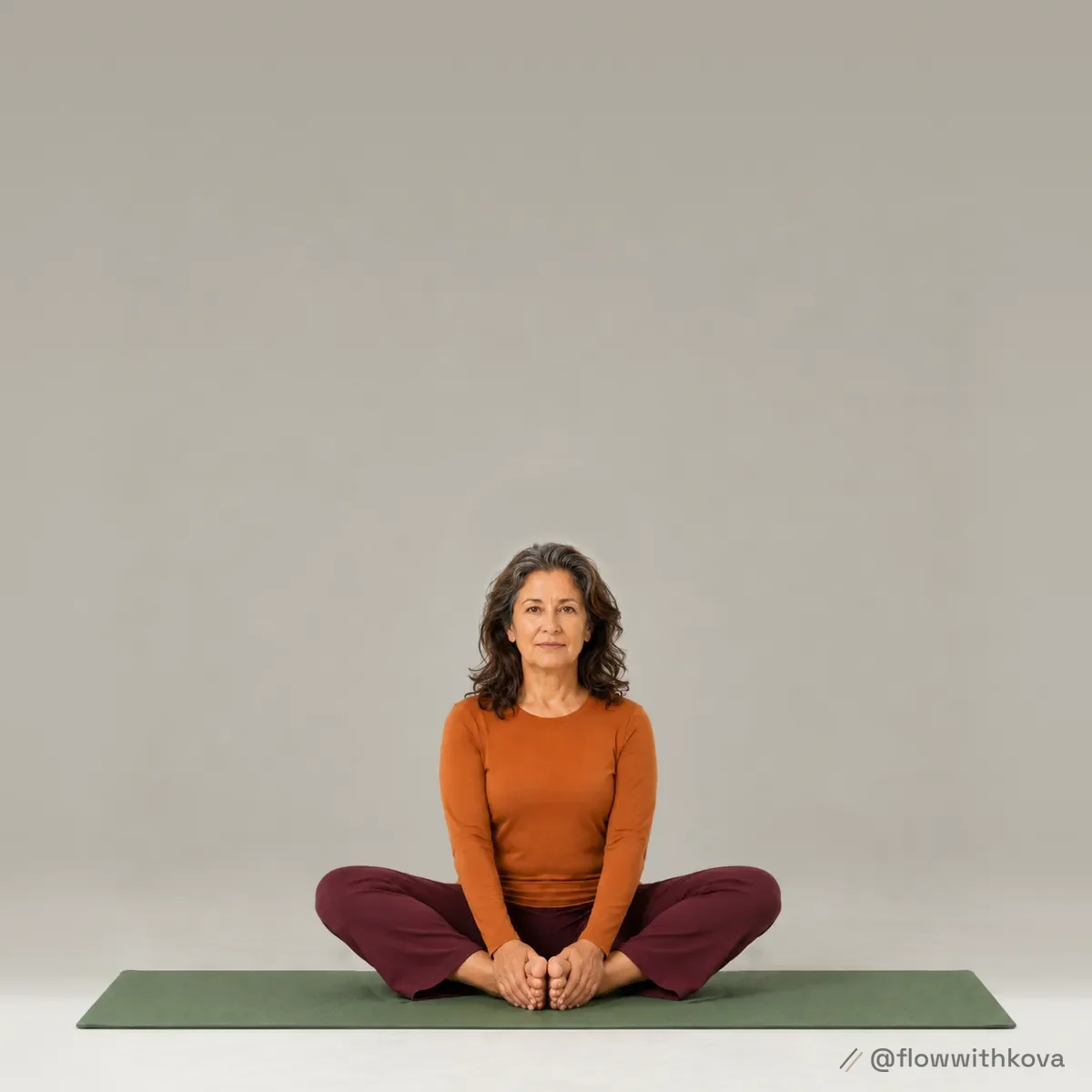
Butterfly pose
Baddha Konasana
A seated hip opener that suits longer holds. Place cushions or blocks under both knees so the inner thighs can relax instead of holding the legs up.
How to do it - 05
Yoga · Beginner
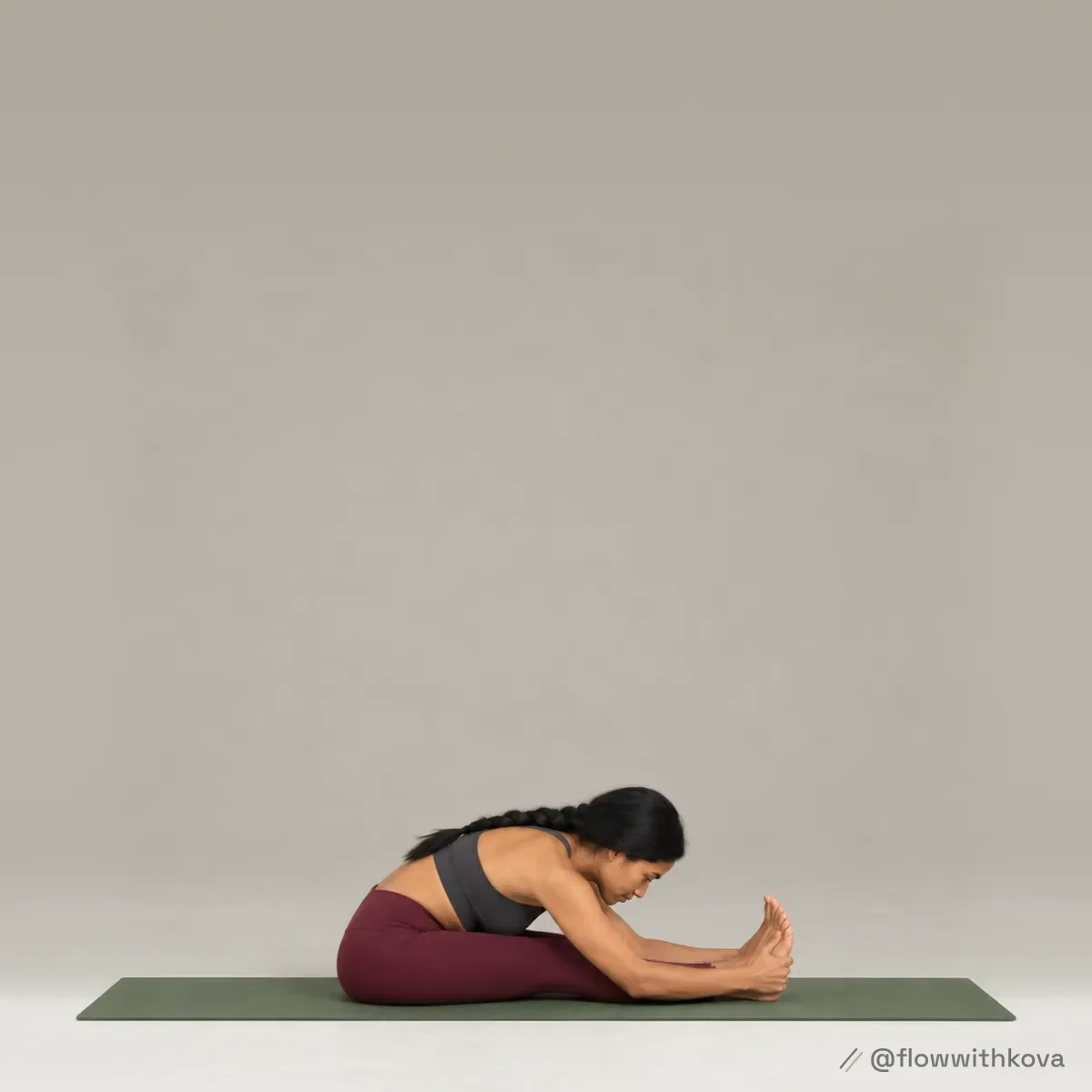
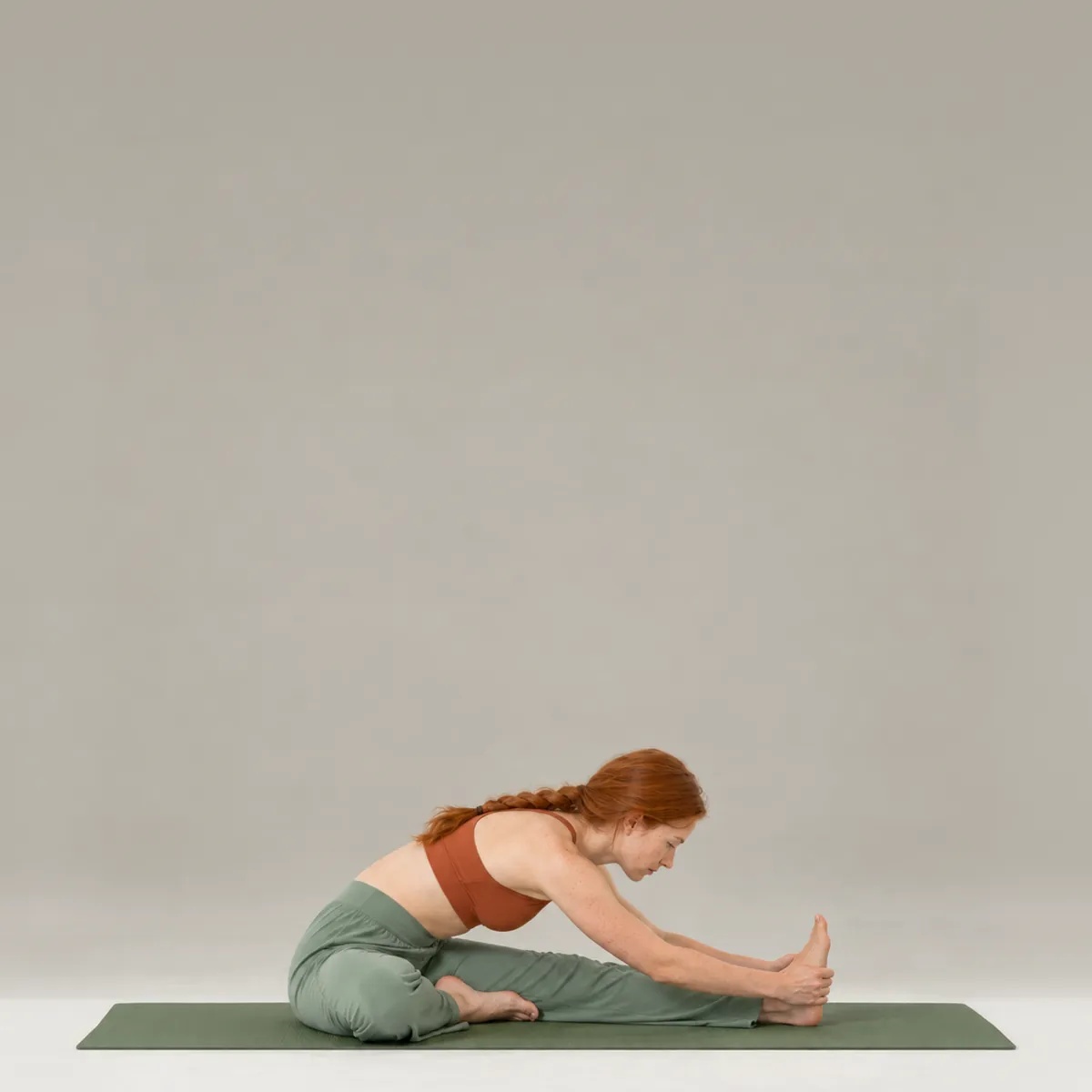
Seated forward fold
Paschimottanasana
A supported fold that turns your attention inward. Lay a bolster or stacked pillows along your legs, bend your knees, and rest your chest and forehead on the support.
How to do it - 06
Yoga · Beginner
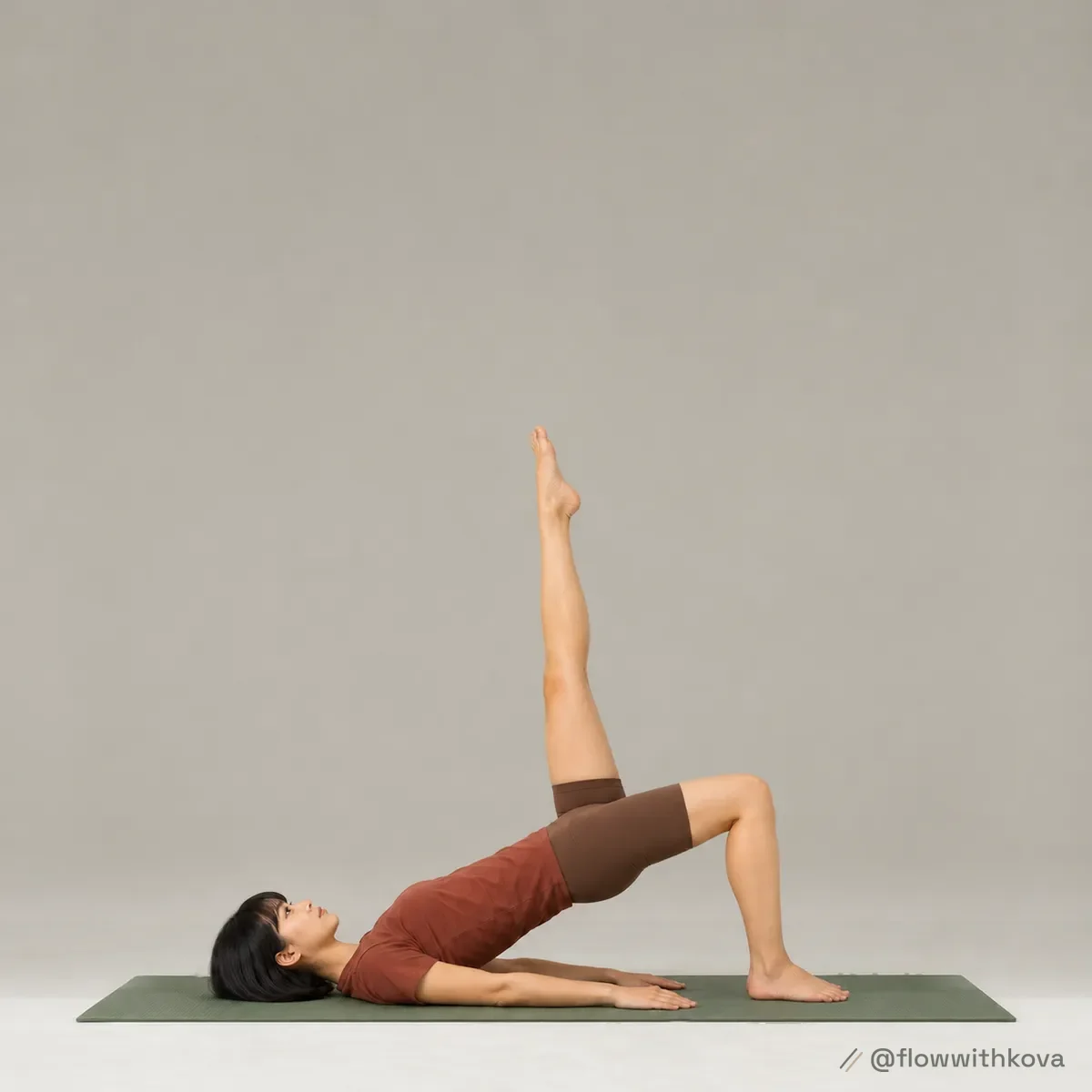
Bridge pose
Setu Bandha Sarvangasana
The restful version of a familiar backbend. Lift the hips, slide a block under your sacrum at its lowest height, and let your full weight settle onto it.
How to do it - 07
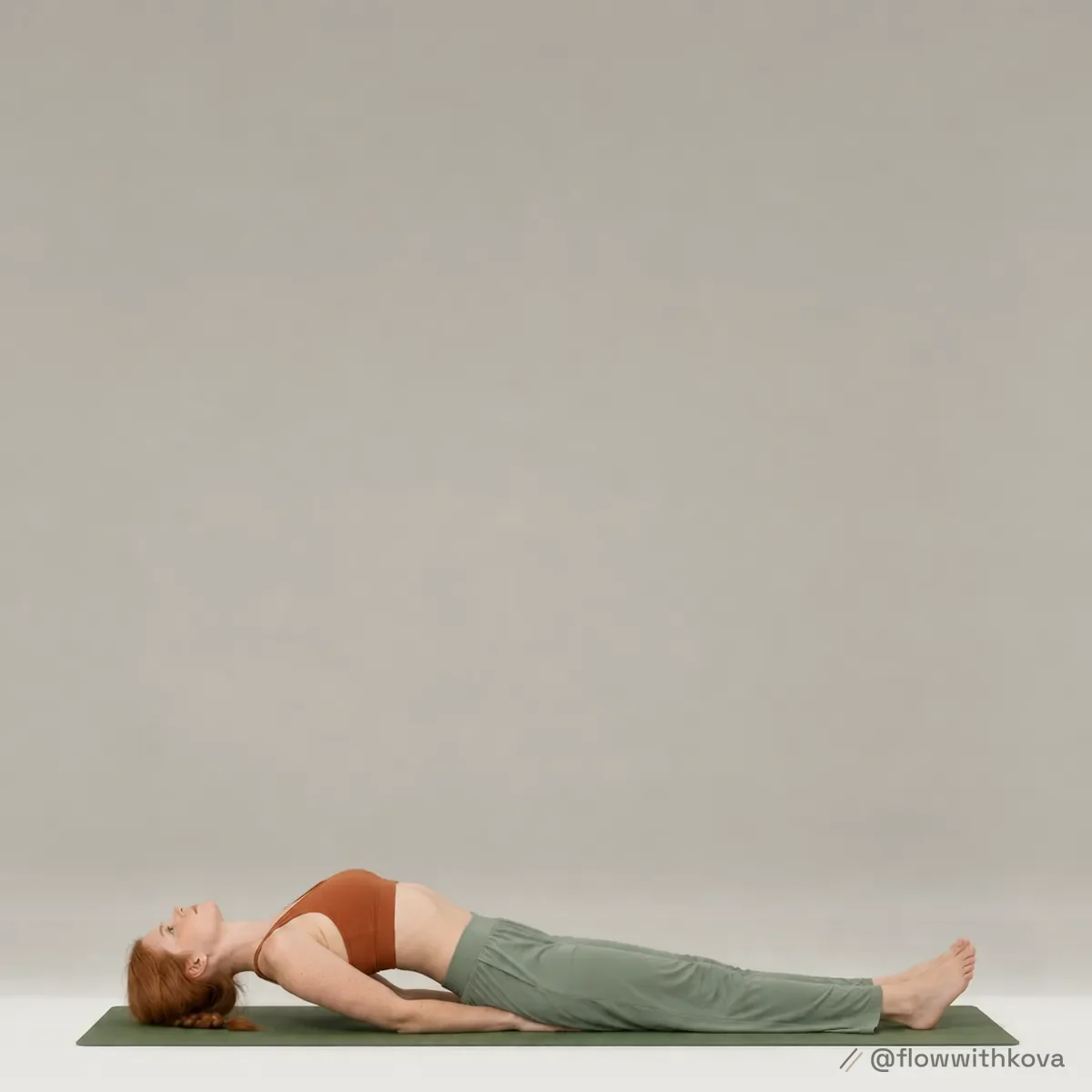
Yoga · Beginner
Fish pose
Matsyasana
Opens the chest with almost no effort when you lie back over a block. Place it under your shoulder blades, with a second block or pillow under your head.
How to do it - 08
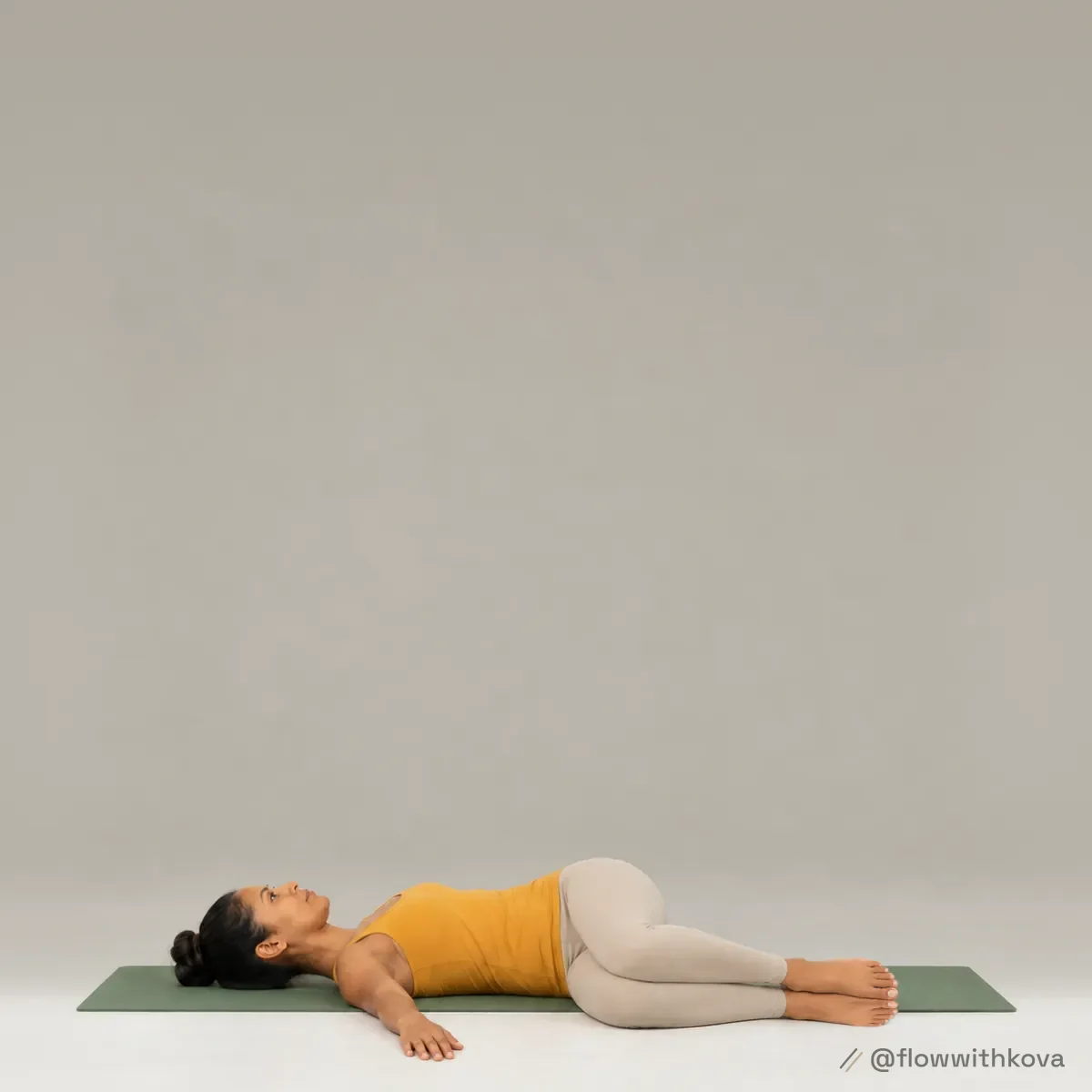
Yoga · Beginner
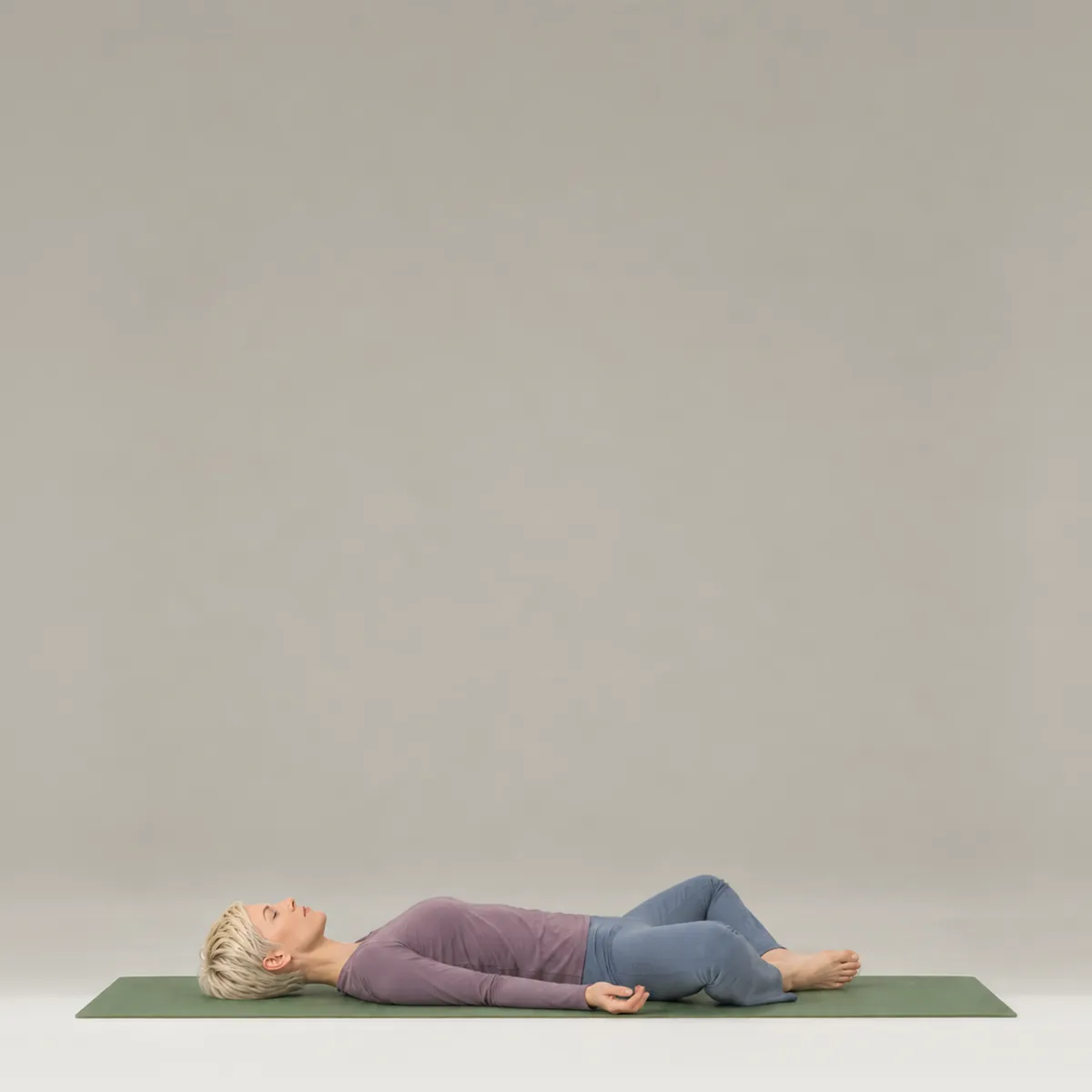
Supine twist
Supta Matsyendrasana
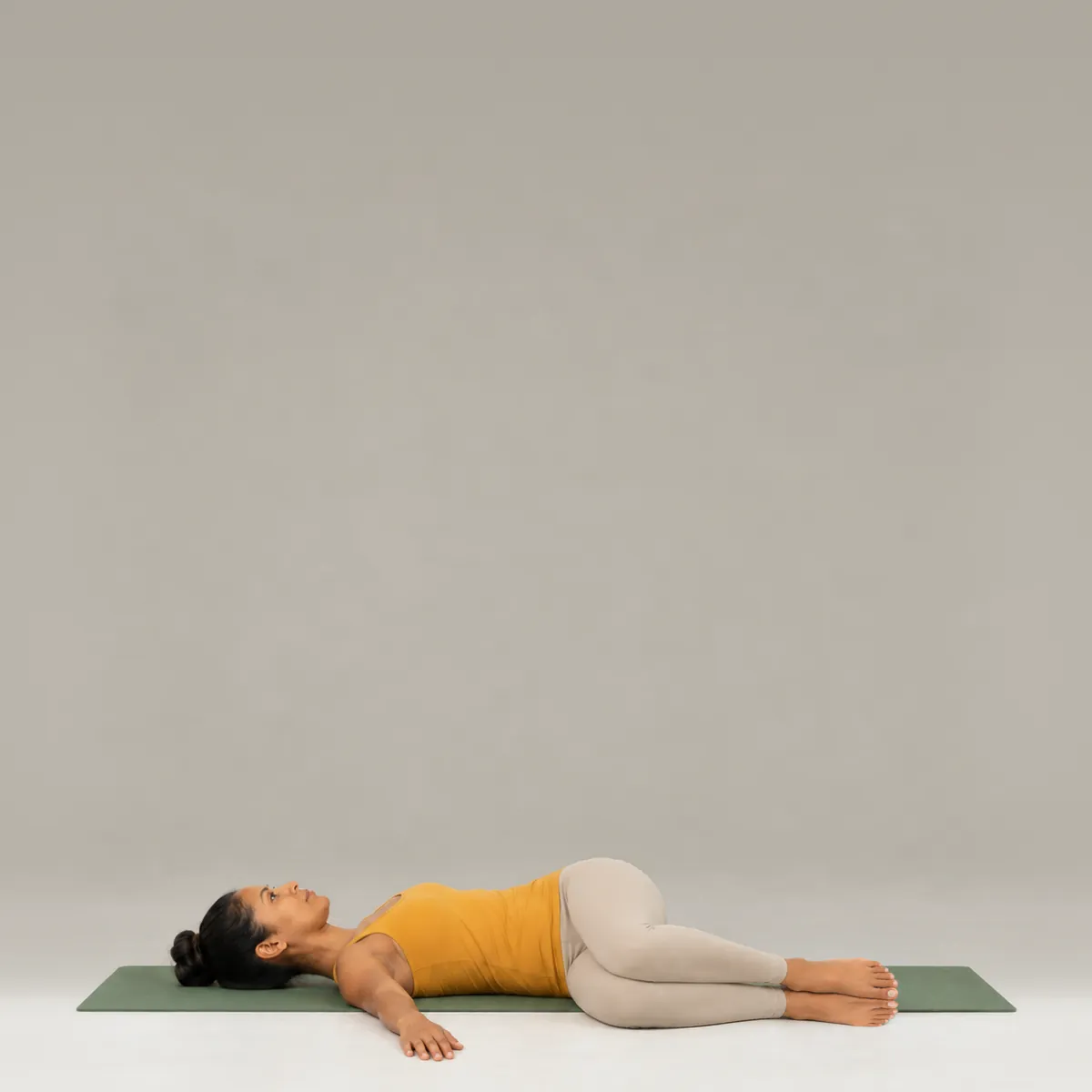
A slow, supported twist for the spine and outer hips. Rest both knees on a pillow or bolster so nothing hangs, and turn your head only as far as is comfortable.
How to do it - 09
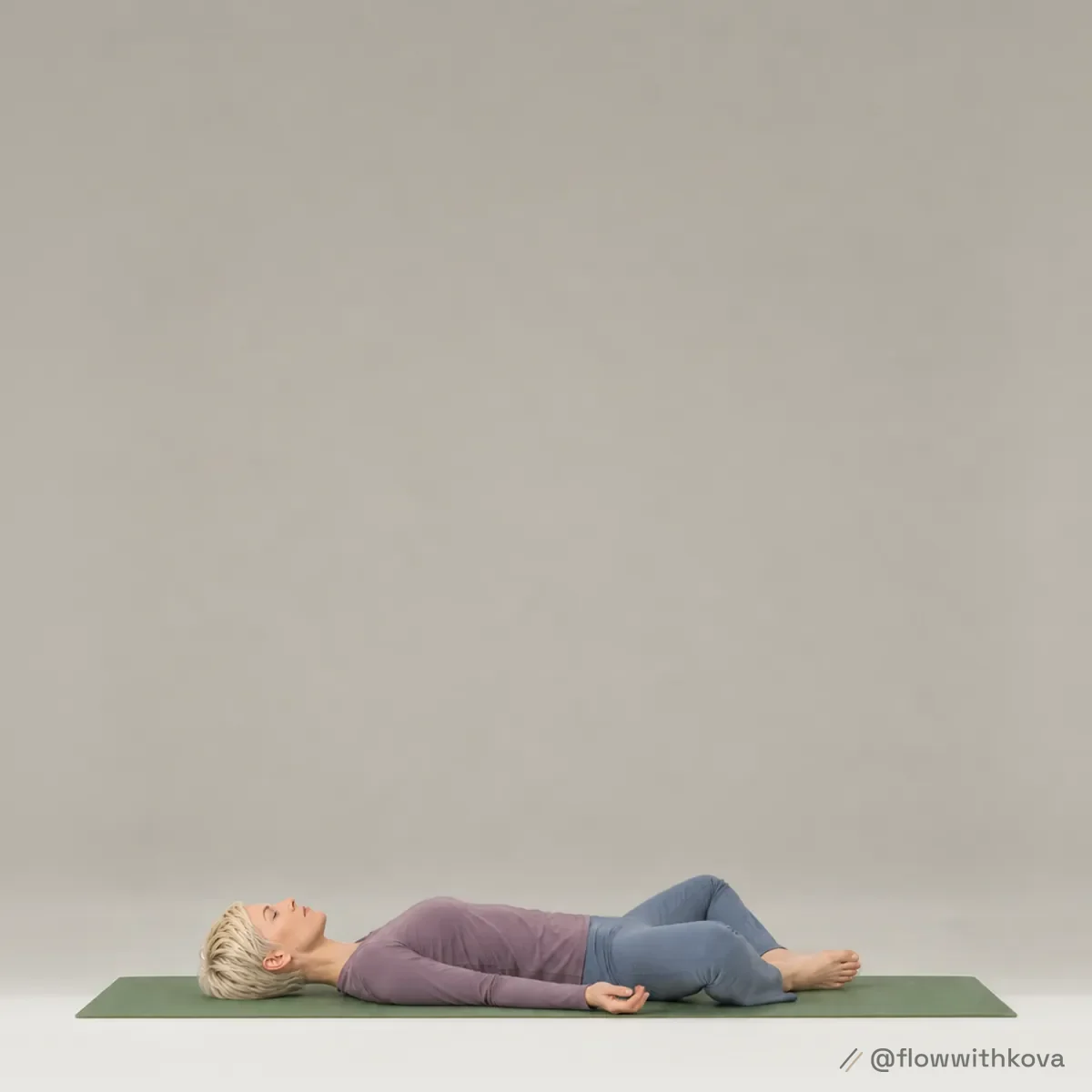
Yoga · Beginner
Reclined bound angle
Supta Baddha Konasana
A classic restorative shape. Support each knee with a cushion, add a folded blanket under your head so the chin stays level, and let the chest open with little effort.
How to do it - 10
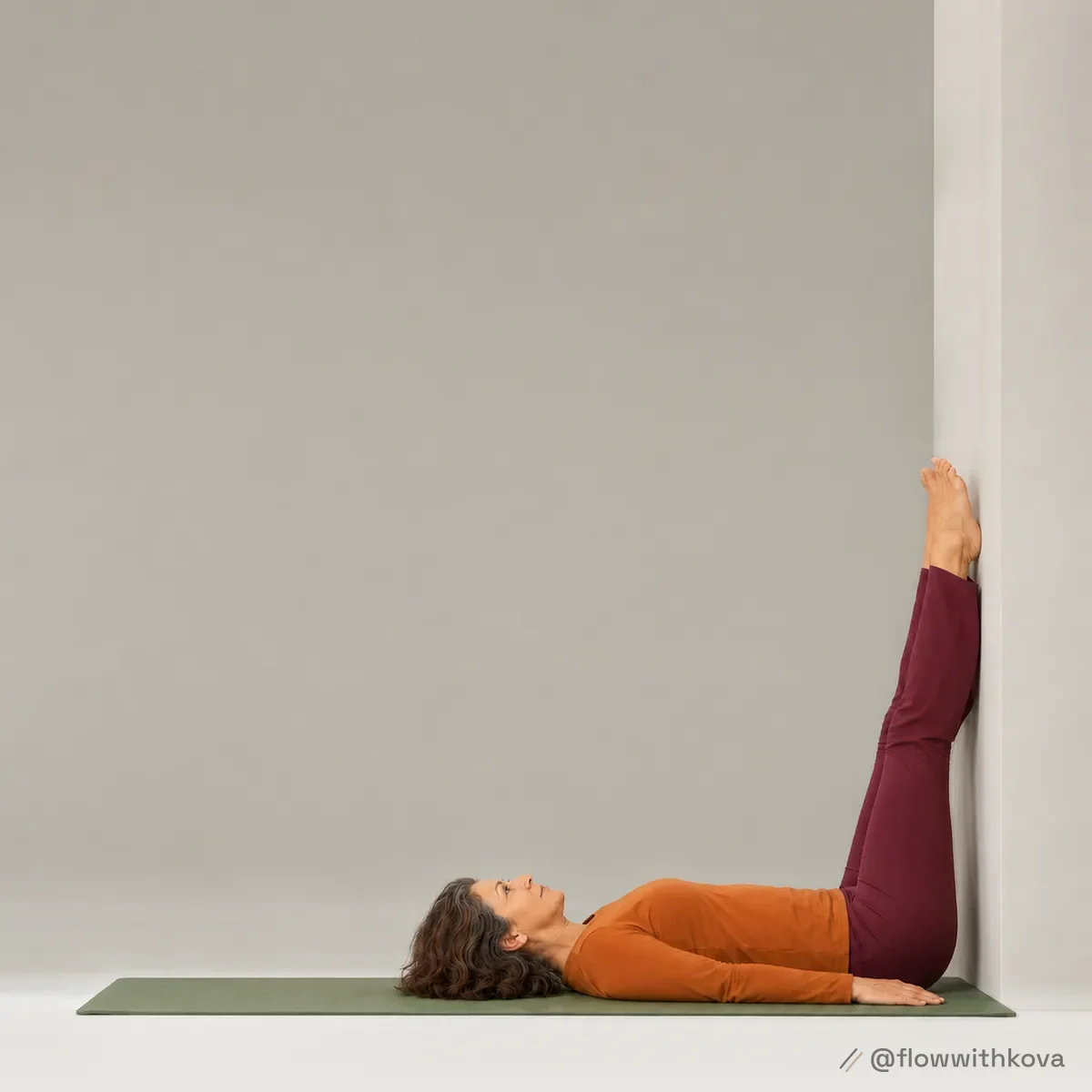
Yoga · Beginner
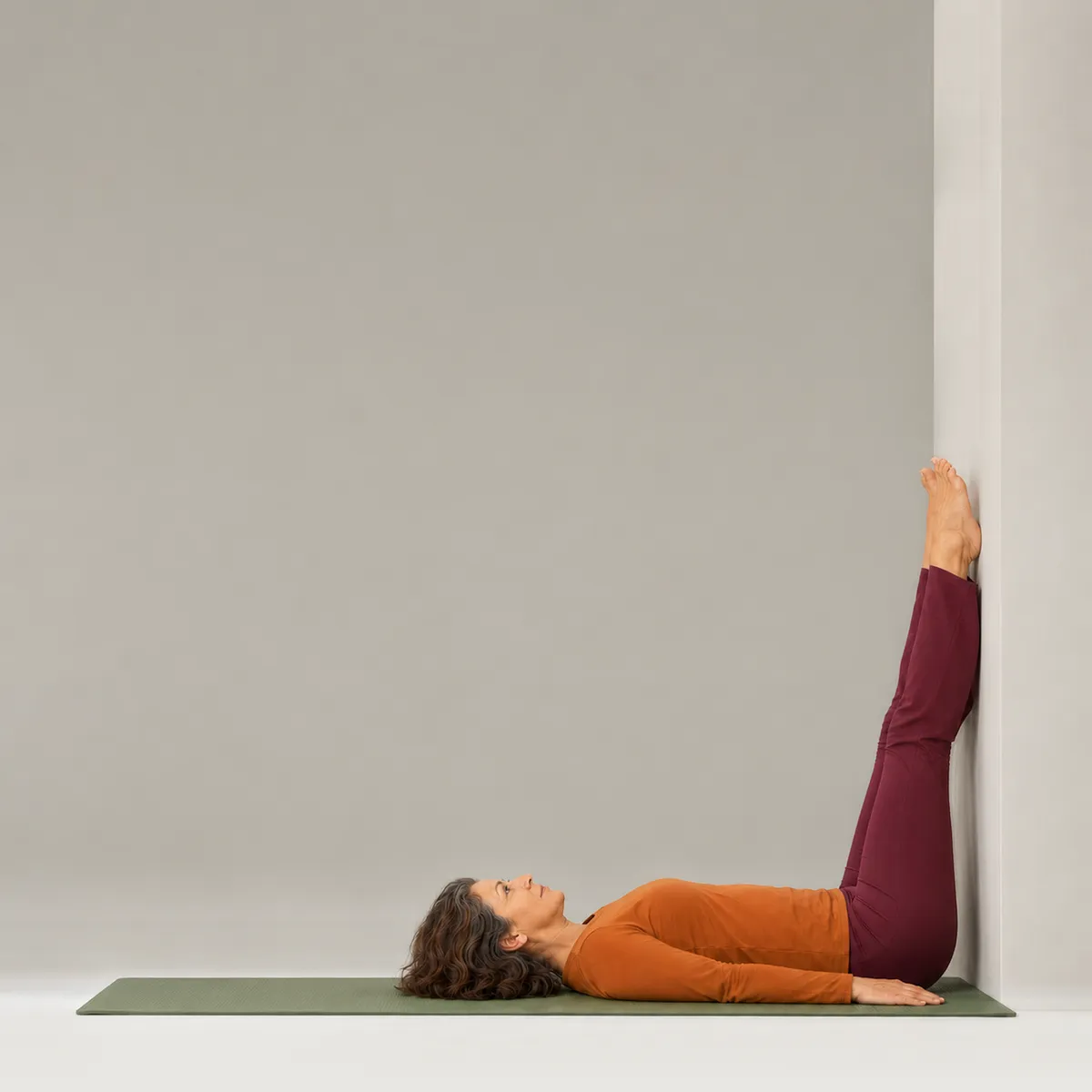
Legs up the wall
Viparita Karani
Lets tired legs rest while the back stays supported. Slide a folded blanket under the hips, find a distance from the wall that feels comfortable, and stay for five minutes or longer.
How to do it - 11
Yoga · Beginner
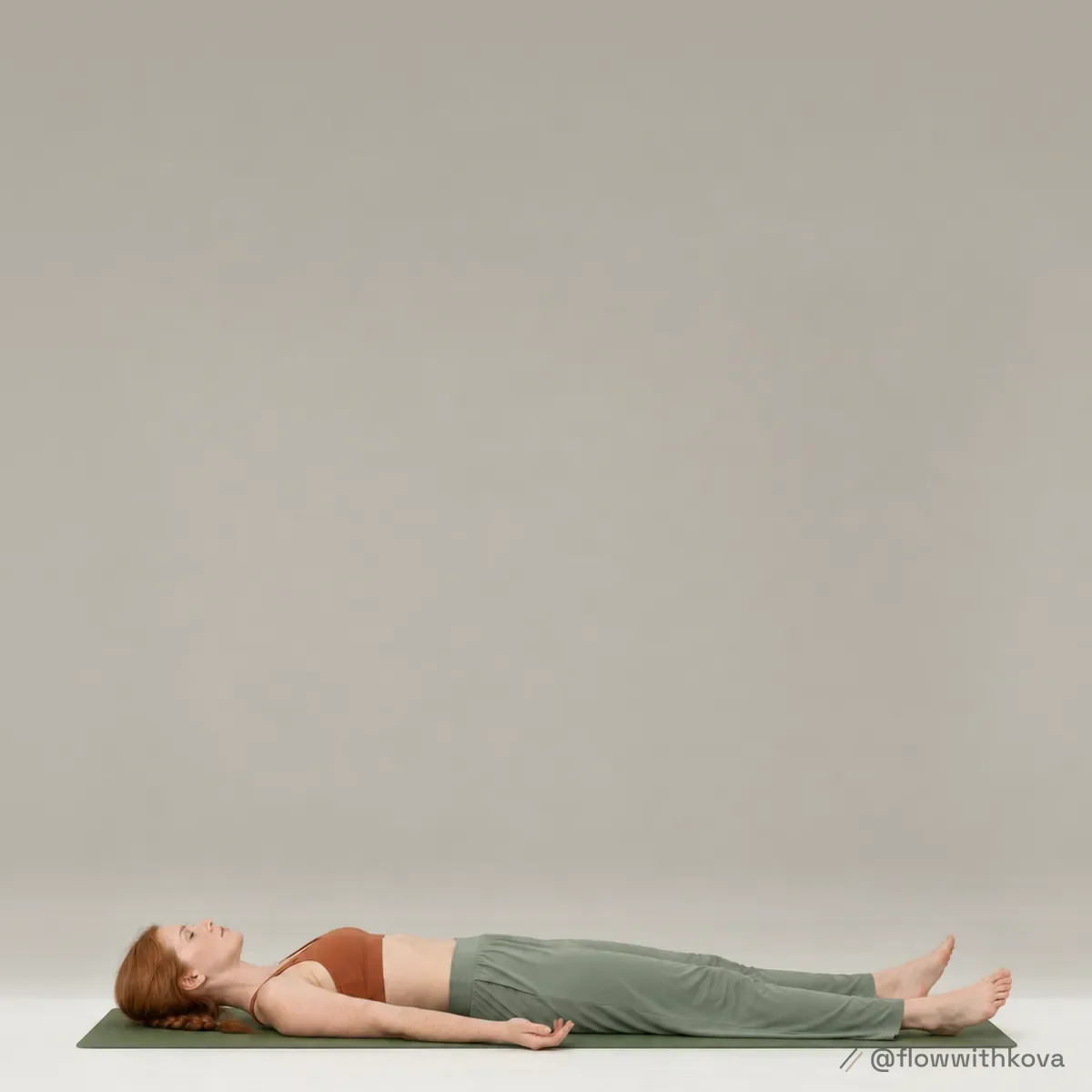
Corpse pose
Savasana
The final rest that the whole session leads toward. Roll a blanket under your knees, cover yourself with another, and let the breath move on its own.
How to do it
A simple session
Put it together.
A 30-minute restorative session: sit in easy pose against a wall for two minutes of slow breathing, then fold into a supported child's pose for three minutes. Lie on your belly for sphinx pose, then sit up for butterfly pose and a supported seated forward fold. Turn onto your back for supported bridge pose with a block under the sacrum, then fish pose over a block. Rest in a supine twist on each side and in reclined bound angle for several minutes. Finish with legs up the wall and at least five minutes of corpse pose under a blanket. Stay three to five minutes in each pose unless a shorter hold feels better.
Take care
Restorative poses should feel comfortable enough to stay in. If a limb starts to tingle, your neck feels strained, or you feel dizzy, come out slowly and add more support. Skip lying flat on your back or belly if it is uncomfortable, such as later in pregnancy, and check with a clinician about any injury.
By Fayeed PawaskarUpdated
Practice with Kova
A coach for the whole session.
Kova gives calm, real-time spoken cues through each hold, so you can close your eyes and rest instead of checking a screen.
- A personalized path of seven stages that blends yoga and pilates, with each class designed for that day.
- Pose tracking runs on your device. Your camera feed is never uploaded and never leaves your iPhone or iPad.
- Free to download on iPhone and iPad. Kova Plus starts with a 3-day free trial for new subscribers.
Questions about this collection
Browse the pose libraryWhat is the difference between restorative yoga and yin yoga?
How long should you hold restorative yoga poses?
Do I need props for restorative yoga?
From the journal
Read the journal
Guide
Yoga props at home: what to use instead of blocks, straps, and bolsters

Rest
A 15-minute evening yoga sequence for winding down

Breath
The case for breathing first

Beginners
Hatha, vinyasa, yin: which type of yoga should a beginner try?
More pose collections
- Yoga poses for beginners12 poses
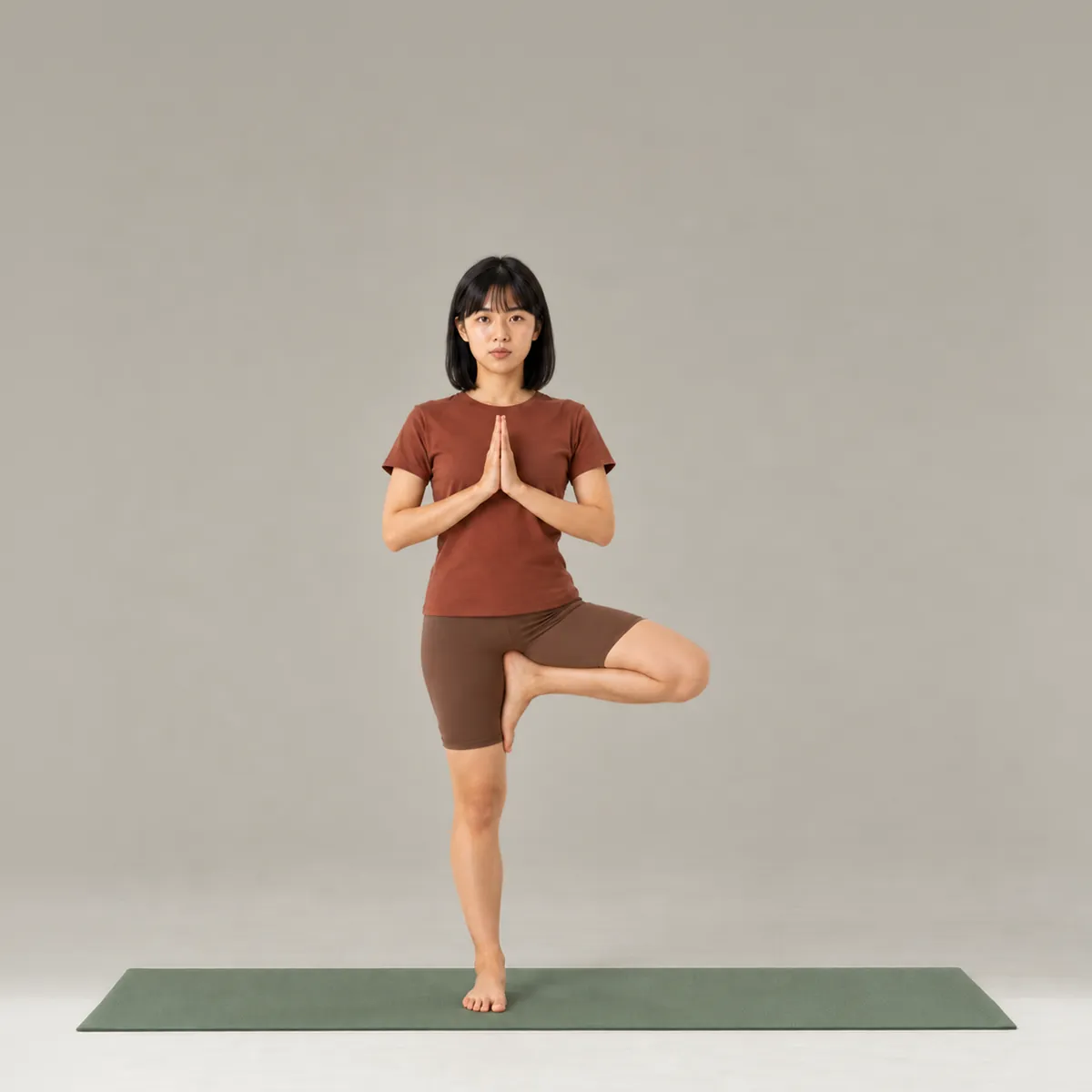
- Yoga poses for tight hips11 poses
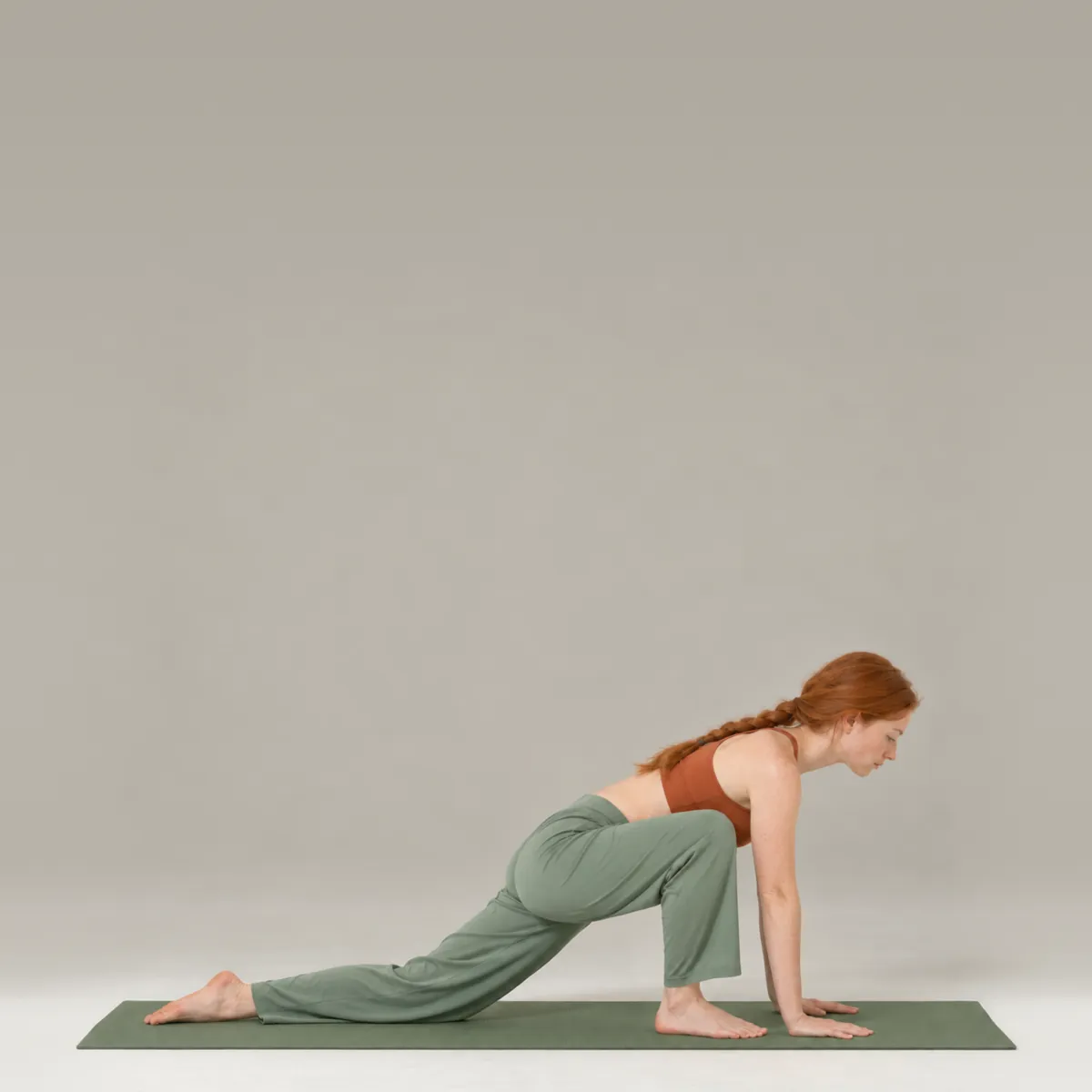
- Gentle yoga poses for a stiff lower back10 poses
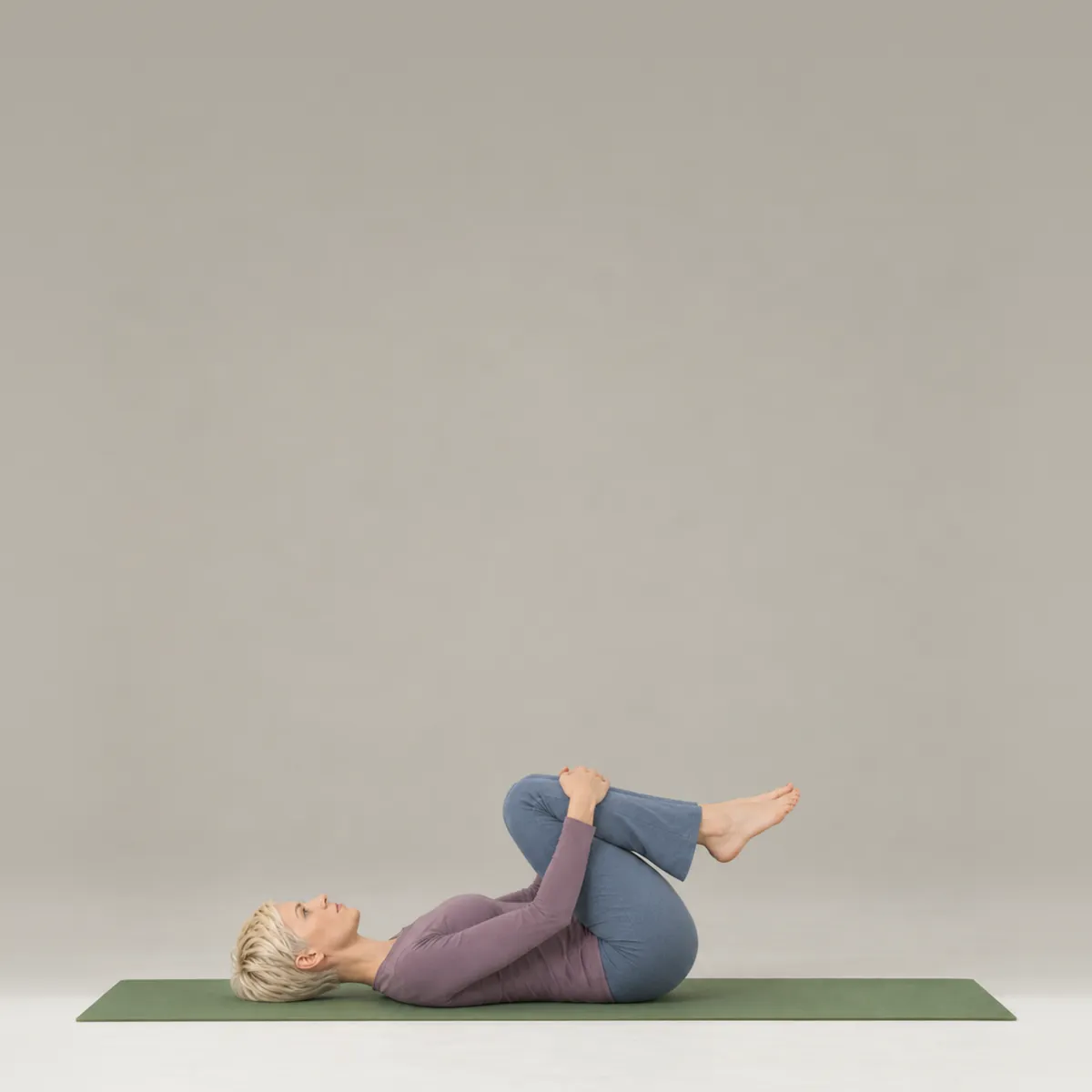
- Pilates and yoga exercises for core strength11 poses
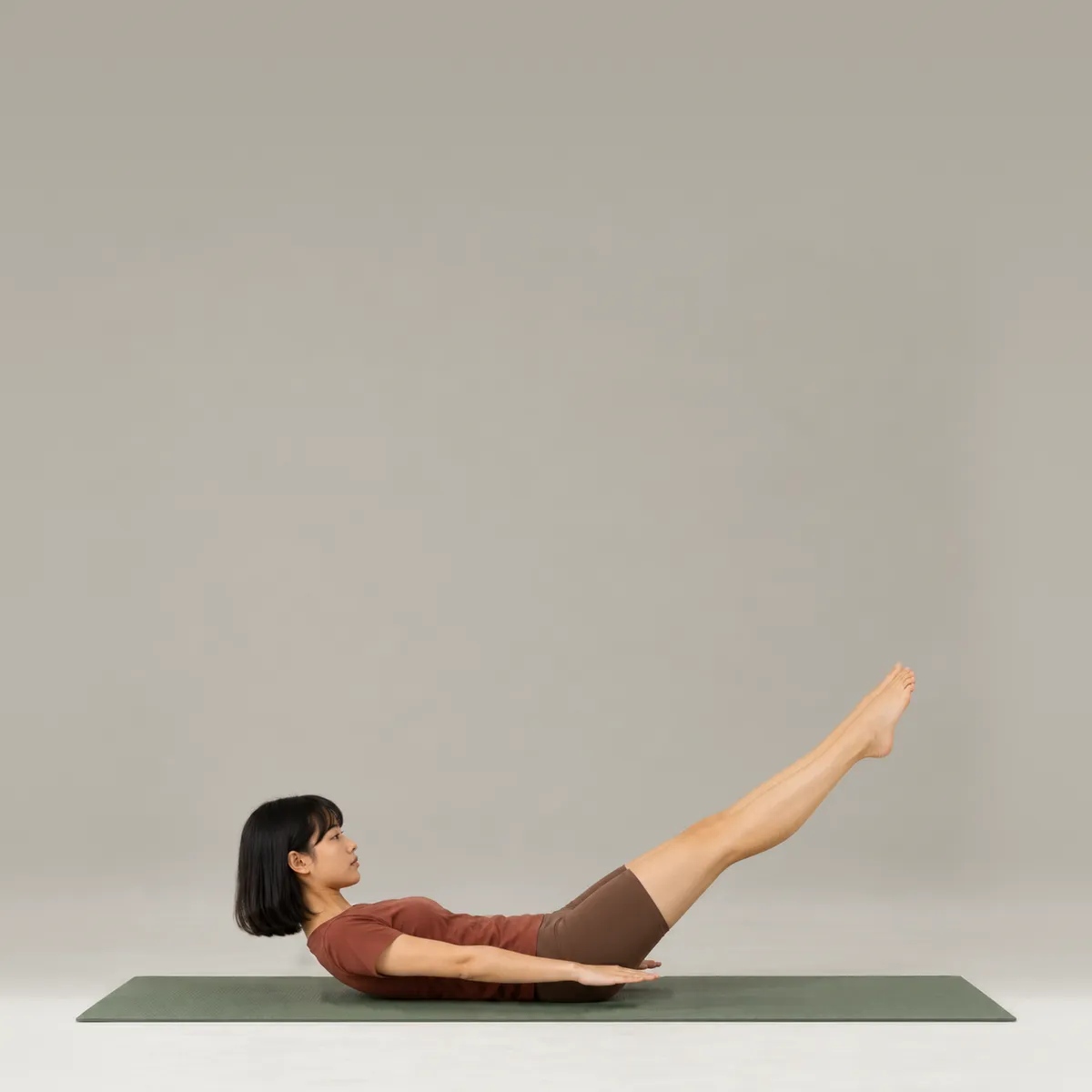
- Yoga poses for tight hamstrings10 poses
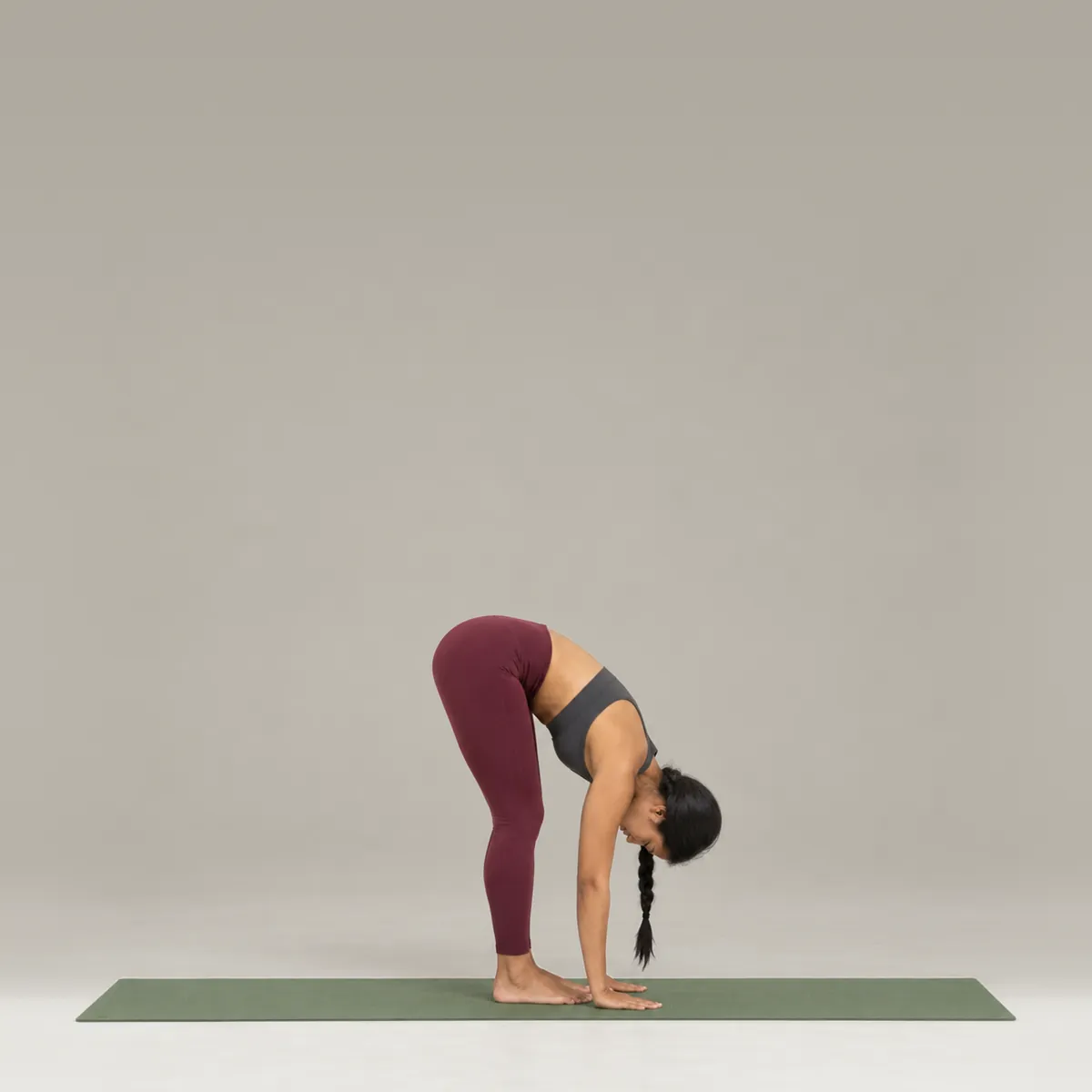
- Yoga poses for tight shoulders and upper back10 poses
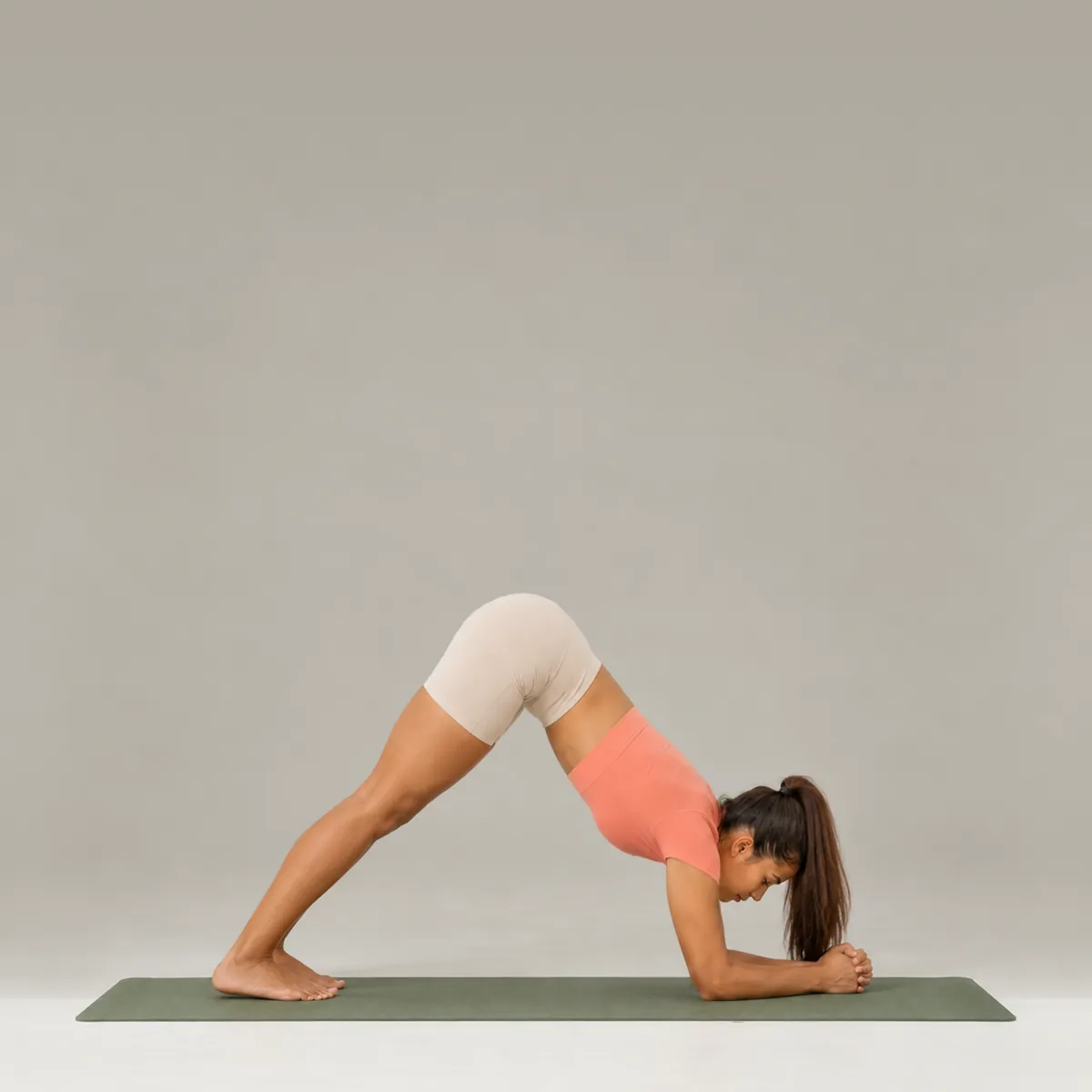
- Yoga balance poses, from tree pose to crow11 poses
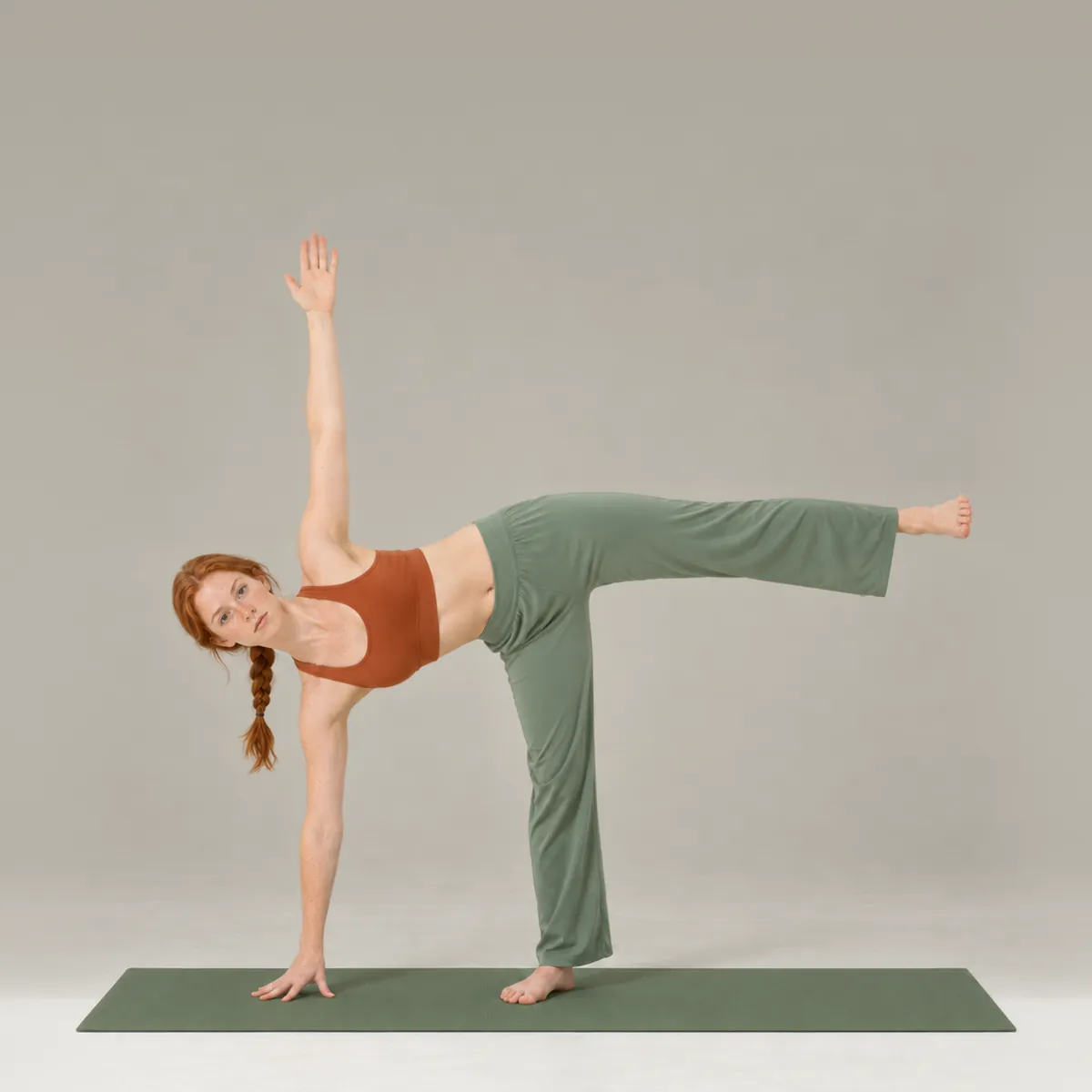
- Yoga poses for sleep and winding down10 poses
- Yoga poses for runners10 poses
- Yoga and pilates exercises for better posture10 poses
- Yoga poses for flexibility12 poses
- Yoga poses for the morning10 poses
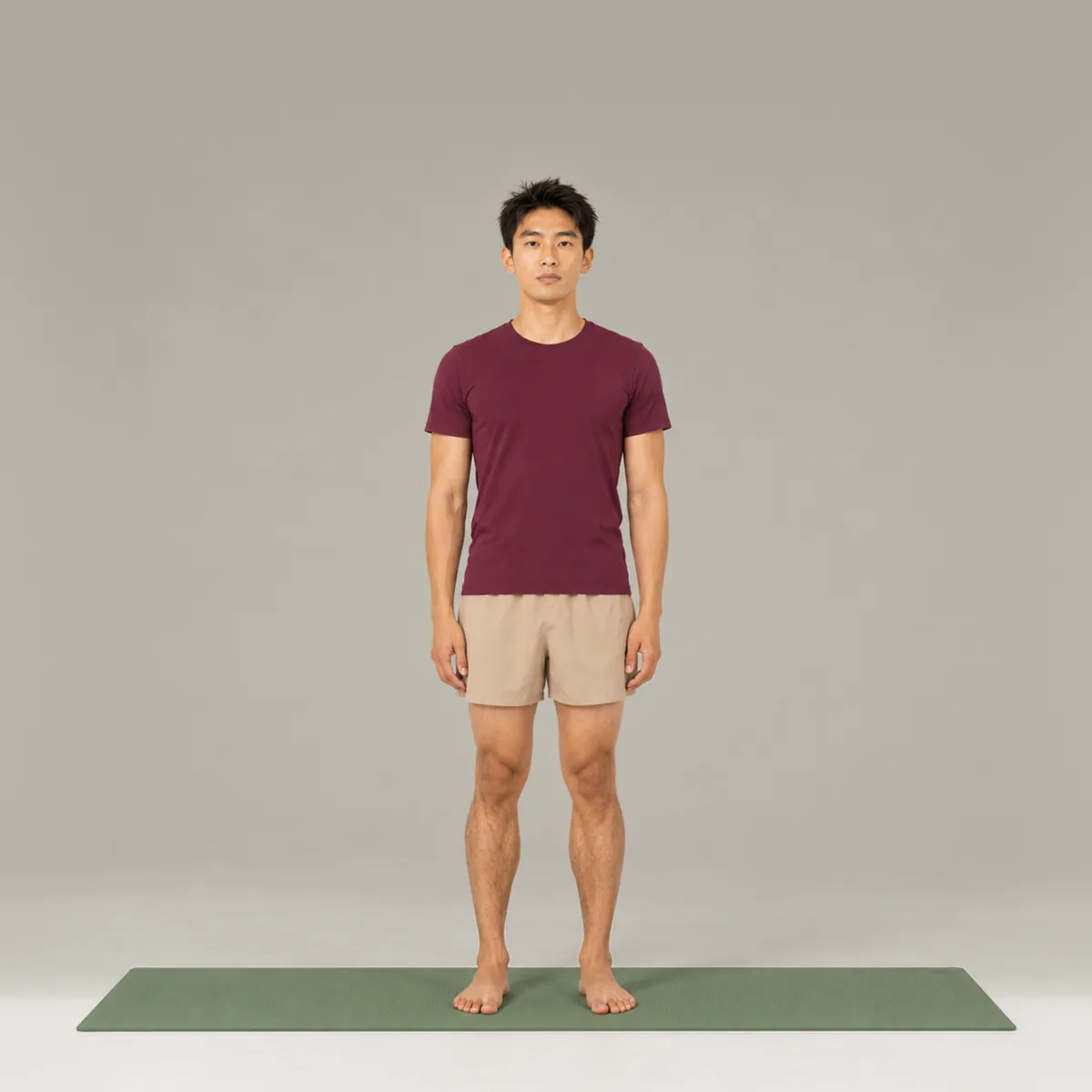
- Standing yoga poses for beginners12 poses
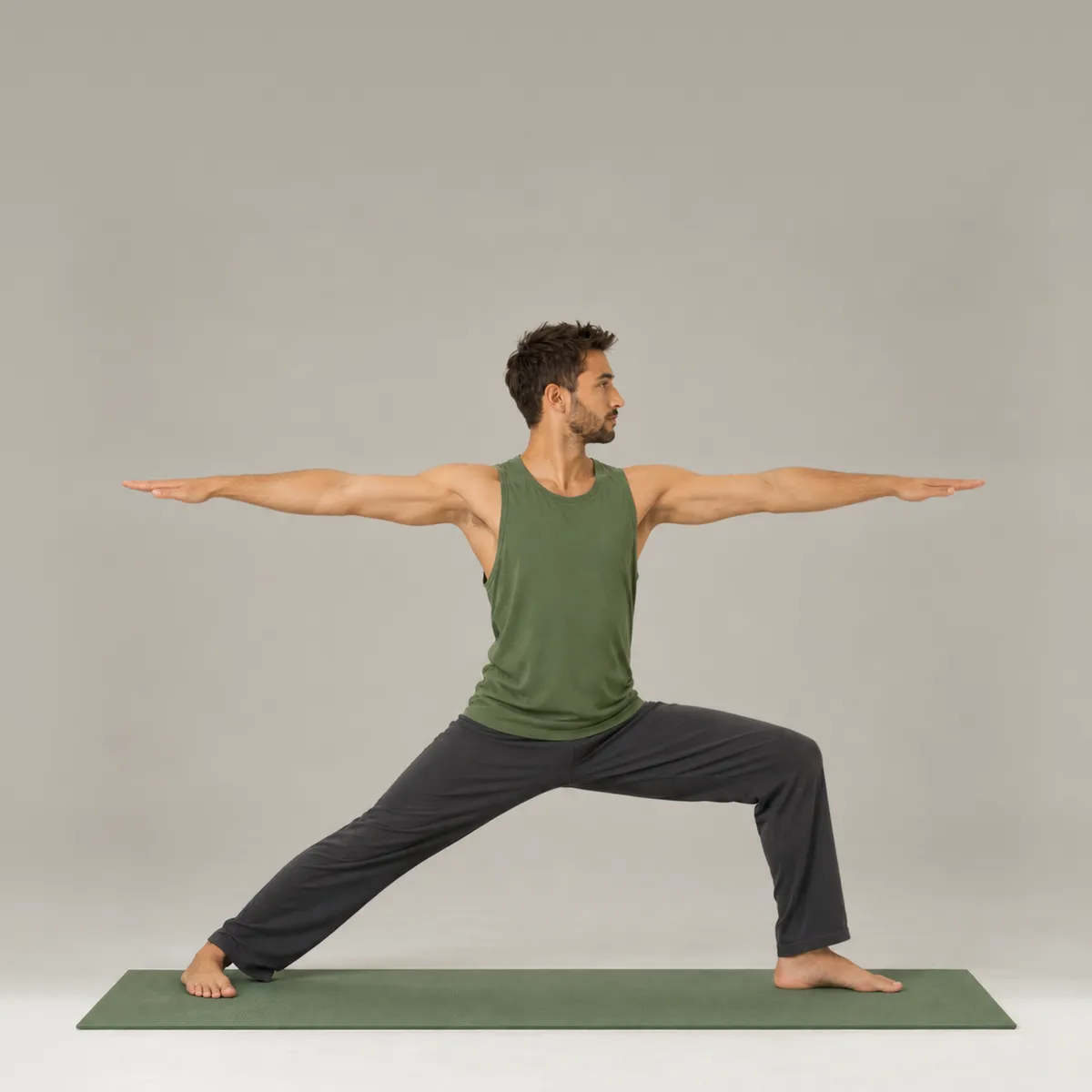
- Seated yoga poses for floor practice11 poses
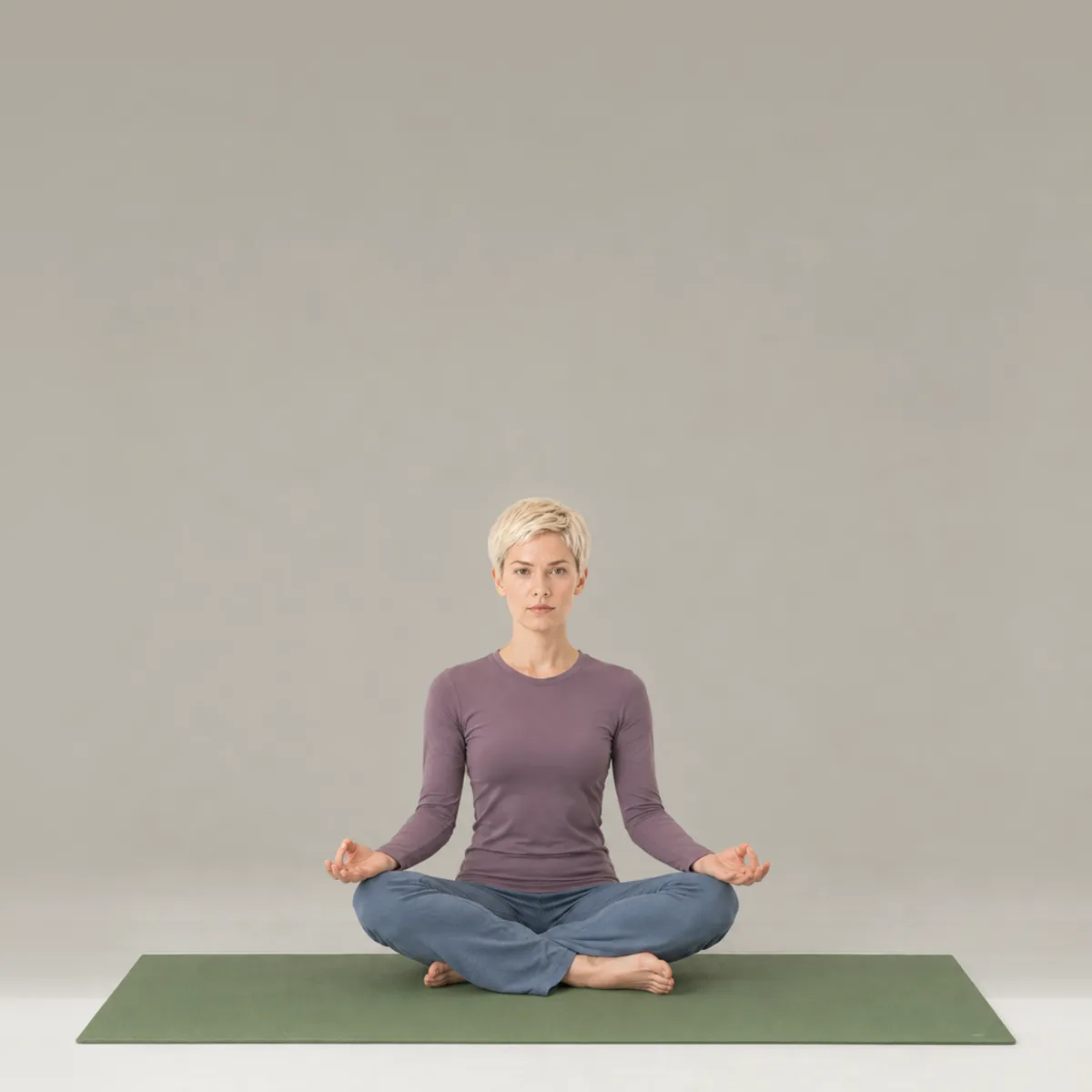
- Yoga backbends for beginners12 poses
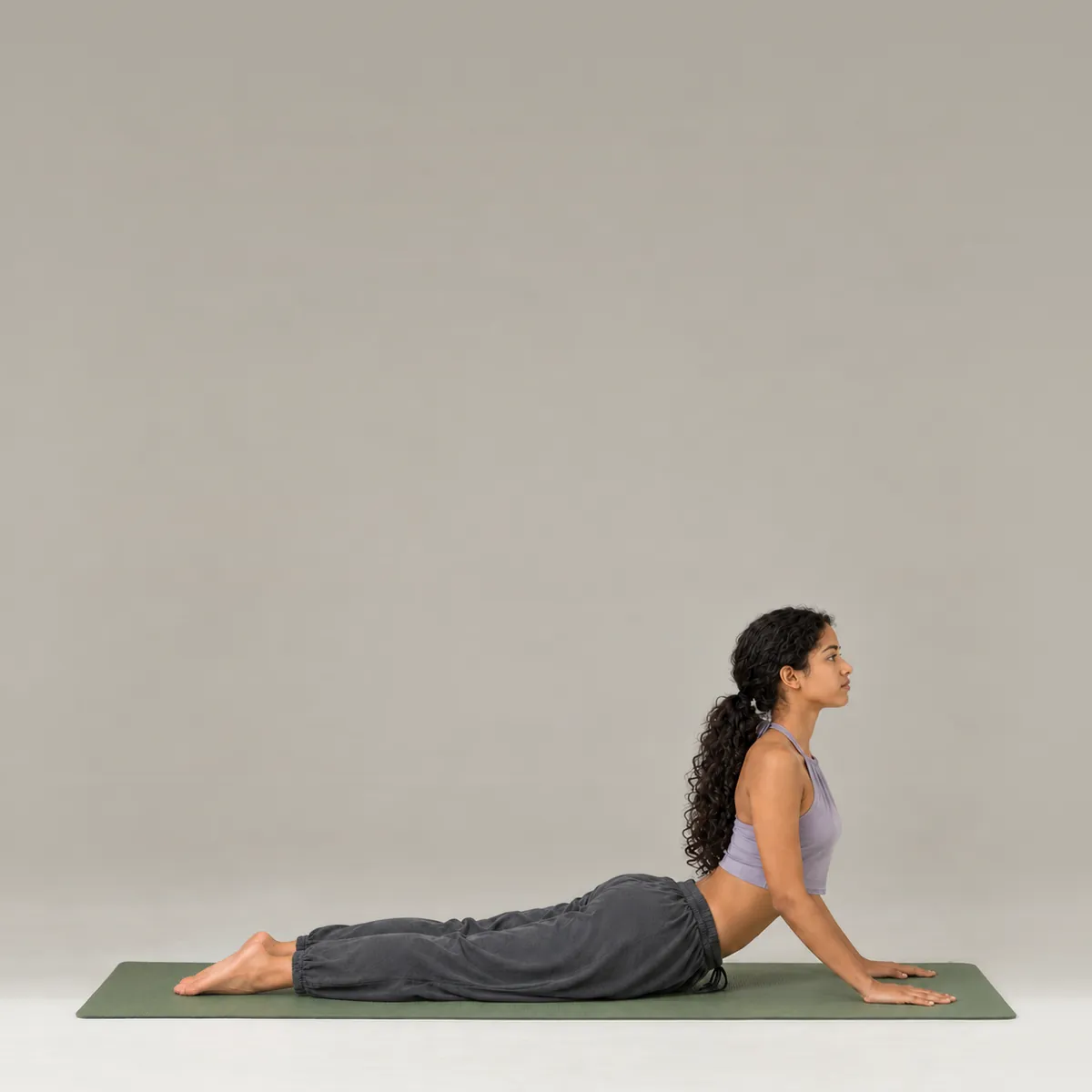
- Yoga twists, from gentle to deep11 poses
- Yoga poses for strength13 poses
- Calming yoga poses for stress relief11 poses
- Pilates exercises for beginners12 poses
- Classical pilates mat exercises, in order12 poses
- Gentle yoga poses for digestion and bloating10 poses
Practice the set
with a coach.
Download Kova on your iPhone or iPad today. It is free to download, and Kova Plus starts with a 3-day free trial for new subscribers.
Download on the App Store