Chair yoga sometimes gets treated as a lesser version of the real thing. It is not. A sturdy chair gives you a stable base, removes the need to get up and down from the floor, and opens up many poses to people who are living with stiffness or limited balance, easing back into movement, or simply working at a desk.
It is also a good way to begin. If the floor feels like a barrier, practicing in a chair lets you learn breath, posture, and the basic shapes first. The routine below takes about ten minutes.
Who chair yoga suits
- People who find getting down to and up from the floor difficult.
- Anyone working on balance who wants a stable base.
- Desk workers who want to move without changing clothes.
- People easing back into movement after time off, with their clinician's okay.
- Anyone who simply prefers it.
Setting up
Choose a sturdy chair without wheels or arms, and put it on a non-slip surface or against a wall so it cannot slide. Sit toward the front edge with your feet flat on the floor, hip-width apart, knees roughly over your ankles. If your feet do not reach the floor comfortably, rest them on a firm cushion or a couple of books.
A 10-minute chair yoga routine
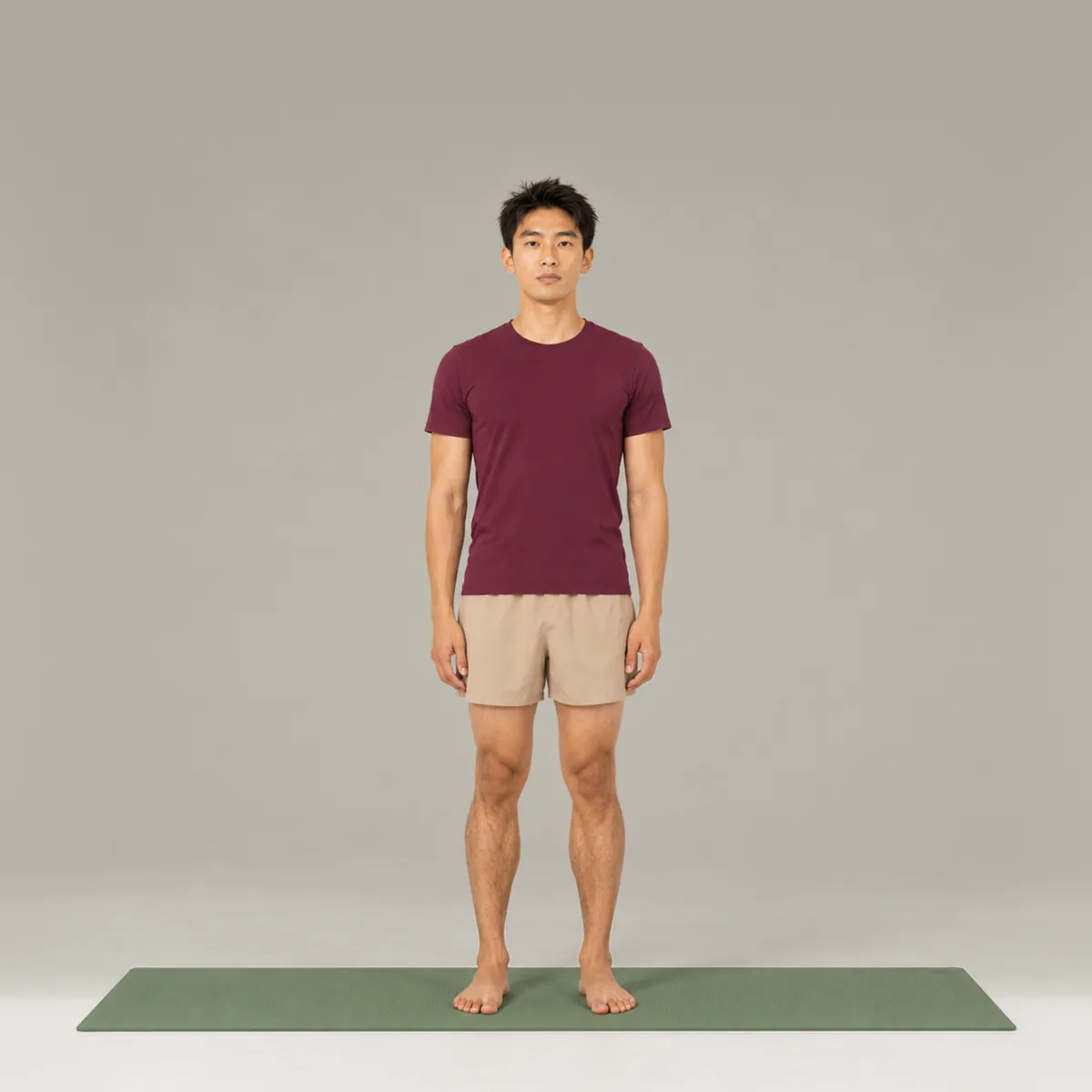
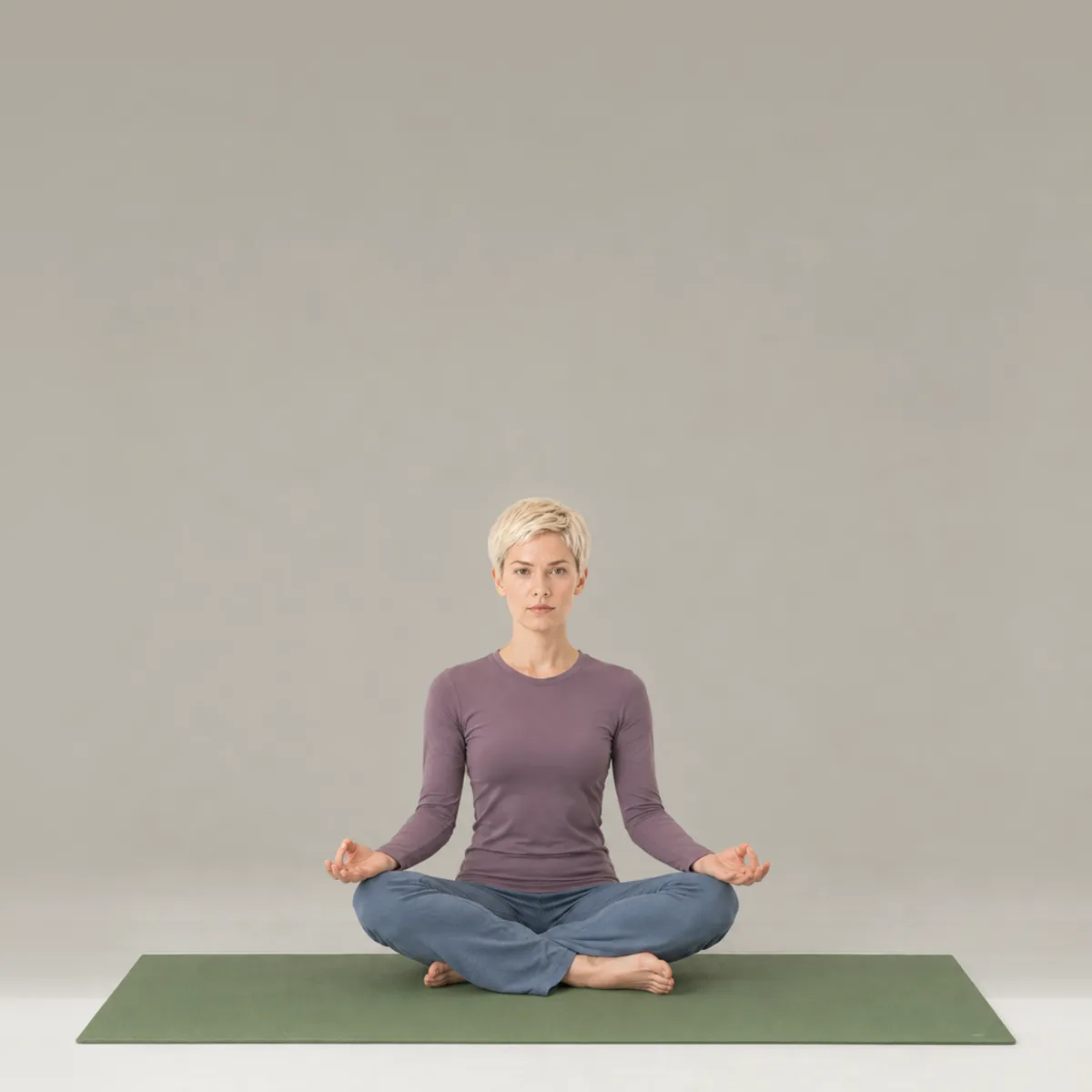
- Seated mountain, one minute. Sit tall, feet grounded, hands on thighs. Take slow breaths and let the crown of your head lift. It is the seated version of mountain pose.
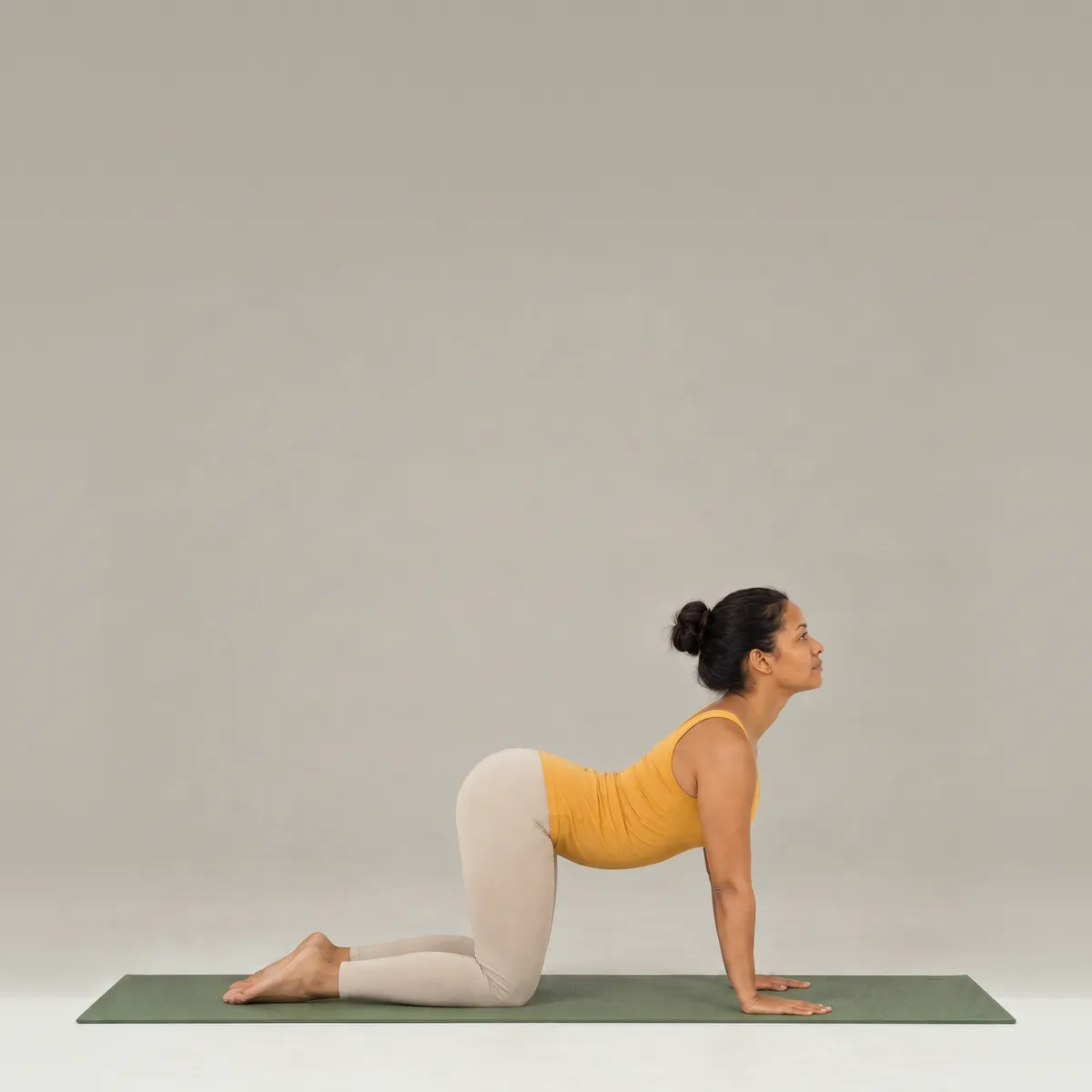
- Seated cat-cow, one minute. Hands on knees. Inhale, lift the chest and draw the shoulders back. Exhale, round the spine and let the chin drop.
- Overhead reach and side bend, 30 seconds each side. Reach both arms up, then hold the seat with one hand and lean gently the other way.
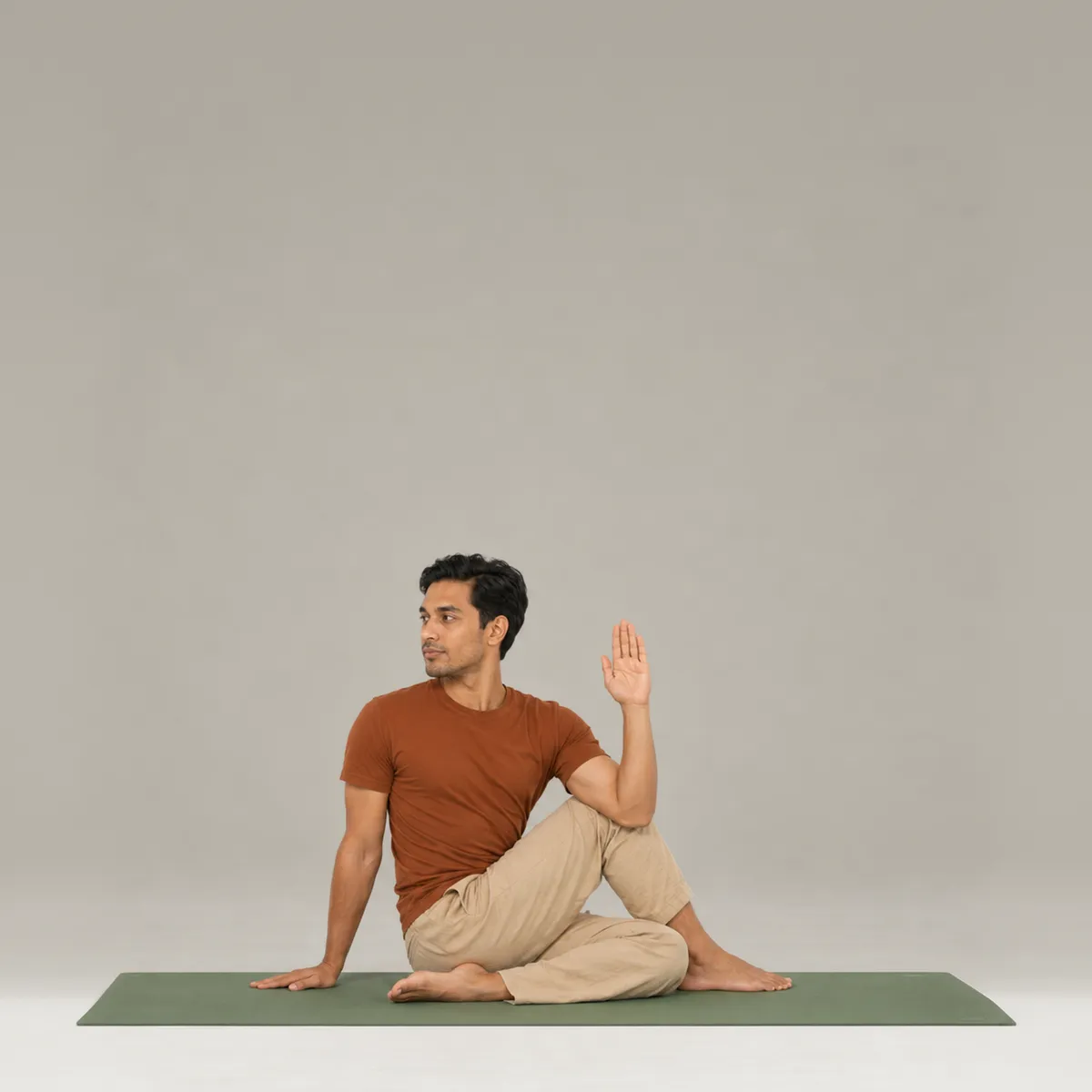
- Seated twist, five breaths each side. Sit tall, place one hand on the opposite knee and the other on the back of the chair, and turn from the middle of your back. It is a seated cousin of half lord of the fishes.
- Eagle arms, five breaths each side. Cross one arm under the other and lift the elbows slightly to stretch between the shoulder blades.
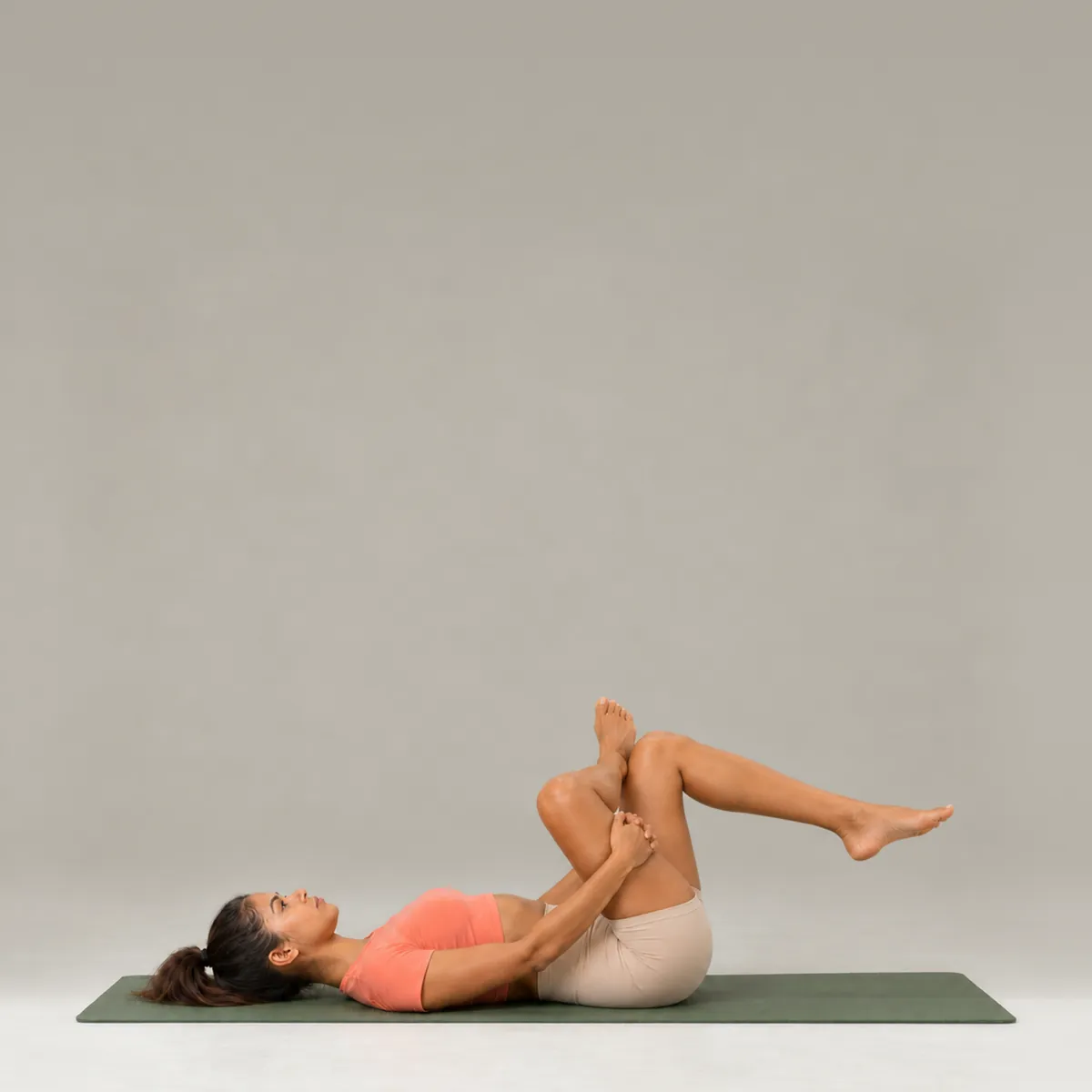
- Seated figure four, one minute each side. Rest one ankle on the opposite knee and hinge forward slightly with a long spine, like an upright reclined figure four. Skip it if your knee complains.
- Seated forward fold, one minute. Feet wide, let the chest fold toward the thighs and the arms hang. Come up slowly.
- Rest, one minute. Hands in your lap, eyes closed or soft, breathing slowly.
Move slowly throughout, especially when coming up from the forward fold. Lifting your head quickly can make some people lightheaded.
Adding standing poses with the chair
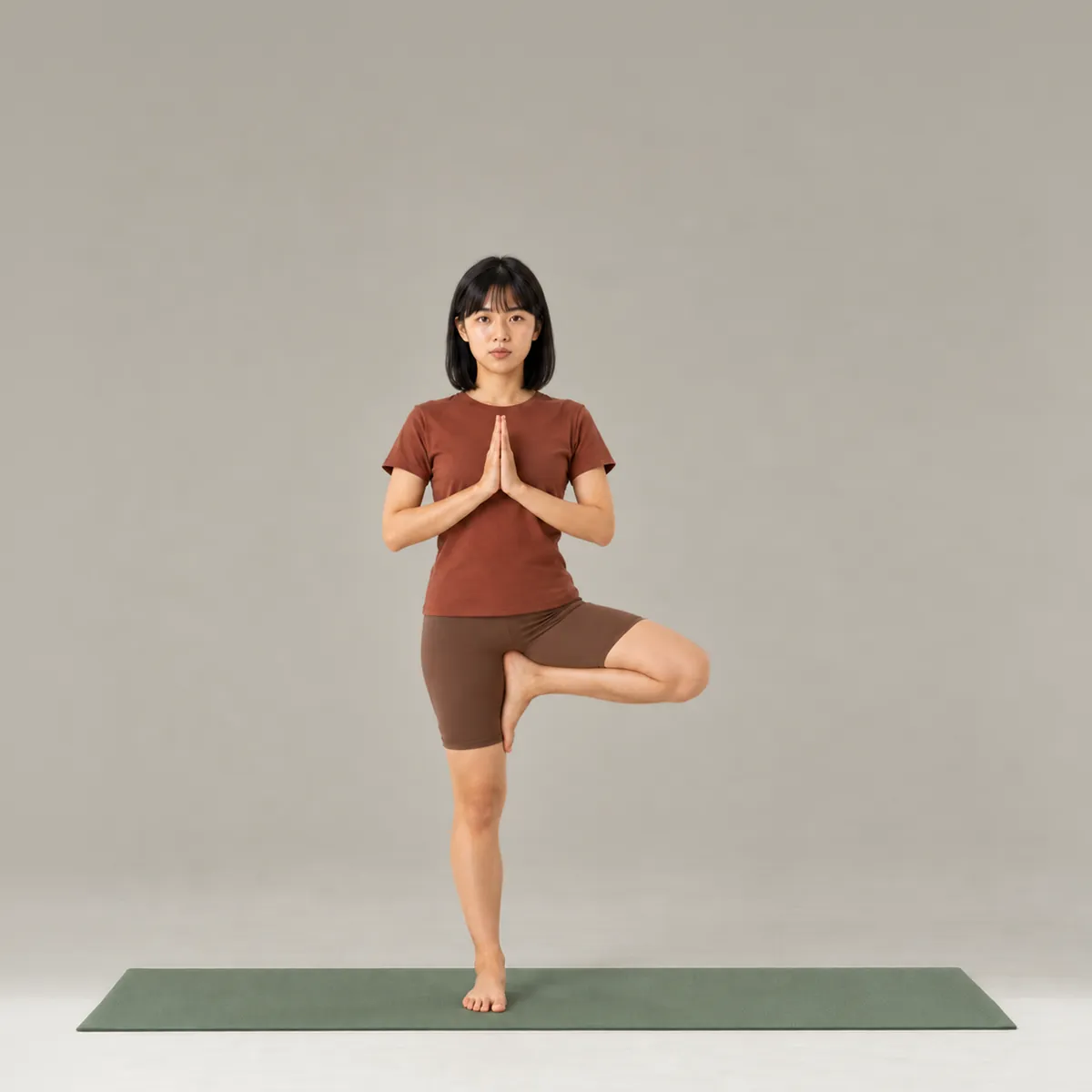
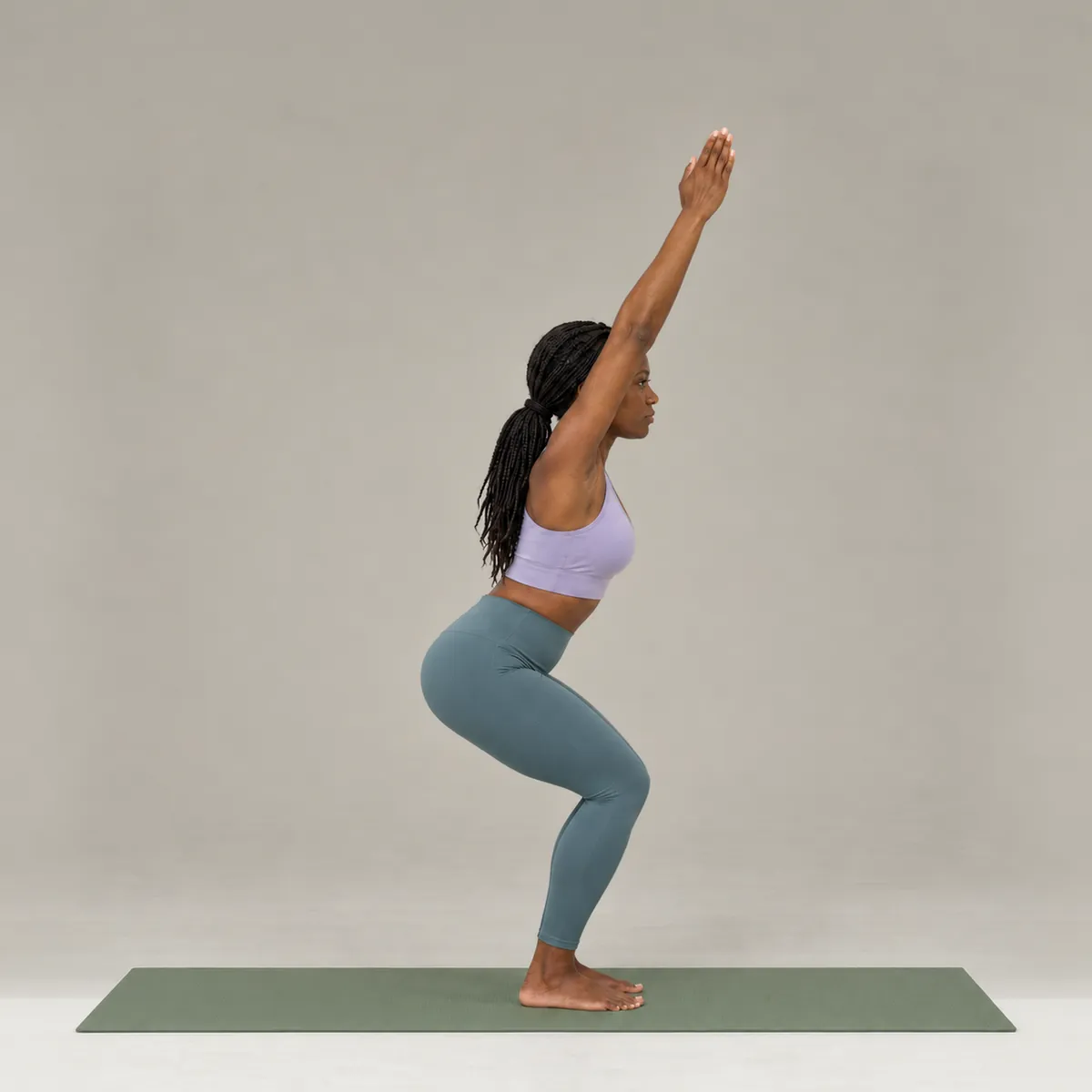
Once the seated routine feels easy, the chair can support standing work. Hold the back of the chair for tree pose, with your foot resting on your ankle or calf. Rest your hands on the seat for a supported standing forward bend. Practice chair pose with the seat behind you, sitting back until you hover just above it, ready to sit down if you need to.
The 5-minute standing yoga routine needs no floor work at all, and the seated poses collection has more ideas. If you are starting later in life, this guide to yoga after 40 covers pacing and expectations.
Staying safe
Keep movements within a comfortable range and keep breathing. If you have had recent surgery or a joint replacement, or you live with osteoporosis, a heart or blood pressure condition, or balance problems, ask your doctor or physiotherapist which movements are right for you. Stop if you feel sharp pain, dizziness, chest pain, or shortness of breath, and seek medical help if those symptoms do not settle quickly.
Where Kova helps
Seated practice still benefits from good alignment: a tall spine, level shoulders, and twists that come from the middle of the back. Kova lays out a path toward up to three goals you pick and designs each class for that day around your experience and any injuries you share. Calm spoken cues and breath pacing set the tempo, and if you use the camera, pose tracking runs entirely on your iPhone or iPad. Your camera feed never leaves your device.
The floor is optional. The breath and the attention are what make it yoga.
Link to or cite this note
<a href="https://www.flowwithkova.com/blog/chair-yoga">Chair yoga: a gentle seated practice for any age</a> (Kova journal)