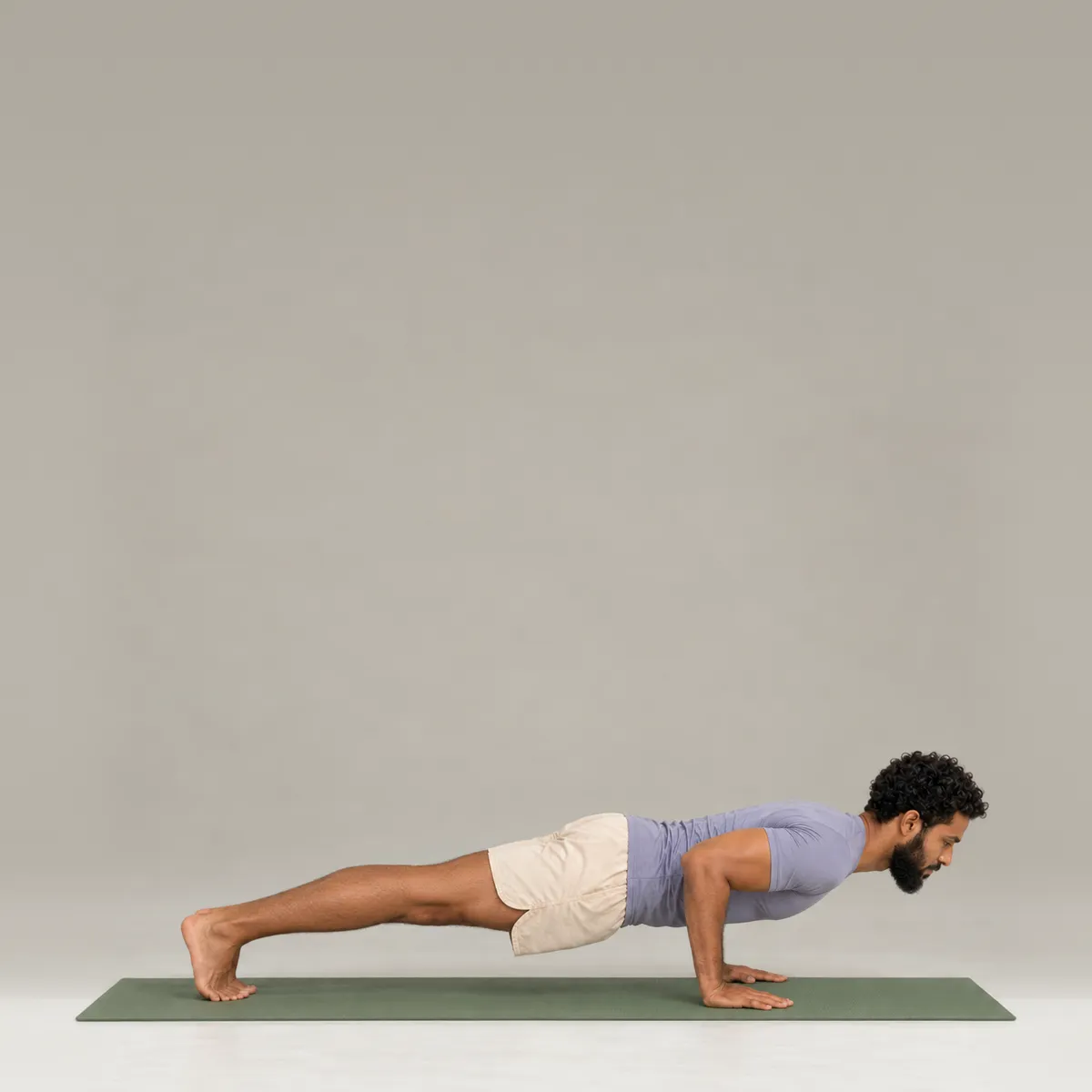
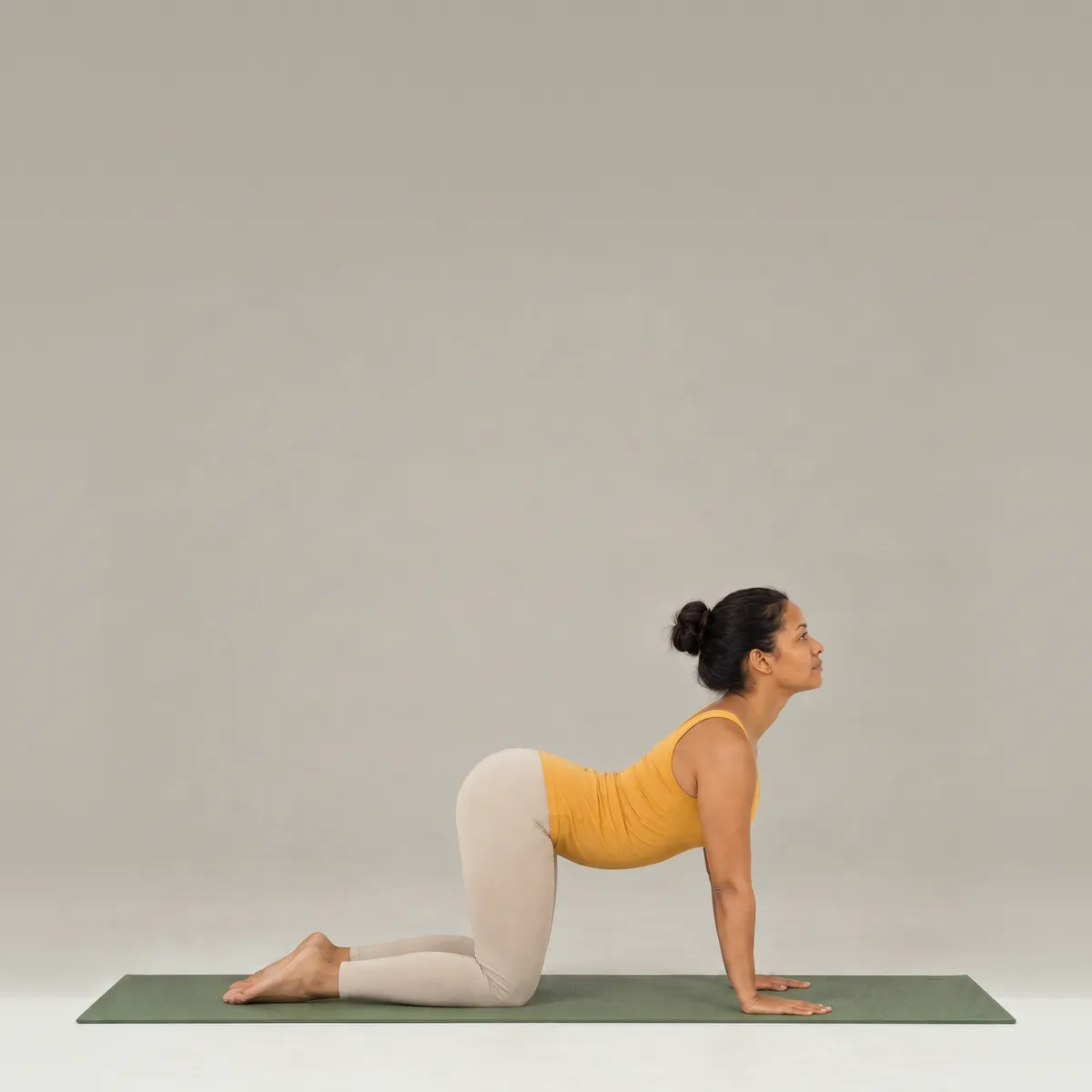
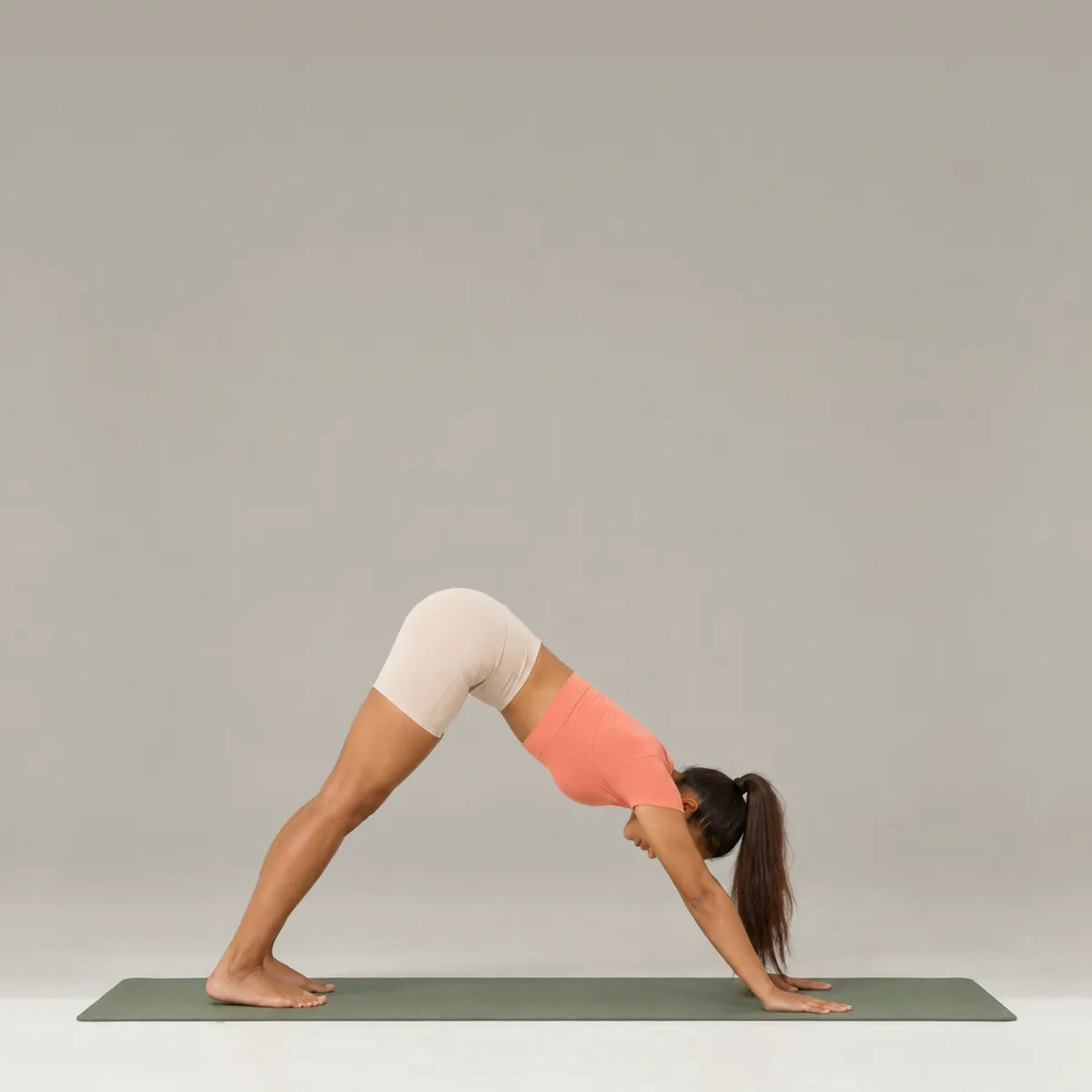
Many people start yoga expecting tight hamstrings and find that their wrists complain first. Plank, downward dog, tabletop, and chaturanga all ask the wrists to bear weight at a sharp angle, and most of us spend our days typing and scrolling, not standing on our hands.
Some discomfort while your wrists adapt is common. Ongoing or sharp pain is not something to push through. The good news is that much of it comes from how weight is spread through the hands, and that is something you can change.
Why the wrists take the load
In weight-bearing poses, the wrist is bent back close to the end of its range. If most of your weight sinks into the heel of the hand, the outer edge, or one small spot, that joint takes more than its share. Tired shoulders make it worse: when the shoulders stop pressing the floor away, the body tends to sag down into the hands.
Spread the weight through the whole hand
Spread your fingers wide with the middle fingers pointing forward. Then press down through the whole hand, especially the knuckles at the base of the index finger and thumb. Some teachers describe it as gripping the mat with your fingertips. The center of the palm may lift very slightly while its edges stay grounded.
That small action takes weight off the heel of the hand, where many people pile it. It takes practice, so check it at the start of each pose rather than expecting it to stay automatic.
Use your shoulders to lighten your hands
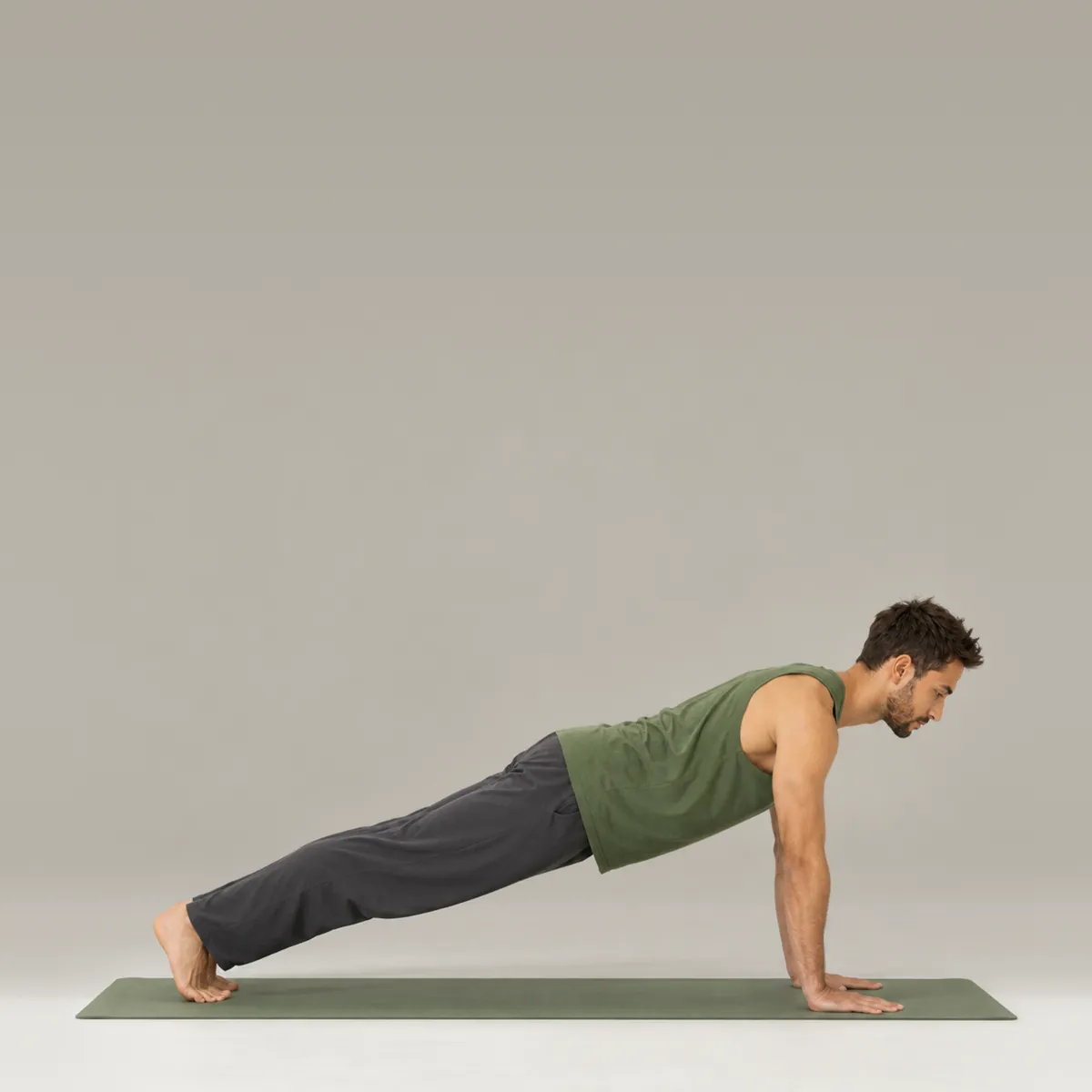
Steady wrists need active shoulders. In plank, press the floor away so the space between your shoulder blades broadens slightly, and keep your shoulders stacked over your wrists rather than drifting past them. In down dog, shift your weight back toward your legs so the hands carry less. If your down dog feels like a plank, your feet may be too far back and your hands too loaded.
Adjustments that change the angle
- Roll the front edge of your mat, or a folded towel, under the heels of your hands to reduce the wrist bend.
- Make fists and balance on your knuckles in tabletop or plank, keeping the wrists straight, if that feels comfortable.
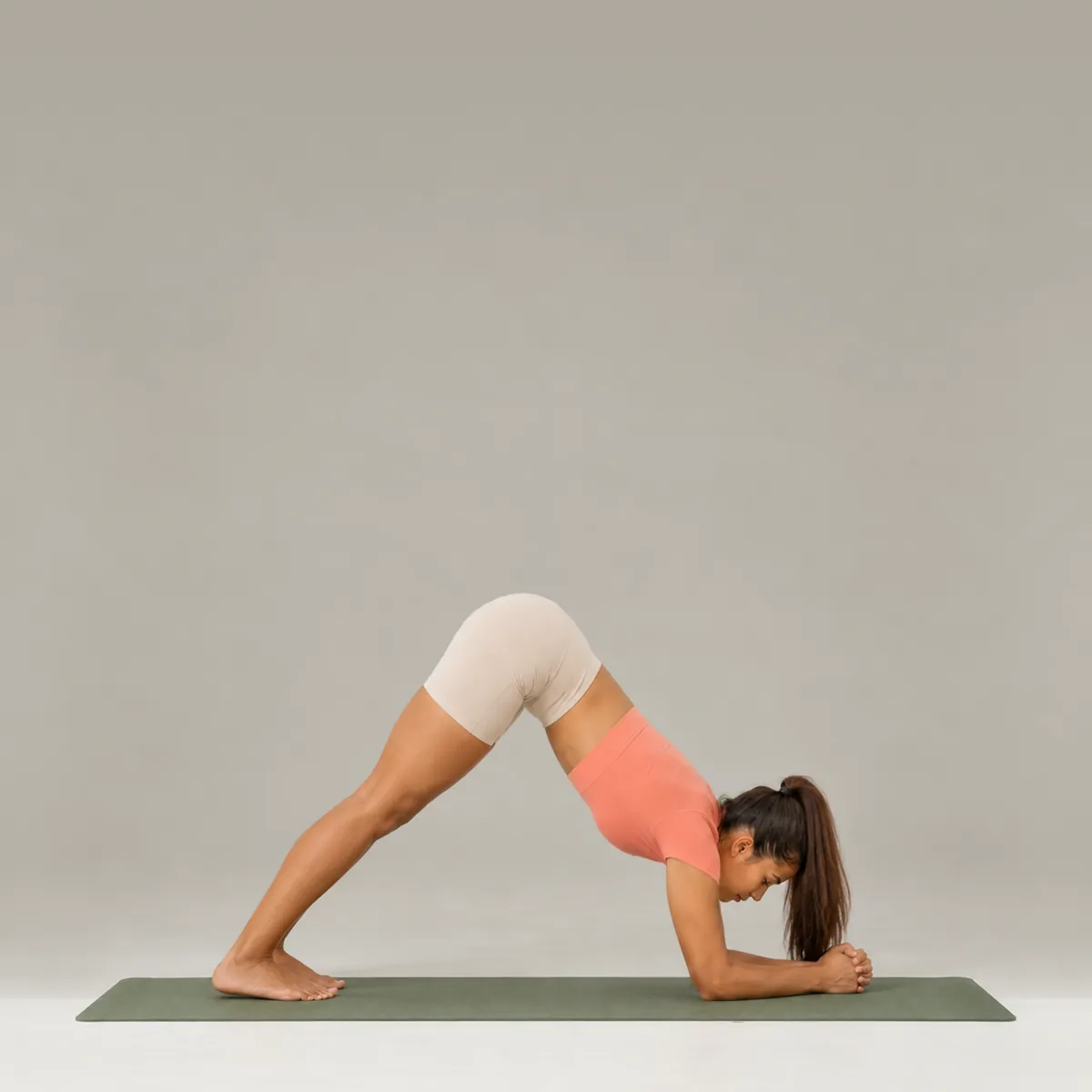
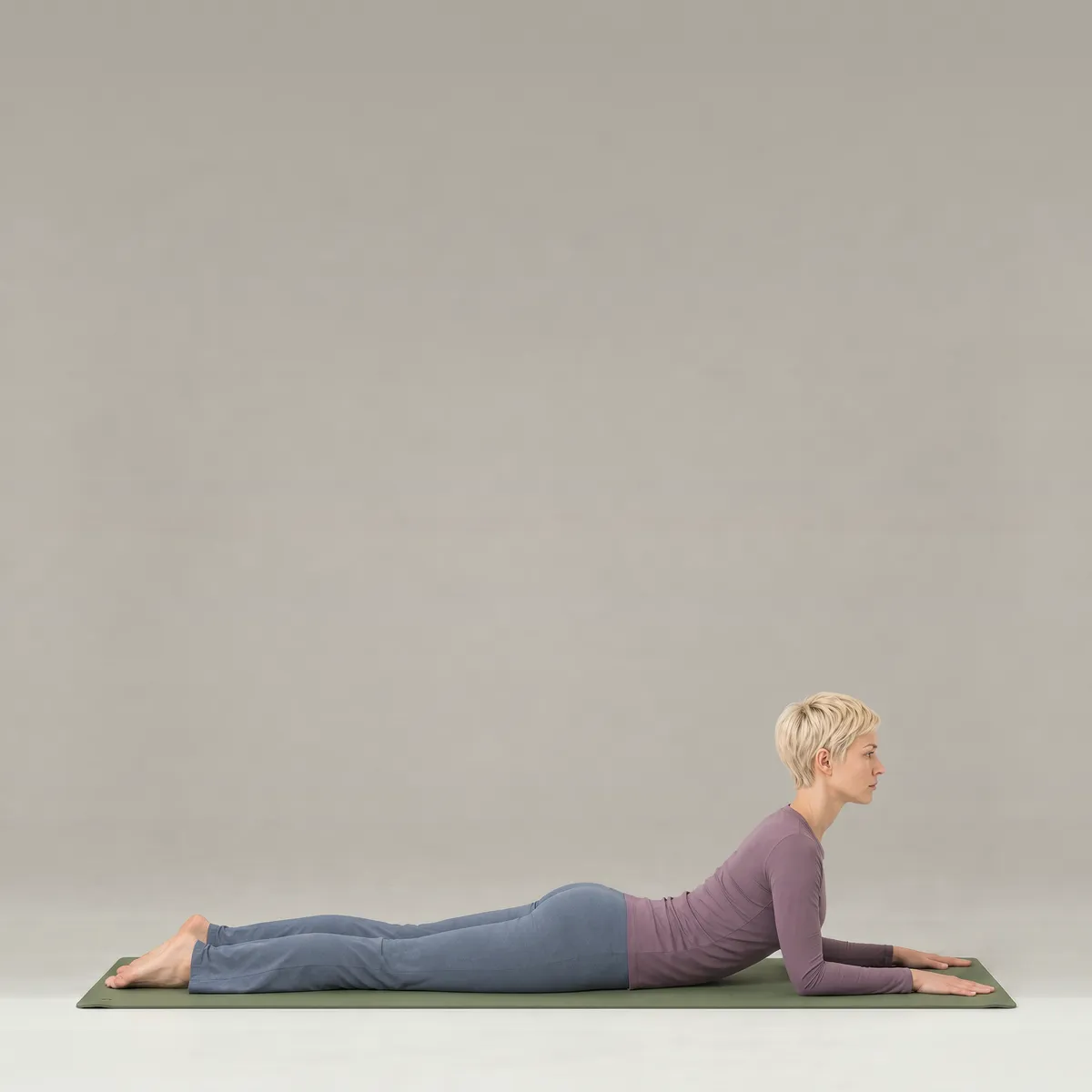
- Come onto your forearms: forearm plank, dolphin pose instead of down dog, and sphinx instead of upward dog.
- Drop your knees in plank and chaturanga to reduce the load while you build strength.
- Spend less time in long holds on your hands for now, and add time gradually as the wrists adapt.
Warm up and build tolerance
A minute of wrist care before practice helps many people. On hands and knees, gently shift your weight forward and back, then side to side. Circle your wrists in both directions. Turn your hands so the fingers point toward your knees and lean back gently to stretch the inner forearms. Keep all of it slow and well within comfort.
Over time, short holds in tabletop, cat-cow, and knees-down plank build tolerance gradually. Wrists, like the rest of the body, tend to adapt to load that increases slowly.
When to see someone
Stop and check with a doctor or physiotherapist if you have sharp pain, swelling, pain that lasts after practice or wakes you at night, numbness or tingling in the fingers, or pain after a fall or injury. Numbness and tingling in particular can point to nerve irritation, such as carpal tunnel syndrome, which deserves a proper assessment.
Where Kova helps
Wrist strain often starts higher up, with shoulders that sink or hips that sag and shift weight forward into the hands. Kova uses on-device pose tracking to read your alignment while you hold a pose, and gives one calm spoken cue at a time to help you spread the load. It also builds your plan around any injuries you tell it about. Your camera feed never leaves your device.
Your hands are a foundation. Spread the load and the whole pose gets lighter.
Link to or cite this note
<a href="https://www.flowwithkova.com/blog/yoga-wrist-pain">Wrists hurt in yoga? How to protect them in plank and downward dog</a> (Kova journal)