Chaturanga, the low push-up between plank and upward dog, can appear dozens of times in a single flow class. That repetition is exactly why its form matters. A small habit, like dipping the shoulders toward the floor, is harmless once and wearing when it is repeated thirty times a session, several sessions a week.
It is also one of the hardest poses to do well. It asks for real upper-body and core strength, and most beginners do not have that yet. The good news is that you do not need the full version to practice it well.
What a good chaturanga looks like
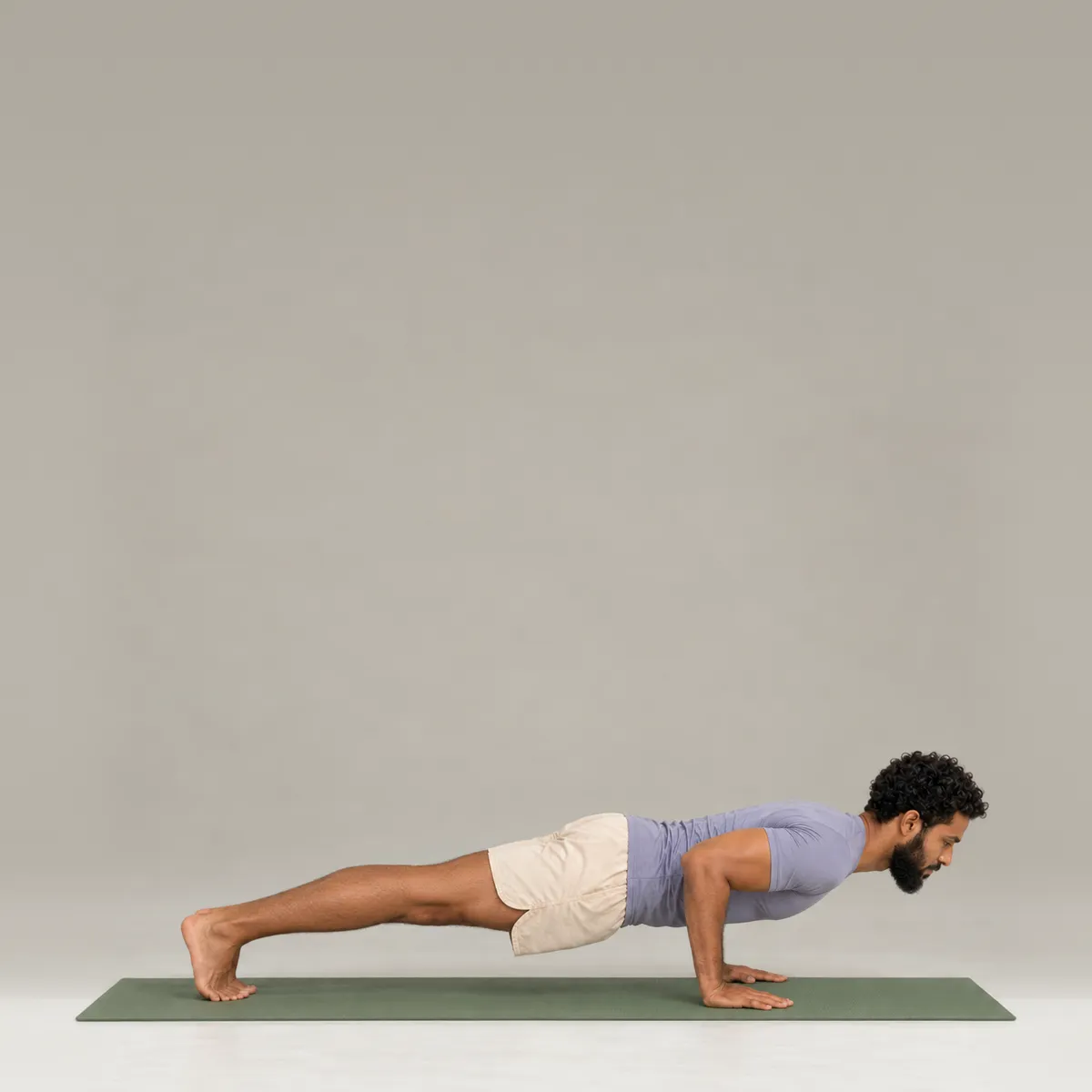
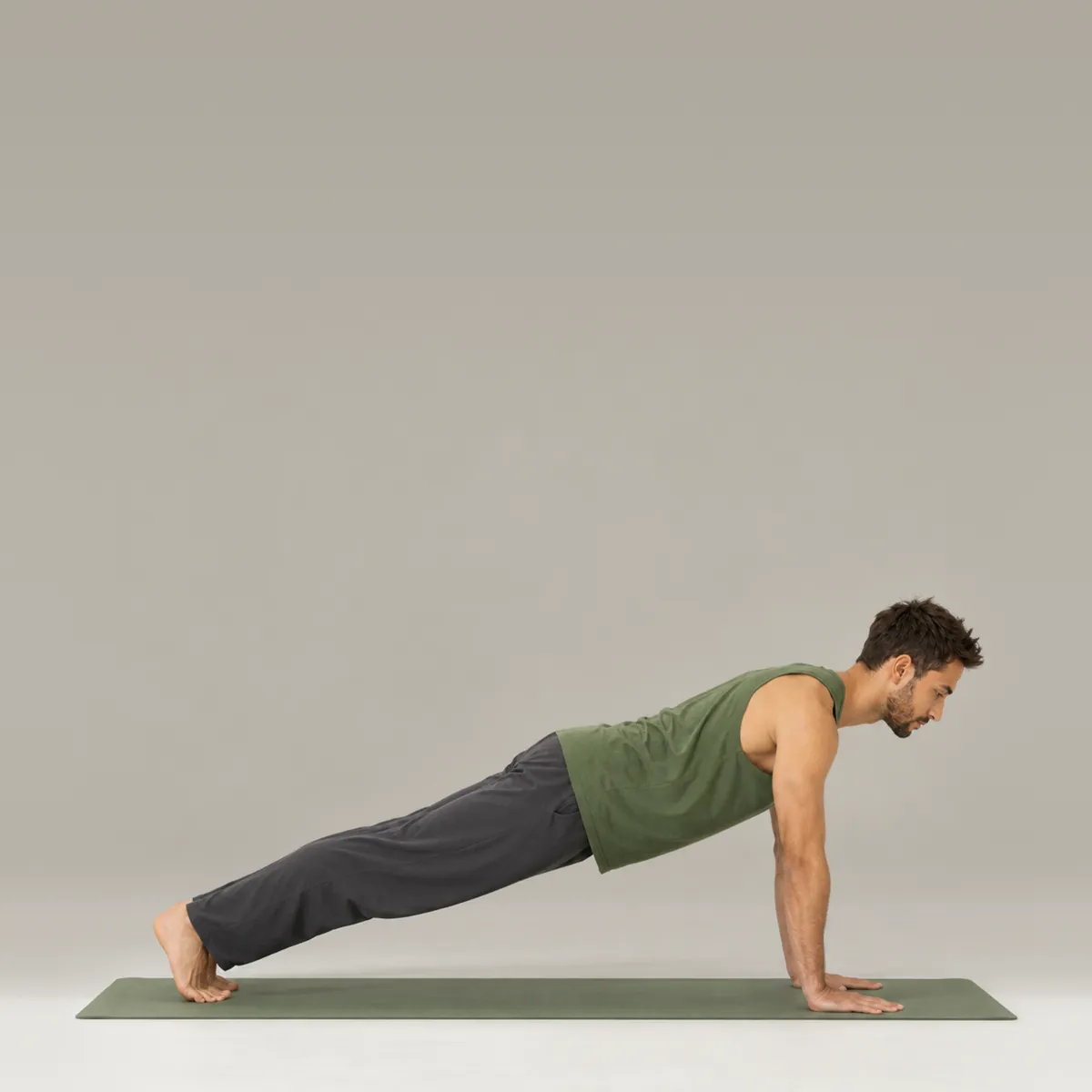
From plank, shift slightly forward onto your toes and bend your elbows straight back, lowering as one piece until your upper arms are roughly parallel to the floor, or a little higher. Your elbows stay close to your ribs, your shoulders stay level with or above your elbows, and your body keeps the long line it had in plank.
- Elbows pointing back, hugging the sides of the ribs.
- Shoulders no lower than the elbows, chest broad.
- Belly engaged, hips level with the shoulders.
- Legs active, heels reaching back.
- Gaze slightly ahead of your hands, neck long.
Mistake one: shoulders dipping below the elbows
This is the big one. When you lower too far, the fronts of the shoulders roll down toward the mat and take weight in a position they are poorly placed to support. It often happens late in a long flow, when the arms are tired.
The fix is to stop higher. Lower only as far as you can while keeping the shoulders level with the elbows, then move on to the next pose. A shallower chaturanga with the shoulders in a good position is more useful than a deep one that sags.
Mistake two: elbows flaring out
If your elbows splay to the sides, the movement turns into a wide push-up and the load shifts onto the shoulders and chest. Keep the elbows tracking straight back over the wrists, close to the body. It feels harder, which is usually a sign the right muscles are working.
Mistake three: hips sagging or piking
Chaturanga is a plank that lowers, so the same plank mistakes apply. Hips that sag let the lower back take over, and hips that pike up break the line and make the lowering awkward. Draw the lower ribs toward the hips and keep the legs firm so the whole body moves as one.
How to build toward a full chaturanga
Strength for chaturanga is built in smaller pieces. Each of these keeps the same shape with less load:
- Knees-down chaturanga: from a plank with the knees on the mat, lower halfway with the elbows hugging in, then press back up or lower all the way to the floor.
- Plank holds: 20 to 30 seconds with steady breath, to build the trunk strength that keeps the body in one line.
- Slow lowering: from plank, lower all the way to your belly over three to five counts, elbows in. Reset on your knees and repeat.
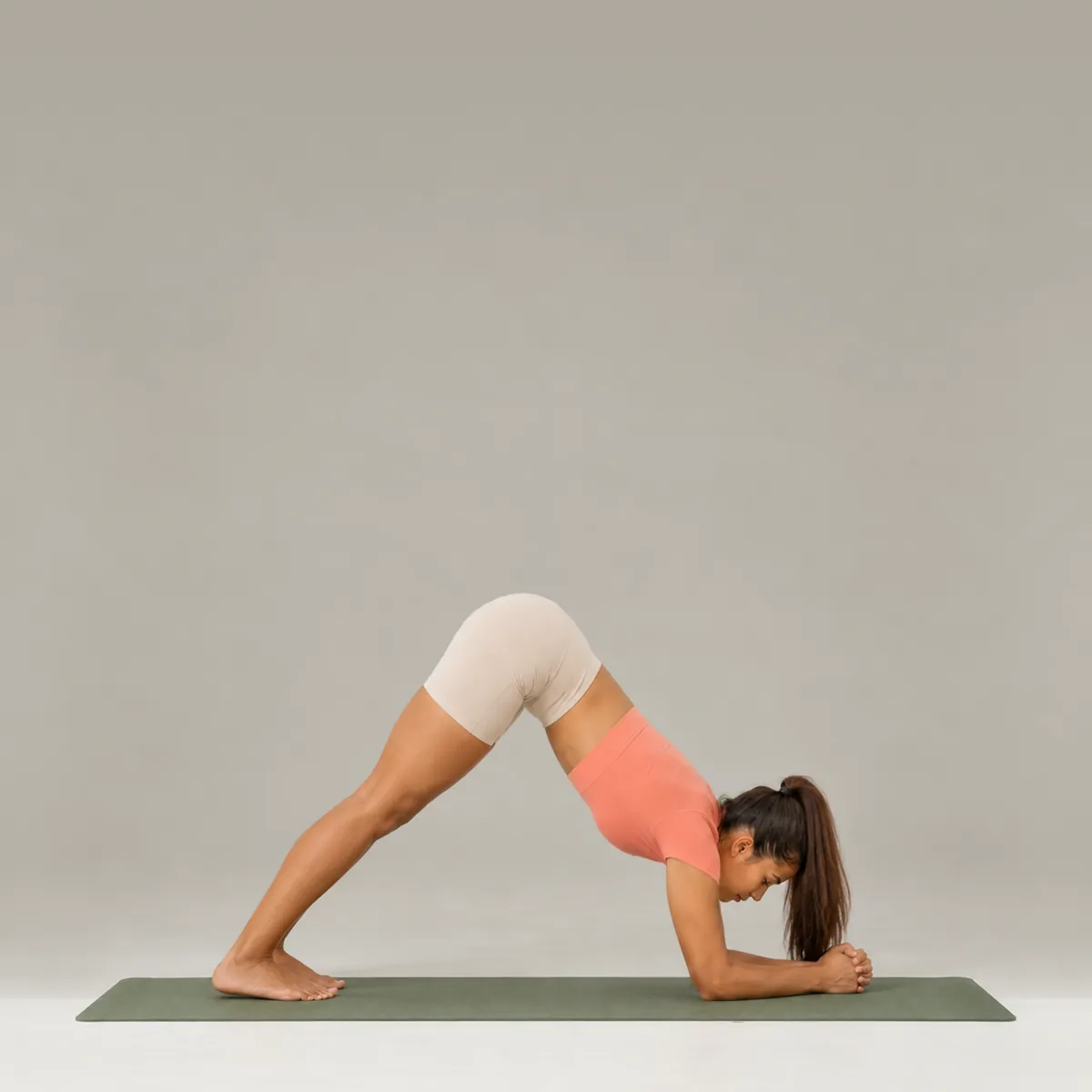
- Dolphin pose and forearm plank, to build shoulder stability without loading the wrists.
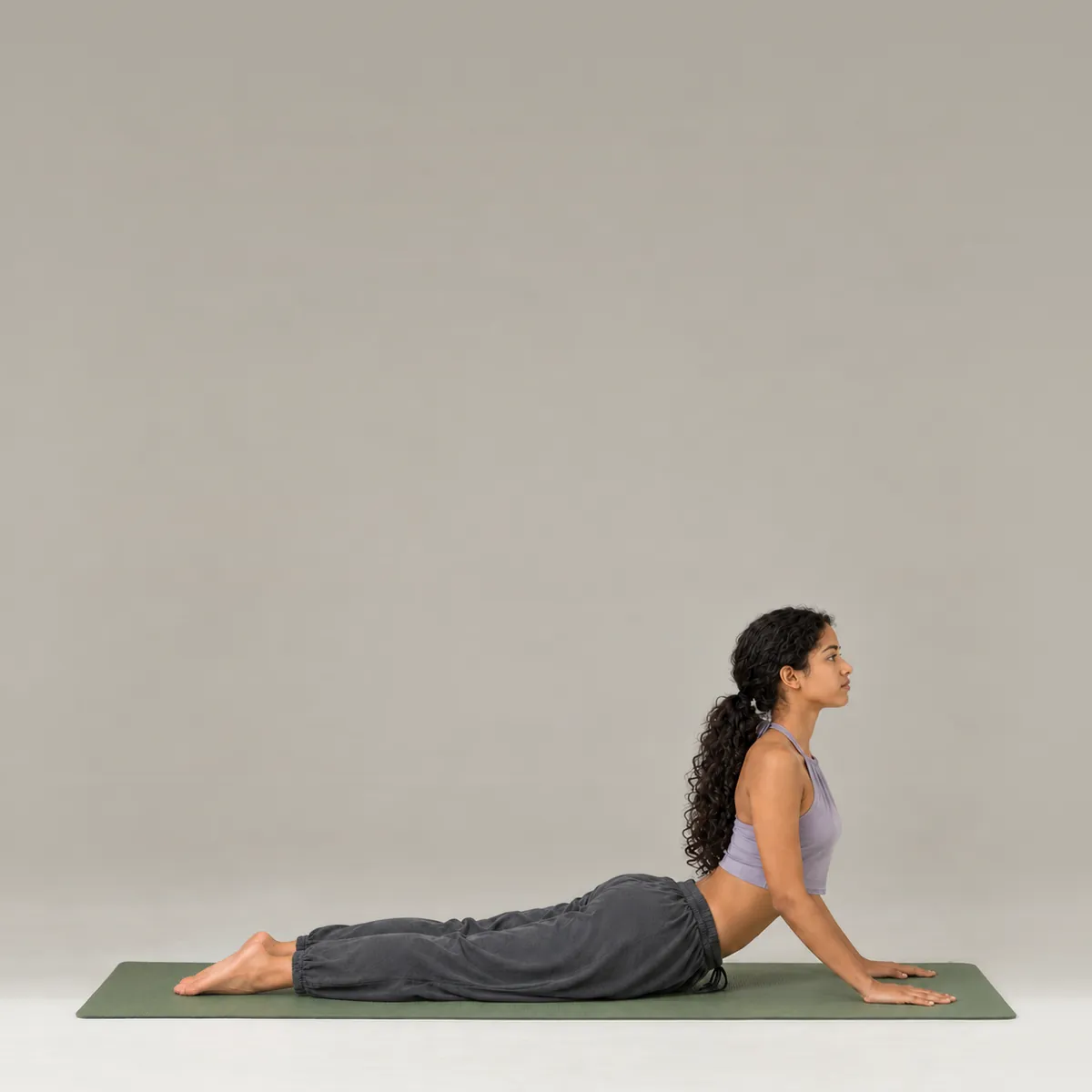
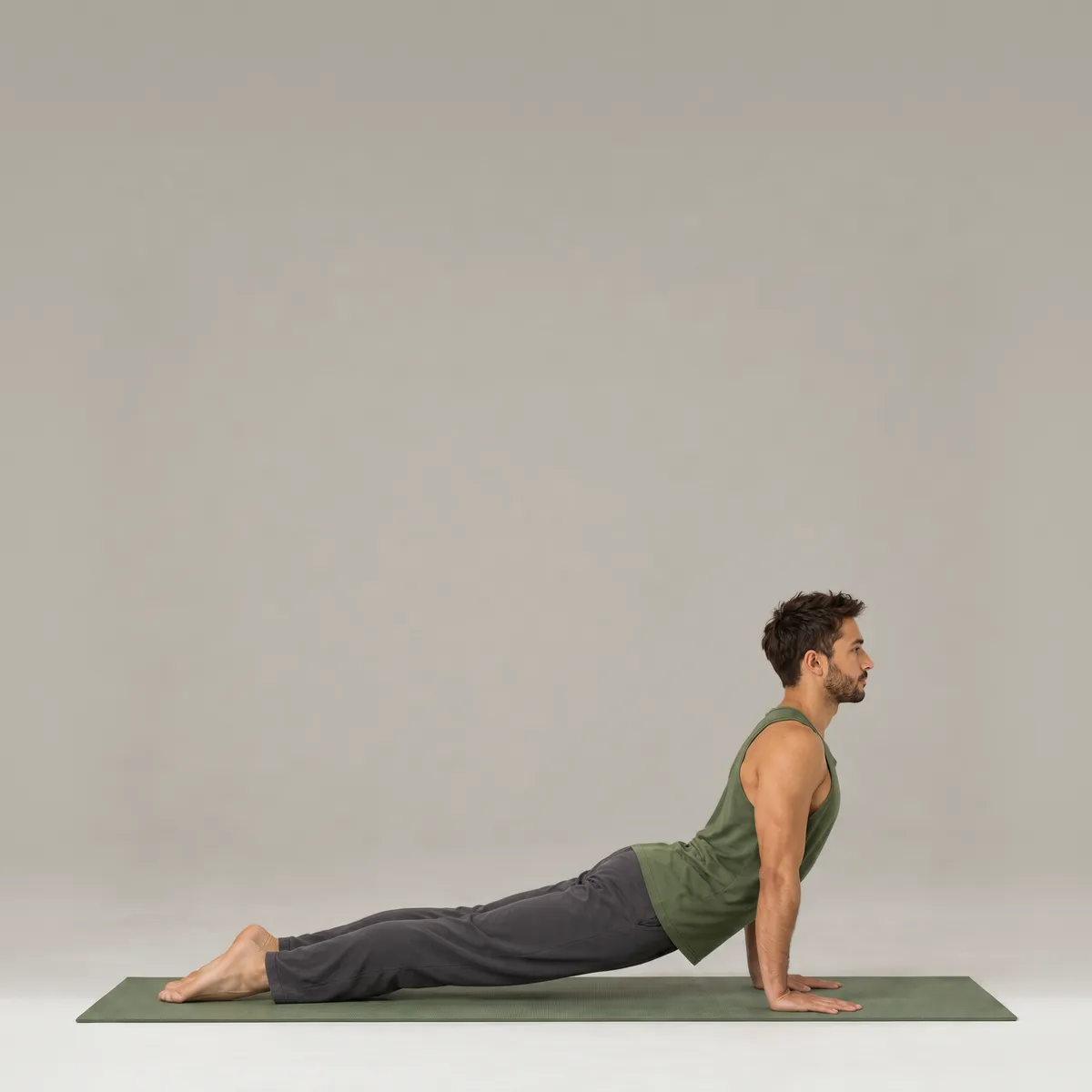
In a flow, you can always lower your knees before chaturanga, or skip it and move from plank straight to your belly and into cobra instead of upward dog. These are not lesser versions. They are how most strong practitioners built the pose in the first place.
When to ease off
Effort in the arms, chest, and belly is expected. A pinch at the front of the shoulder, pain that lingers after practice, or discomfort in the wrists is a signal to shorten the range, use the knees-down version, or rest. If you have a shoulder injury or ongoing shoulder pain, check with a physiotherapist or doctor before practicing chaturanga. If your wrists are the problem, these wrist-friendly adjustments can help.
Where Kova helps
Chaturanga happens fast, and you cannot see your own shoulders while you lower. Kova uses on-device pose tracking to read your alignment and gives calm spoken cues one at a time, such as keeping your hips level with your shoulders. A live form score shows how the pose is going, and your camera feed never leaves your device.
A strong chaturanga is not a low one. It is one that keeps its shape.
Link to or cite this note
<a href="https://www.flowwithkova.com/blog/chaturanga-form">Chaturanga form: how to lower without hurting your shoulders</a> (Kova journal)