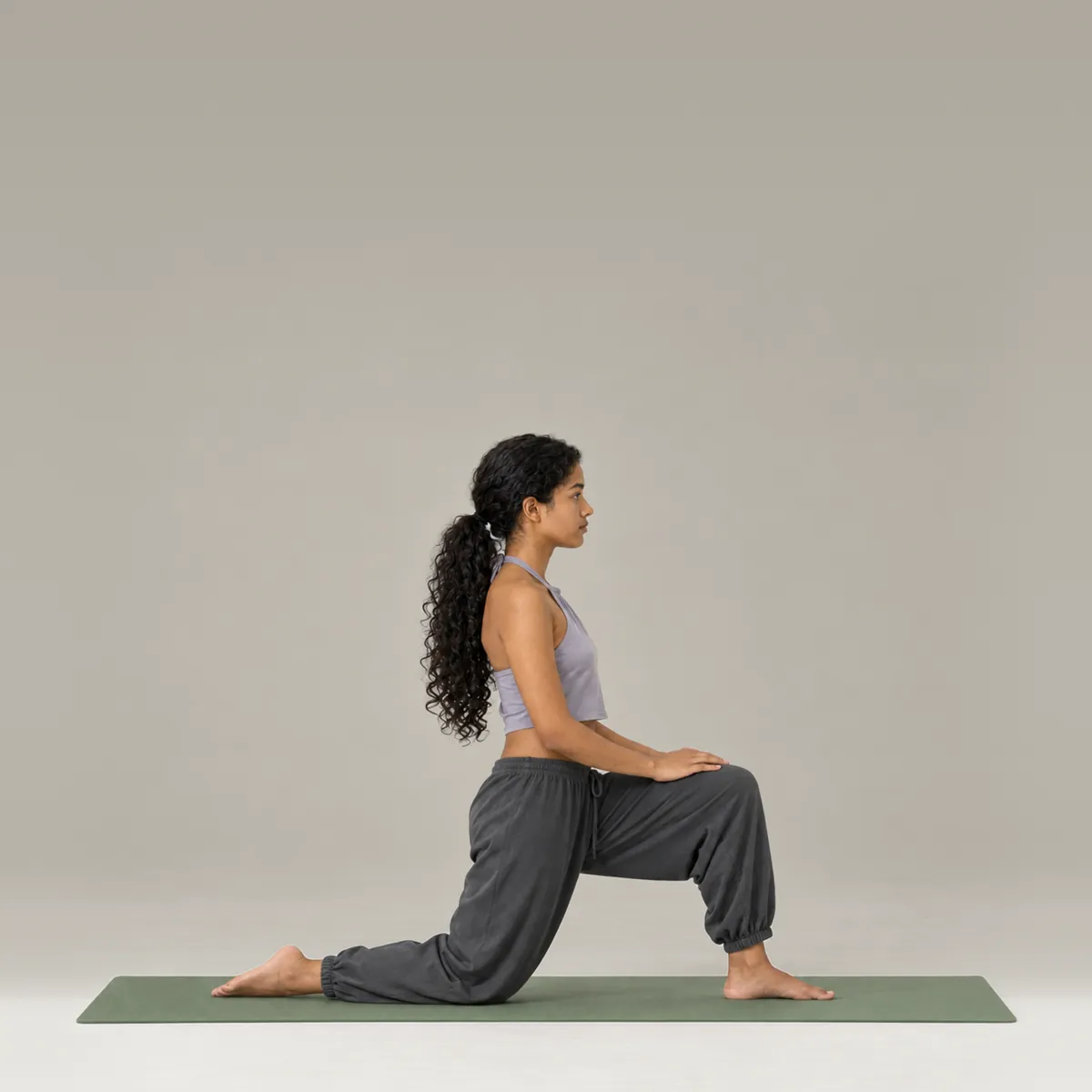
Crescent lunge
Ashta Chandrasana
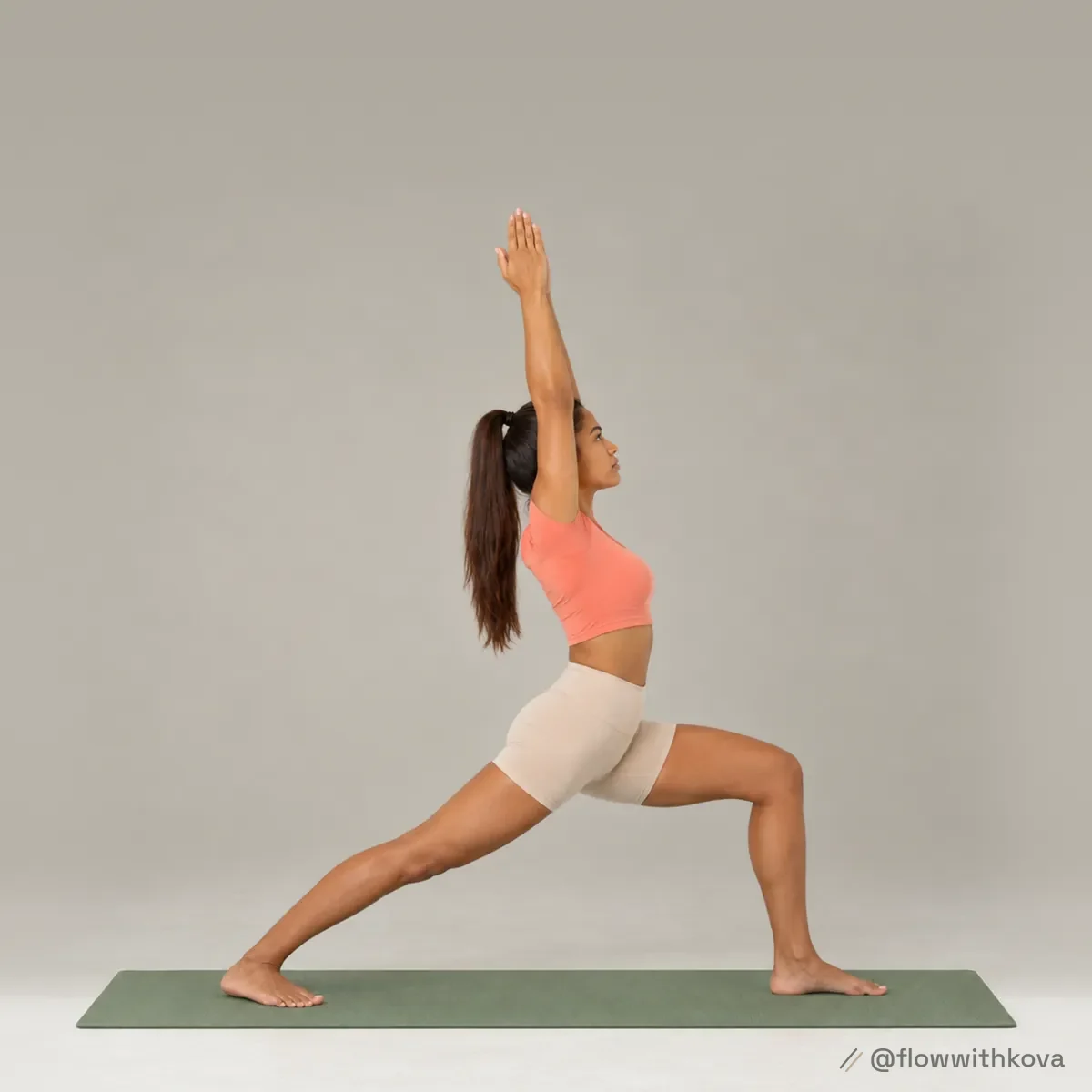
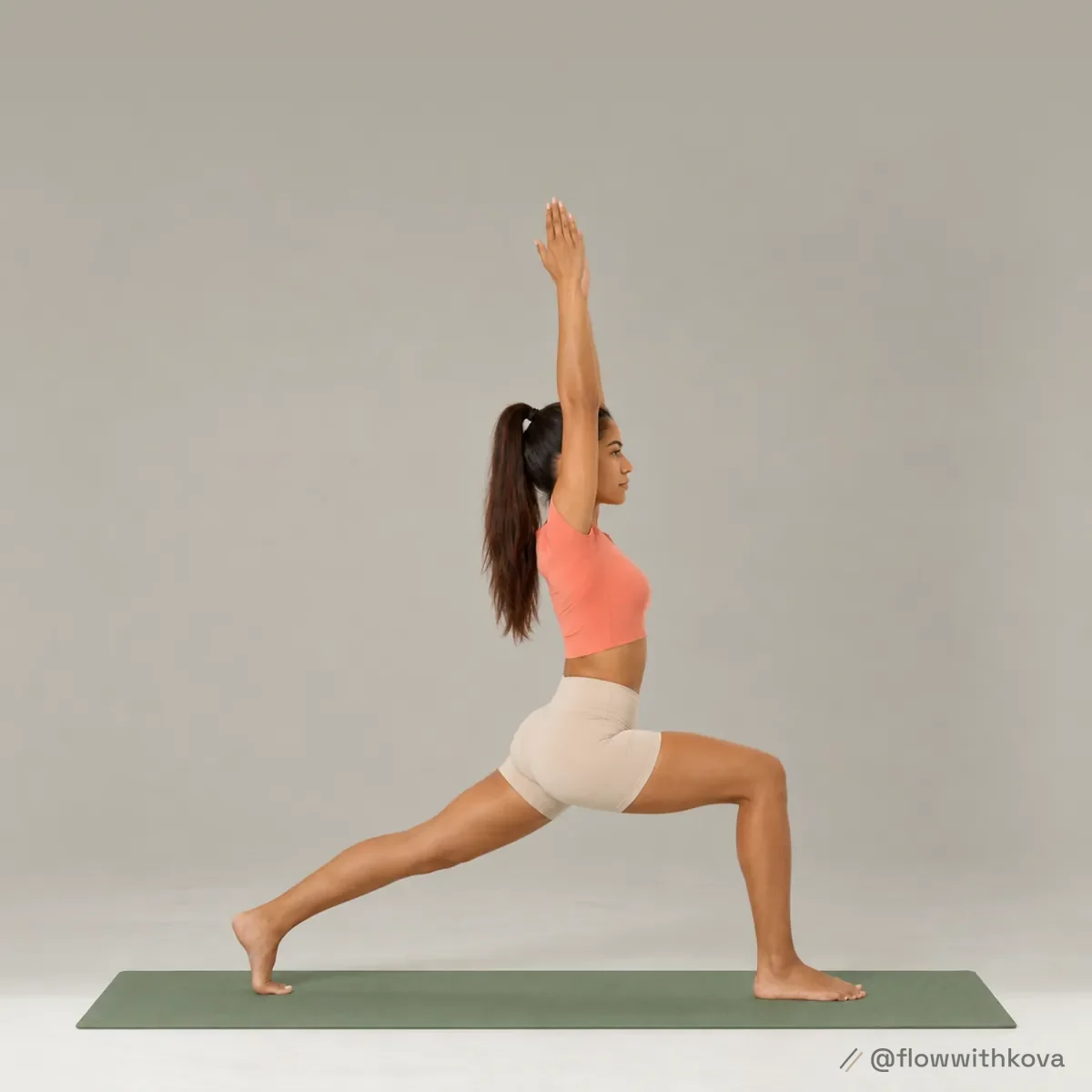
Crescent lunge is a high lunge with the back heel lifted and the arms reaching overhead. It strengthens the legs and stretches the front of the hip on the back leg. Because the back heel is off the floor, it asks for steady balance and a long, active back leg.
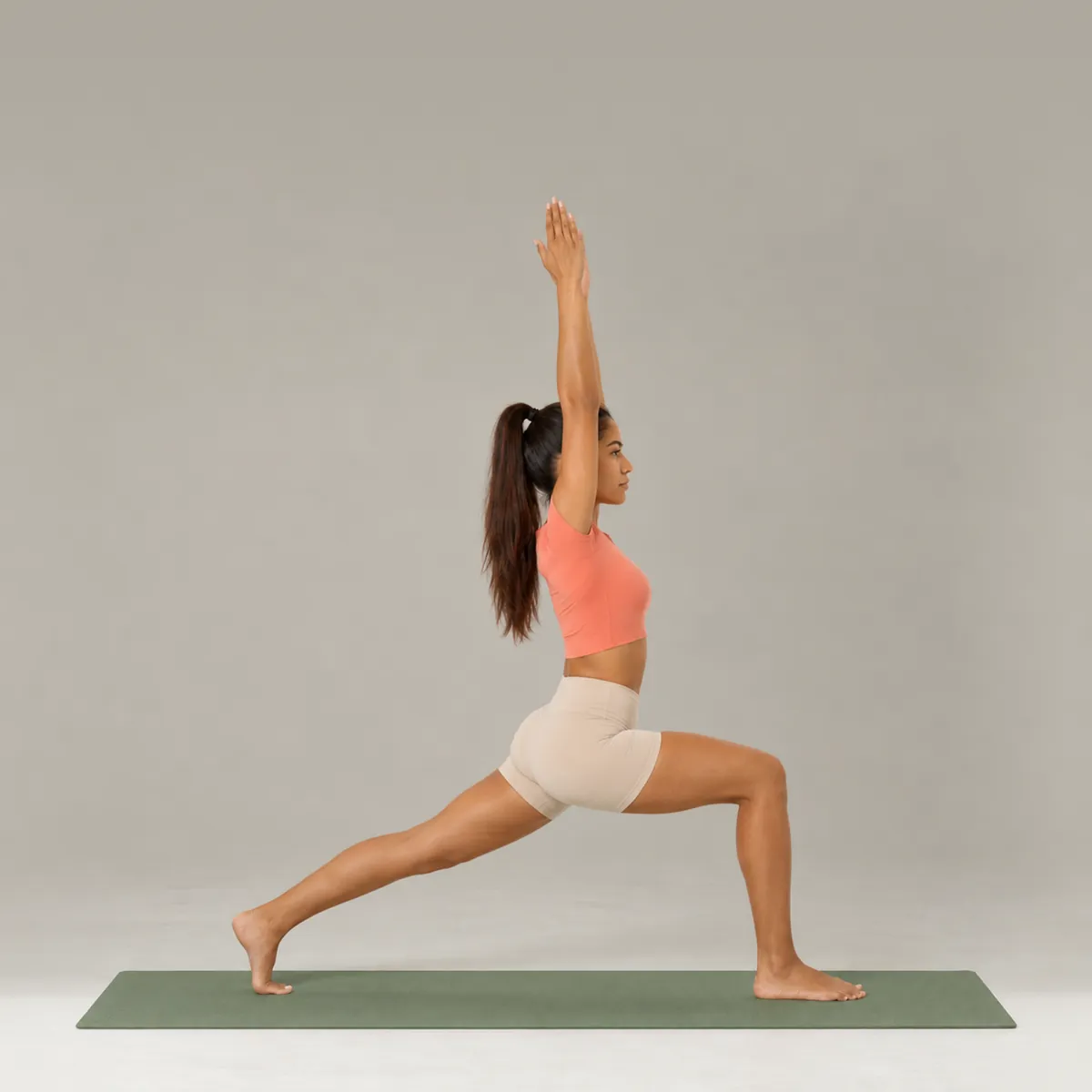
Torso rises tall over the hips.
How to do Crescent lunge
Read each step once before you try it. Move slowly, and come out of the pose whenever your breath gets short.
- Level
- Beginner
- Discipline
- Yoga
- Works
- Legs, Hip Flexors, Glutes, Core
- Family
- Standing poses
- Also called
- High lunge, Crescent pose
- 01
Start in downward dog with your hands shoulder width apart.
- 02
Step your right foot forward between your hands and line your right knee up over your ankle.
- 03
Stay on the ball of your left foot with the heel lifted, and keep your feet about hip width apart side to side.
- 04
Press back through your left heel and lift the back of your left thigh so the back leg stays long and strong.
- 05
Bring your hands to your front thigh and lift your torso upright over your hips.
- 06
Reach your arms overhead with your palms facing each other, and soften your shoulders away from your ears.
- 07
Draw your lower belly in and lengthen your tailbone toward the floor so your lower back stays long.
- 08
Hold for five breaths, then lower your hands to the mat, step back to downward dog, and switch sides.
Form checklist
What good form looks like.
Once you are in the pose, check these one at a time. If one slips, ease off a little until it comes back.
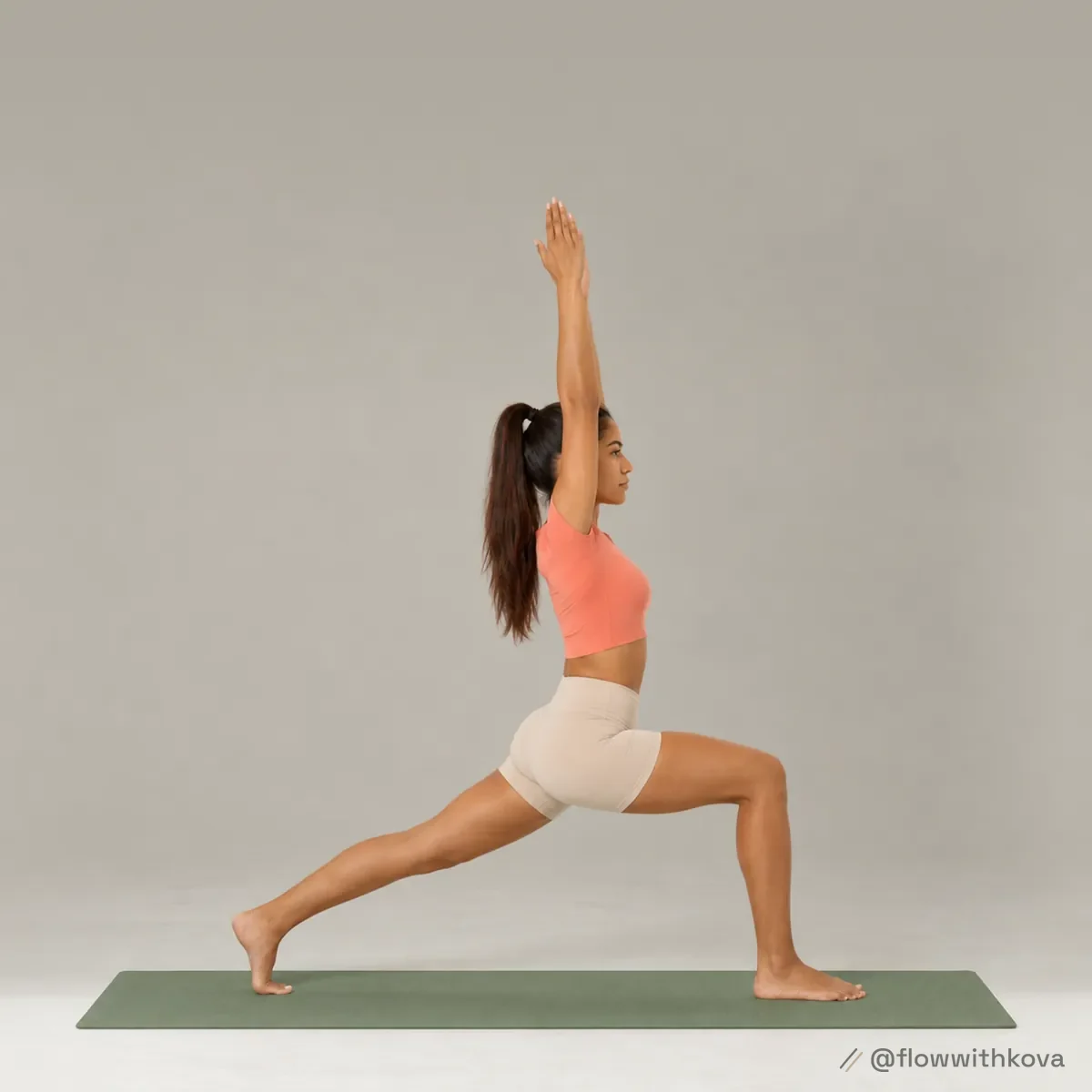
- 01Front knee stacks over the front ankle.
- 02Back heel lifts and reaches toward the wall behind you.
- 03Back leg stays straight and active.
- 04Feet stay on separate tracks for balance.
- 05Torso rises tall over the hips.
- 06Lower ribs stay soft as the arms reach up.
Common mistakes and how to fix them.
Most of these are hard to feel from the inside, so check them one by one.
- 01
The front knee travels well ahead of the ankle.
The fix
Step your back foot a little farther back until your front shin is close to vertical.
- 02
The back knee bends and the back leg goes soft.
The fix
Press back through your heel and lift the back of your thigh. Shorten your stance a little if you cannot keep the leg straight.
- 03
The lower back arches and the ribs flare forward.
The fix
Draw your lower belly in, soften your front ribs down, and bring your arms slightly forward if needed.
- 04
The feet line up on one narrow track, so you wobble.
The fix
Step your back foot out to the side until your feet sit about hip width apart.
Modifications for your body
Easier and supported ways into the pose.
- Lower your back knee to the mat for a low lunge if your balance feels shaky.
- Keep your hands on your hips or on blocks beside your front foot.
- Shorten your stance and bend the front knee less.
- Practice beside a wall and rest one hand on it for support.
Benefits over time
What regular practice of this pose can help with.
- Strengthens the thighs, glutes, and calves.
- Stretches the hip flexors of the back leg.
- Builds balance on a narrow base.
- Opens the chest and lengthens the sides of the body.
Breath
Inhale as you lift your torso and arms, then breathe evenly through the nose while you hold. Use each exhale to settle a little deeper into the front knee.
Take care
Take care with knee, hip, or lower back injuries, and lower the back knee if your balance feels unsteady. Stop if you feel sharp pain. Kova is not a medical device and does not diagnose injuries.
By Fayeed PawaskarUpdated
Use this photo
This photo is free to use on your blog, in articles, newsletters, and class handouts. Keep the credit link to Kova. Image use terms
Download photo (WebP, 1200 x 1200)<figure>
<a href="https://www.flowwithkova.com/poses/crescent-lunge"><img src="https://www.flowwithkova.com/pose-photos/crescent-lunge.webp" alt="A woman in crescent lunge on a green yoga mat, back heel lifted and arms reaching overhead" width="1200" height="1200" loading="lazy" style="max-width:100%;height:auto"></a>
<figcaption>Crescent lunge (Ashta Chandrasana). Photo: <a href="https://www.flowwithkova.com/poses/crescent-lunge">Kova pose library</a></figcaption>
</figure>Practice with Kova
Get cued while you hold it.
Kova tracks your front knee and back leg with on-device pose tracking. If your back knee starts to sag toward the mat or your front knee drifts ahead of your ankle, a calm spoken cue helps you lift and restack.
- Pose tracking runs on your device. Your camera feed is never uploaded and never leaves your iPhone or iPad.
- Prefer no camera? Every session has an audio-only mode.
- Free to download on iPhone and iPad. Kova Plus starts with a 3-day free trial for new subscribers.
Crescent lunge questions
Back to the pose libraryWhat is the difference between crescent lunge and Warrior I?
Is crescent lunge the same as high lunge?
Why do I lose my balance in crescent lunge?
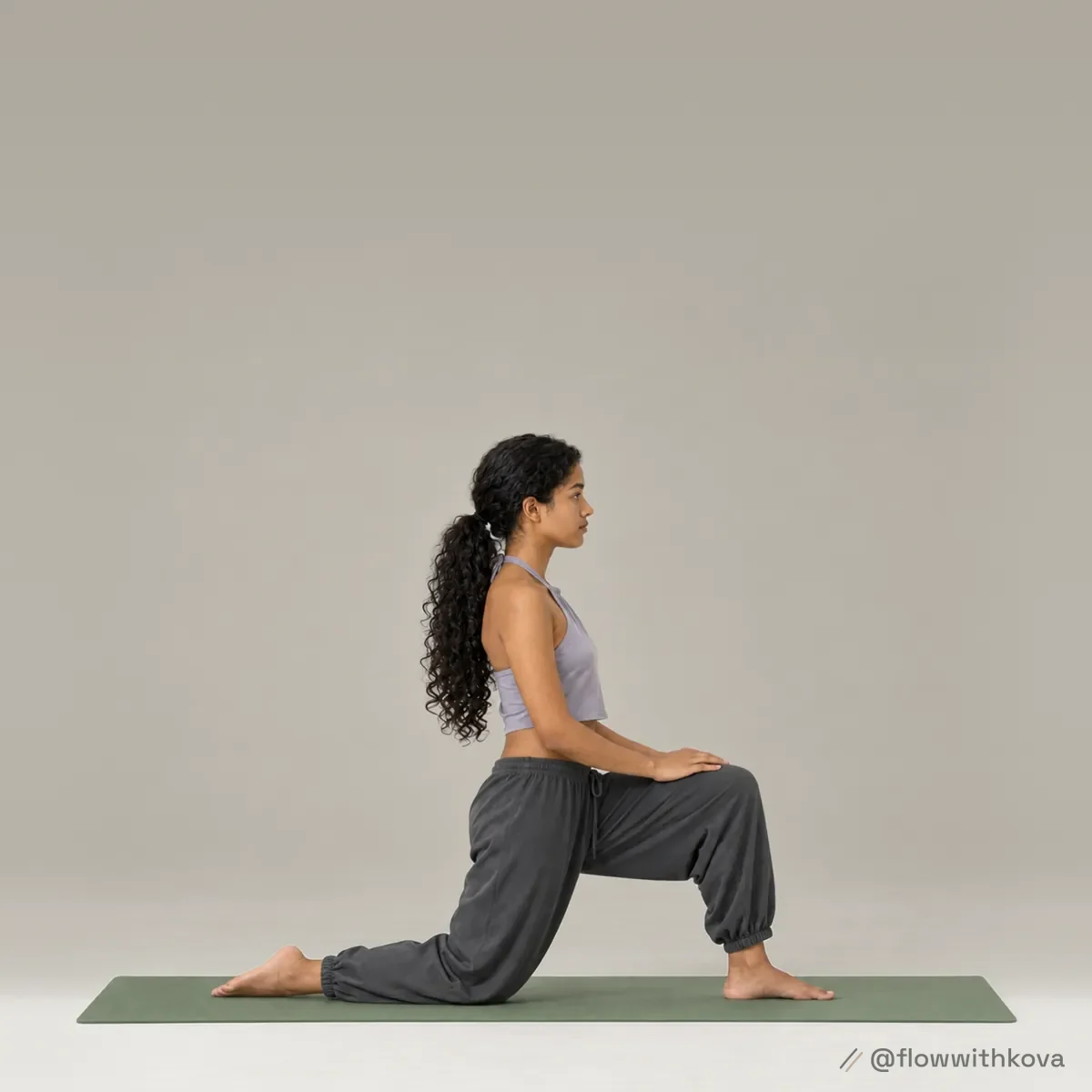


Practice it
with a coach.
Download Kova on your iPhone or iPad today. It is free to download, and Kova Plus starts with a 3-day free trial for new subscribers.
Download on the App Store