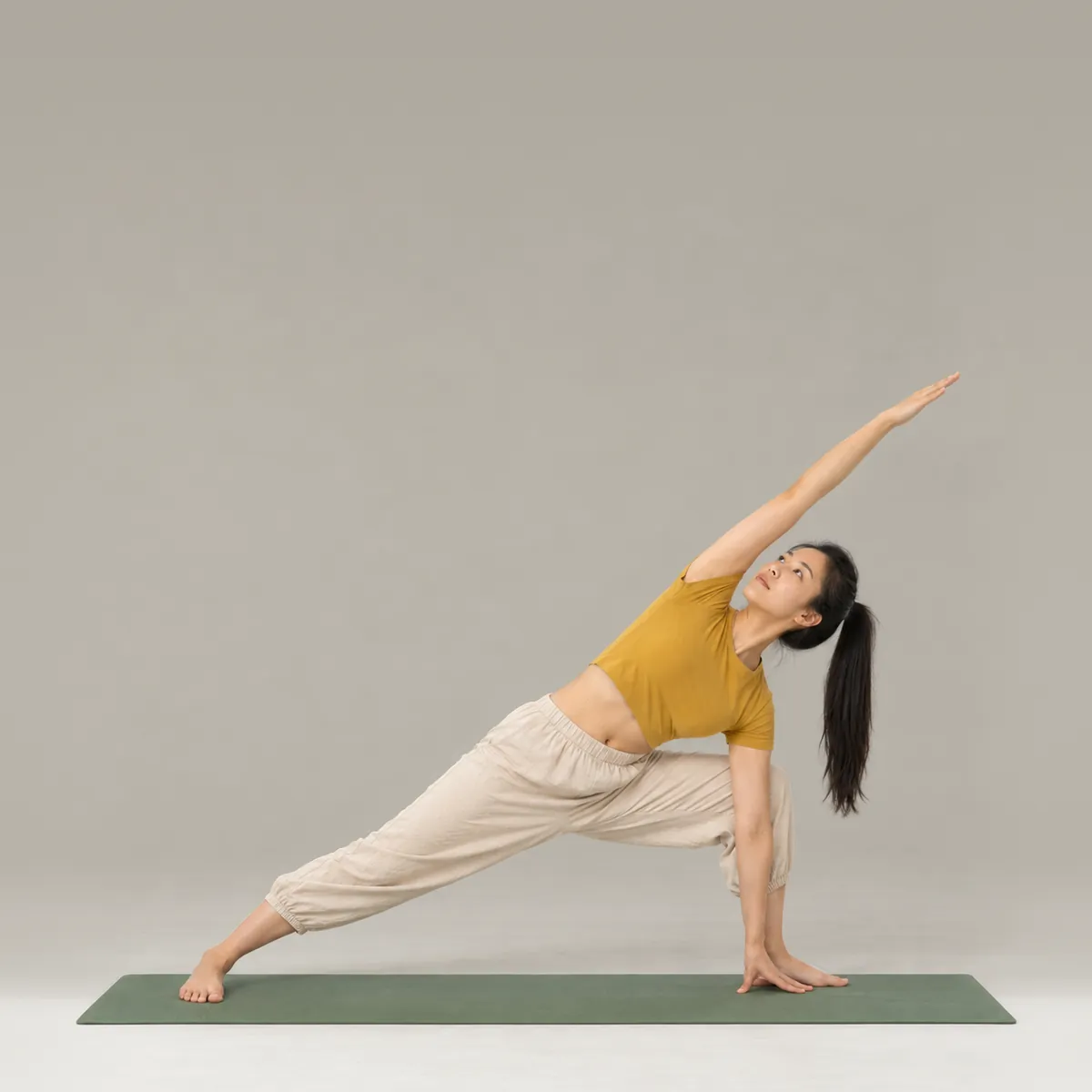
Cycling asks your body to hold one shape for a long time. The hips stay flexed, the upper back rounds toward the bars, the neck tilts up to see the road, and the legs repeat the same short arc thousands of times. It is efficient, and it is also why many riders climb off the bike feeling tight in the hips, lower back, and chest.
Yoga does not undo cycling, and it does not need to. A short practice simply takes the body through the positions the bike leaves out: hip extension, chest opening, rotation, and length through the backs of the legs. The routine below takes about 15 minutes and works well after a ride or on a rest day.
What the bike leaves tight
- Hip flexors, which stay shortened for the whole ride.
- Quadriceps, which do much of the pedaling.
- Hamstrings and calves, which work through a limited range.
- The chest and the fronts of the shoulders, from reaching forward to the bars.
- The upper back and neck, from holding a rounded position while looking ahead.
Everyone is different, and your bike fit, riding position, and the rest of your day all play a part. Treat the list as places to check, not a diagnosis.
A 15-minute practice for riders
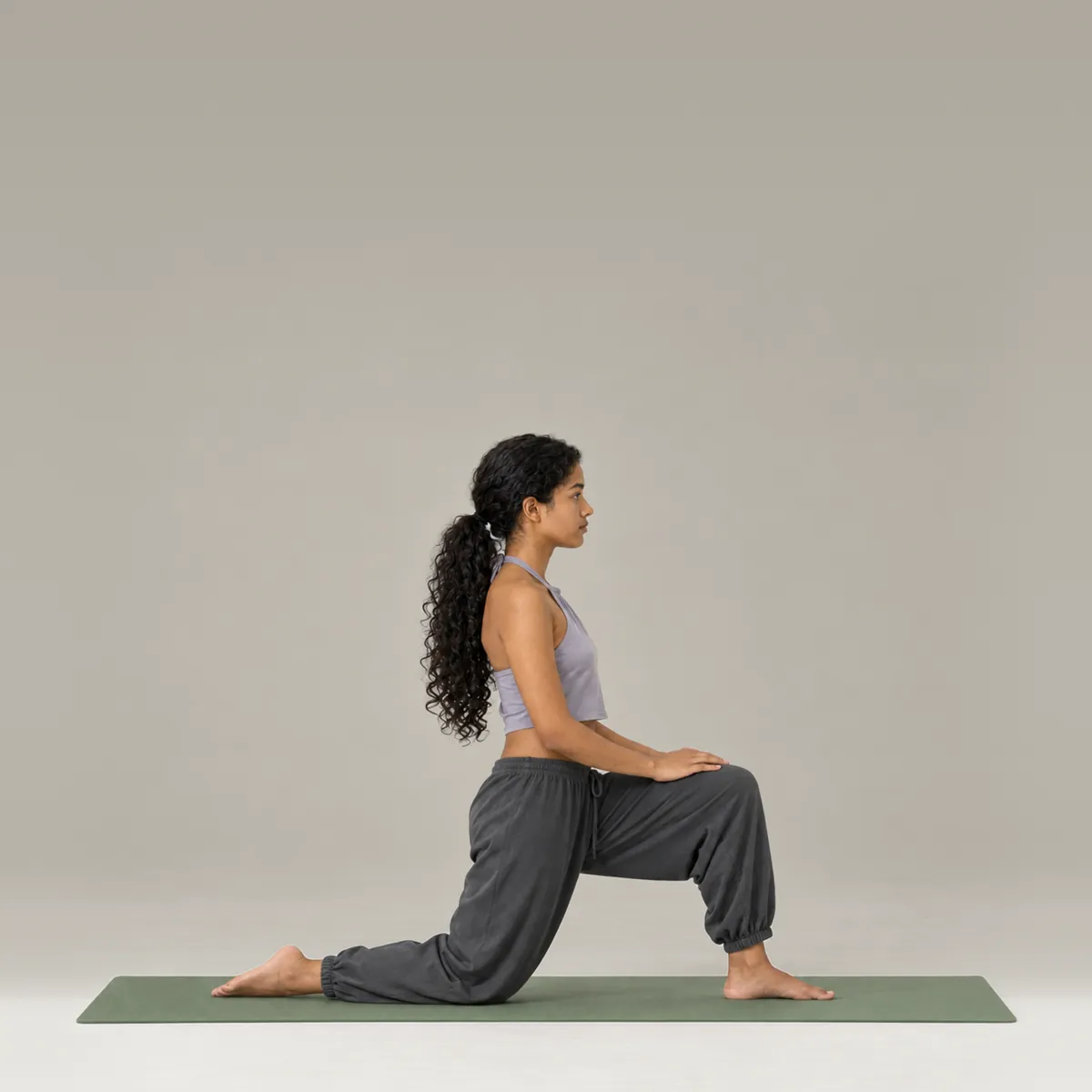
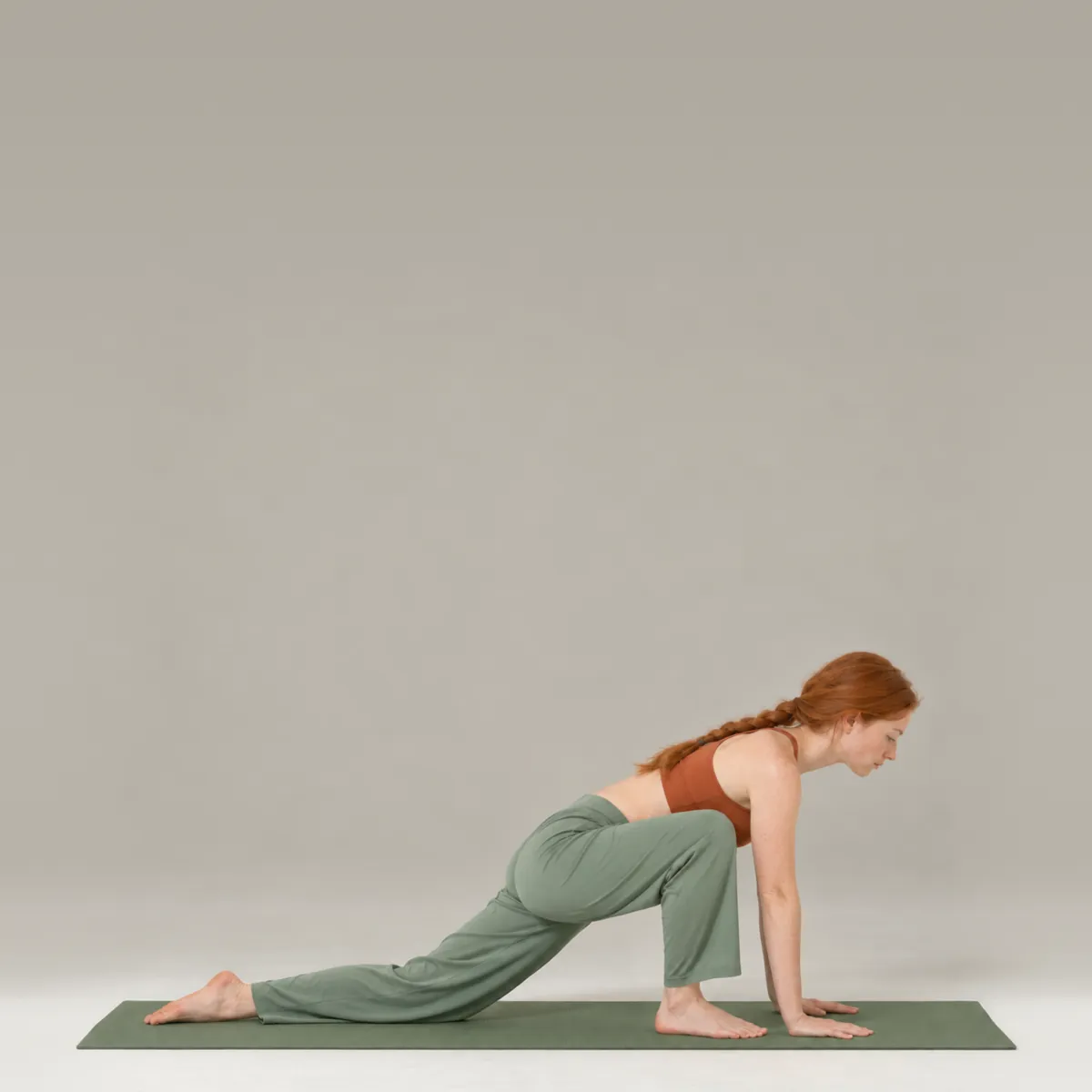
- Low lunge, one minute each side. Back knee down on a folded towel, hips easing forward to open the front of the back hip.
- Low lunge quad stretch, 30 seconds each side. From low lunge, reach back for the back foot only if your knee is comfortable. Otherwise stay in the lunge.
- Lizard pose, 45 seconds each side, hands inside the front foot, for the hips and groin.
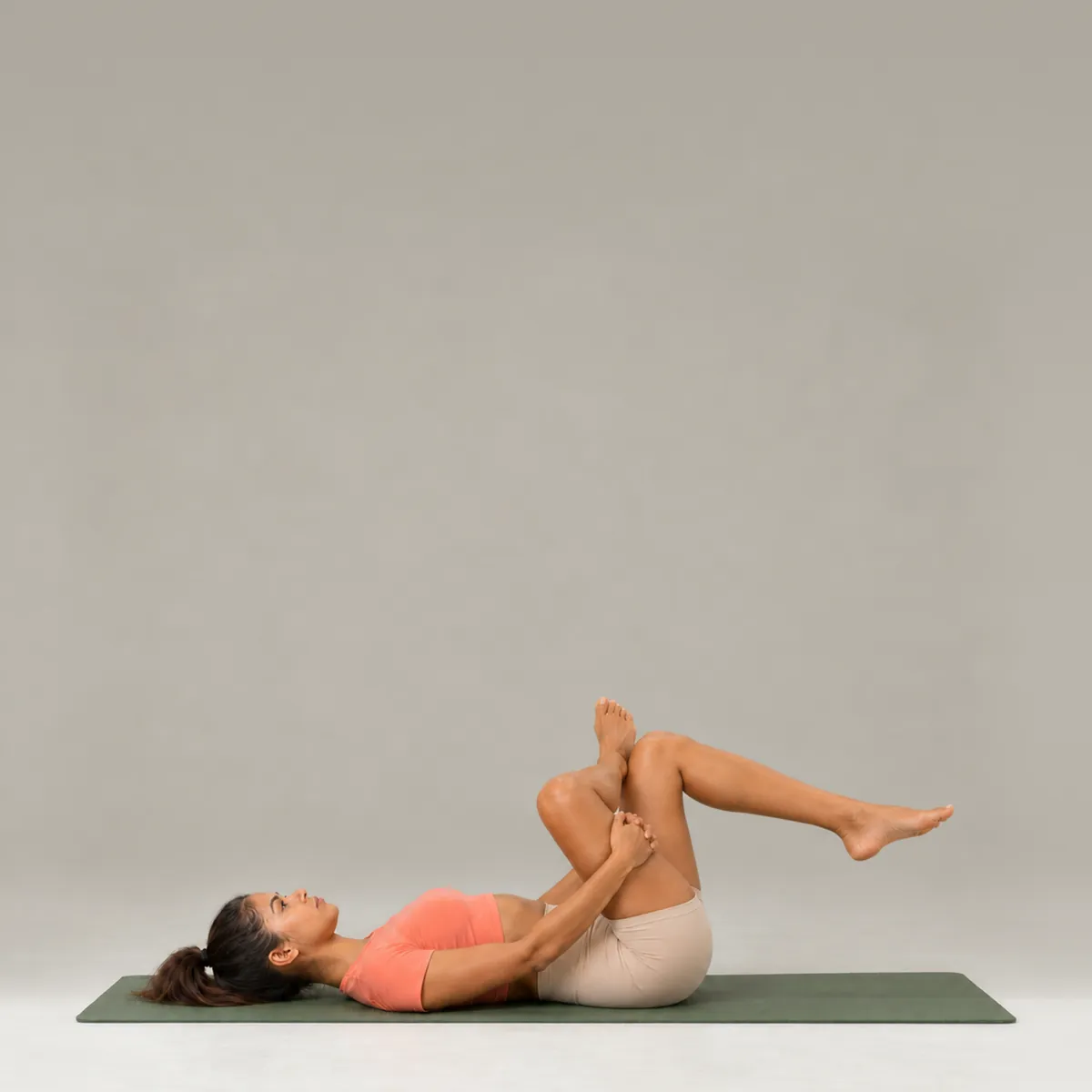
- Reclined figure four, one minute each side, for the outer hip and glutes. A gentler choice than pigeon for many riders.
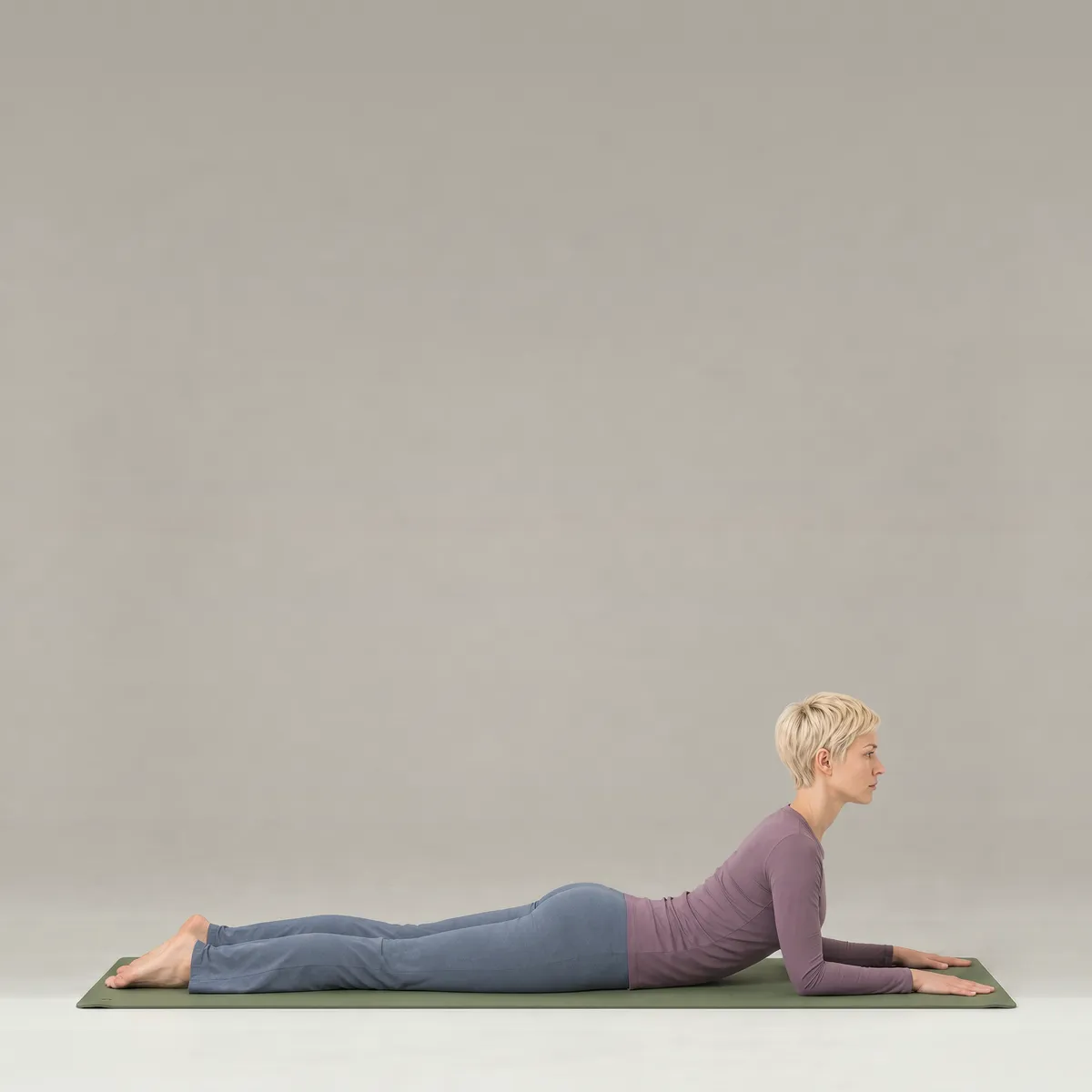
- Sphinx pose, one minute, letting the chest move forward and the spine extend after hours of rounding.
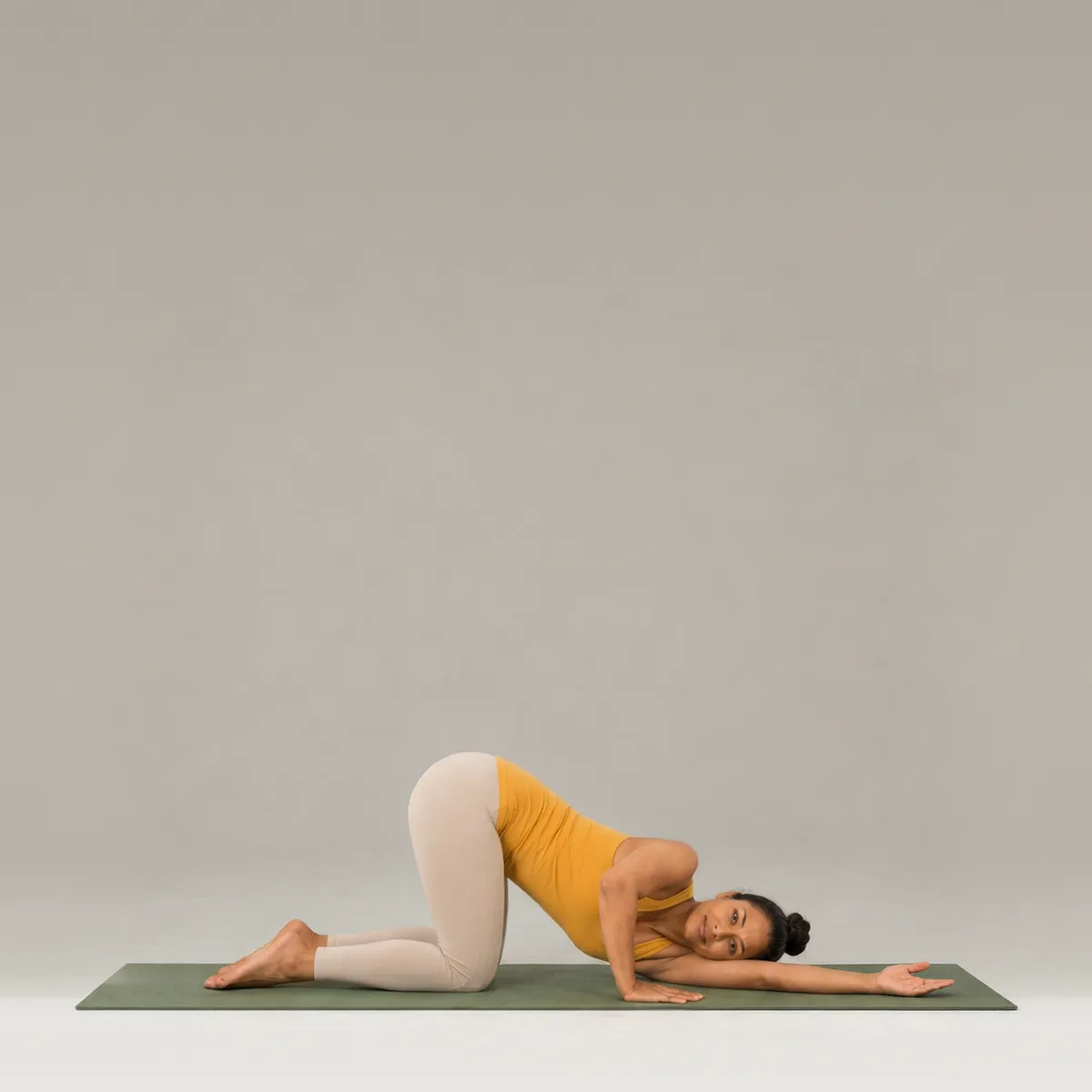
- Thread the needle, five breaths each side, to rotate the upper back and ease the shoulders.
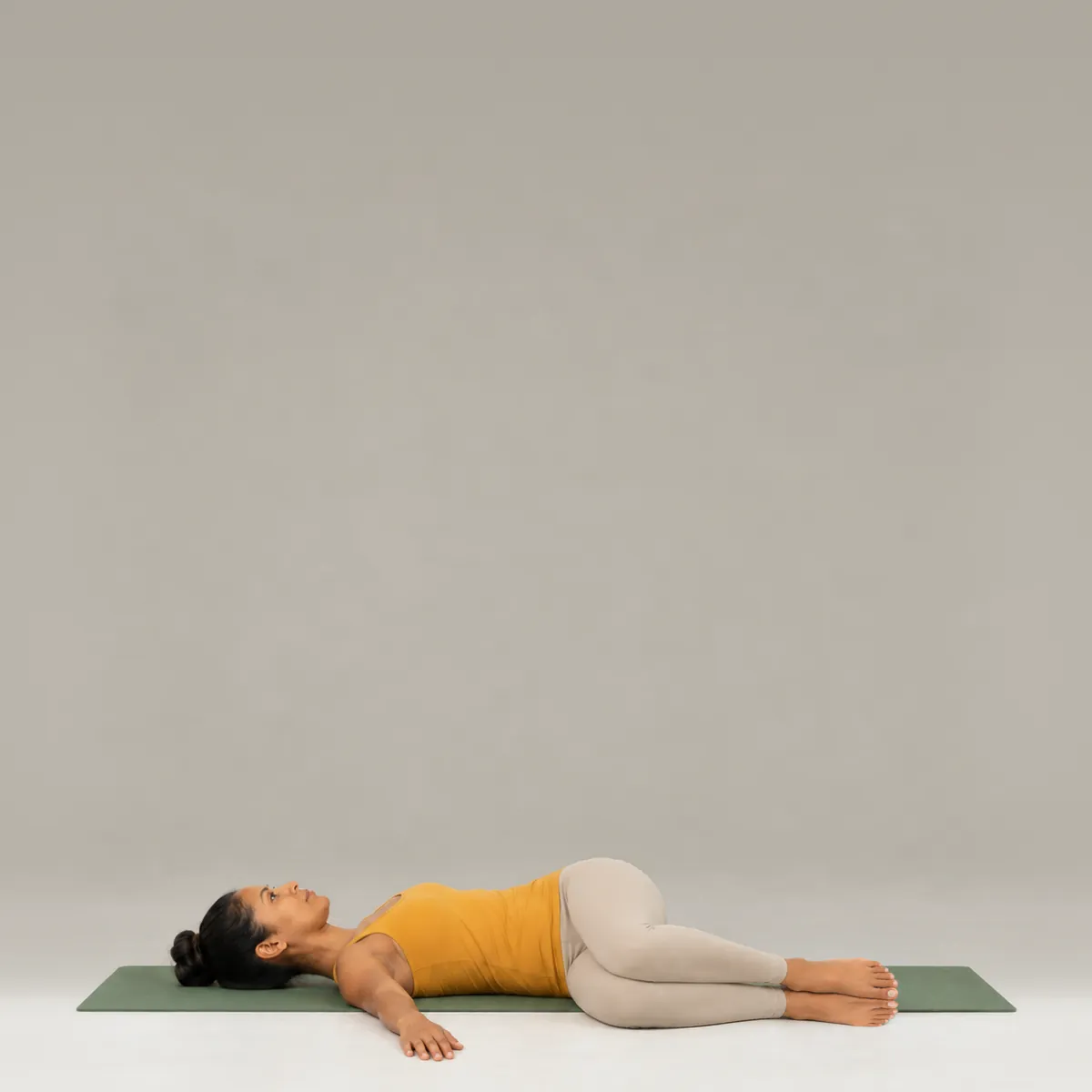
- Supine twist, one minute each side, then rest on your back for a few breaths.
Move slowly and stay at a level where you can breathe easily. After a hard ride, the muscles can feel tight but also tired, so this is not the moment to push for depth.
After a ride or on a rest day?
Both work, for different reasons. Straight after a ride, a few minutes of lunges and a twist help you change position and ease out of the riding shape. On rest days, when the legs are fresher, you can hold a little longer and add strength work.
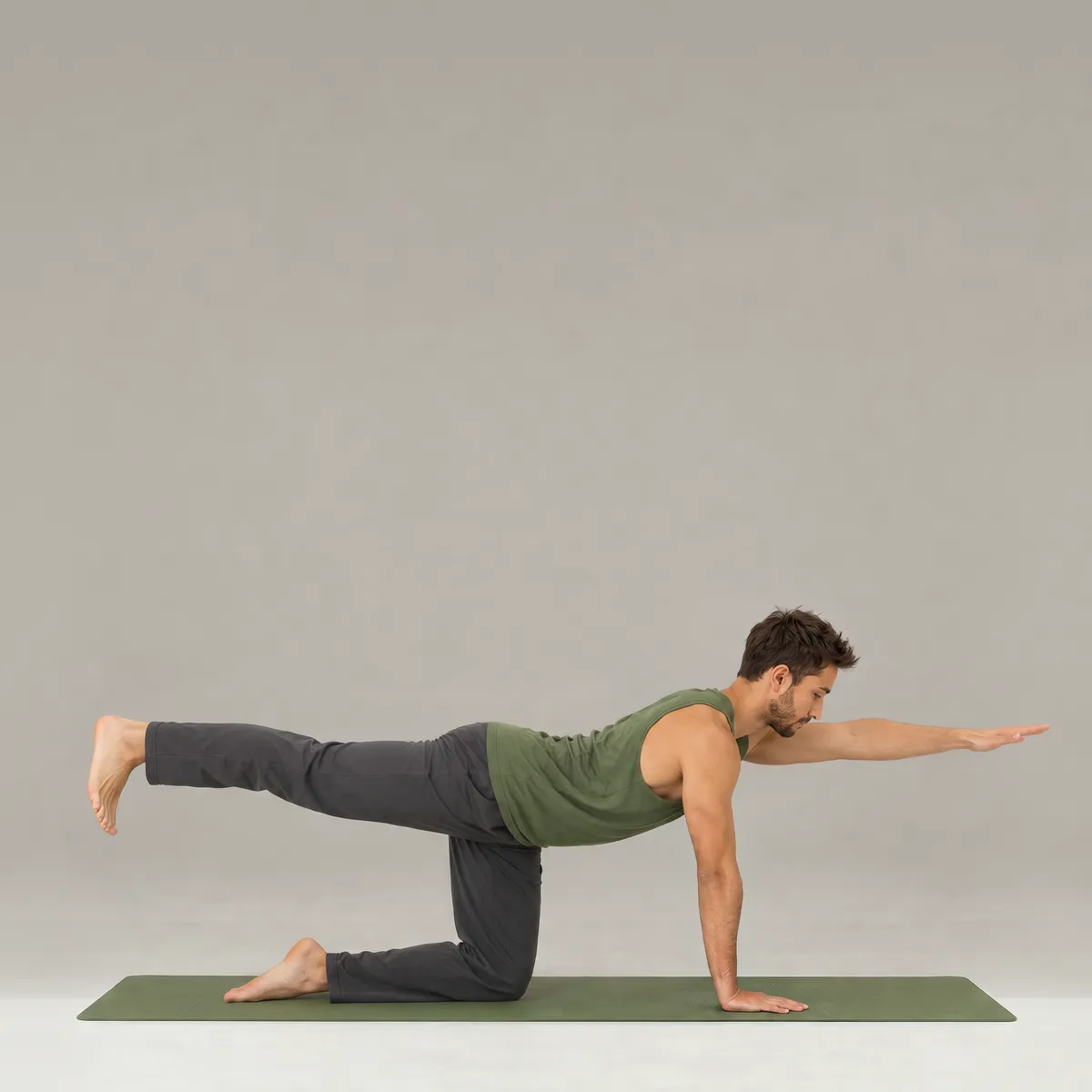
Strength matters as much as stretch. Cycling builds the legs but does little for the back of the body. Poses like bridge, locust, and bird dog work the glutes and the muscles along the spine that the riding position rarely trains. The thinking is close to yoga for runners, and riders who also lift may find yoga for lifters useful too.
Small details that help
- Pad the back knee in lunges. A folded towel or blanket makes a big difference on a hard floor.
- Keep the hips square in low lunge rather than letting the back hip swing open.
- In sphinx, press the forearms down and let the shoulders slide away from the ears.
- Breathe into the back of the ribs during twists, an area the riding position tends to compress.
When to see someone
Ordinary post-ride tightness should ease as you move. Knee pain, numbness in the hands or feet, or back pain that lingers or spreads is worth checking with a clinician or a professional bike fitter, as these can be signs that your position or equipment needs attention. Yoga can be part of looking after your body, but it is not a fix for those.
Where Kova helps
Lunges and hip openers are easy to fake. The back hip swings open, the front knee drifts, and the stretch quietly moves somewhere else. Kova uses on-device pose tracking to notice visible alignment like a drifting knee, and gives calm spoken cues while you hold the pose. Your camera feed never leaves your device.
The bike gives you one shape. The mat gives you the rest.
Link to or cite this note
<a href="https://www.flowwithkova.com/blog/yoga-for-cyclists">Yoga for cyclists: a 15-minute routine for hips, back, and chest</a> (Kova journal)